



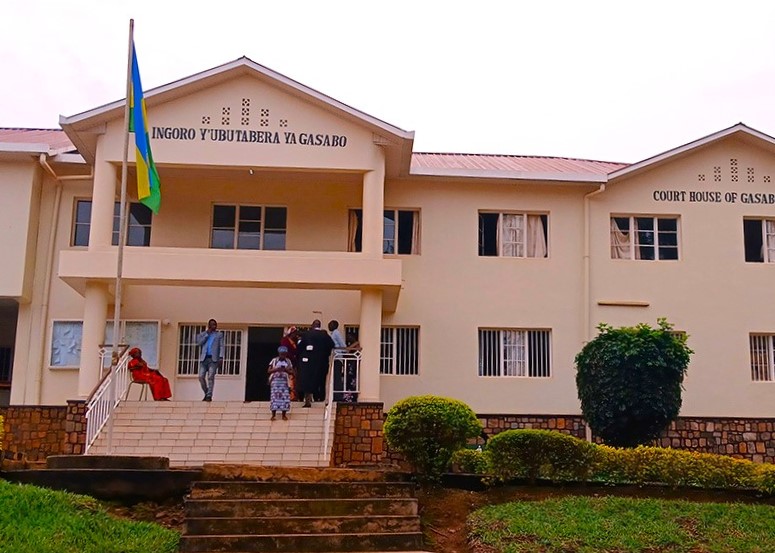
A court facility in Gasaba, here in Kigali. When children are involved
KIGALI — Children appearing before courts in Rwanda will no longer routinely face uniformed security officers, under new rules designed to make the justice system less intimidating and more focused on rehabilitation.
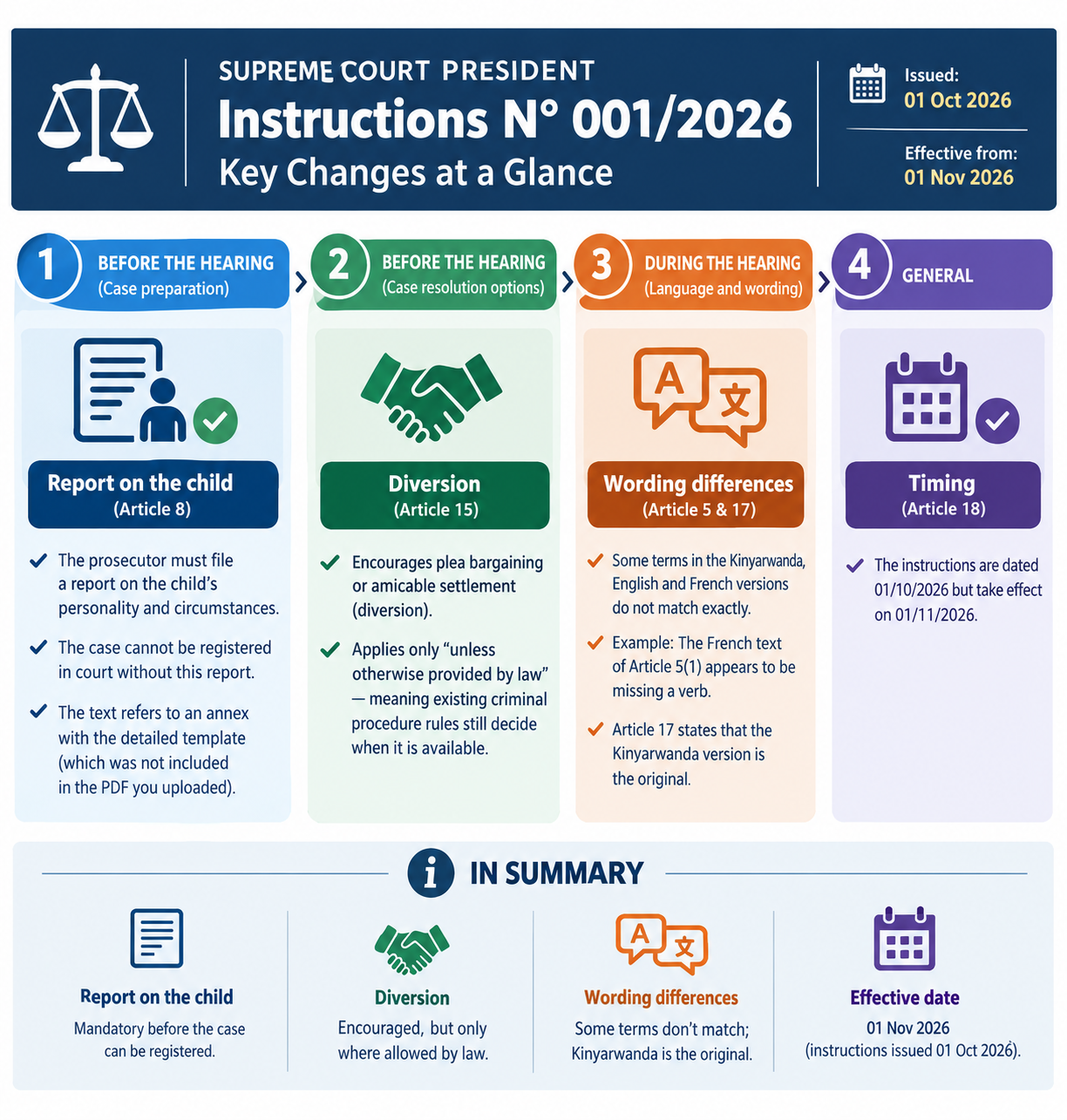
The instructions, issued by the Chief Justice Domitilla Mukantaganzwa, President of the Supreme Court on October 1, 2026, require courts handling cases involving children to create a child-friendly and psychologically safe environment.
They take effect on November 1.
Uniformed security personnel should not be present during proceedings involving children unless their presence is necessary for security reasons.
Judges, prosecutors and lawyers will also not wear their professional robes in such proceedings. They must communicate with children in language they understand and explain the parts of the proceedings that concern them.
The rules also require courts to consider a child’s age, vulnerability, psychological wellbeing and individual circumstances.
Children with disabilities must receive appropriate assistance. A child appearing as a witness or to provide information must be placed in a separate, child-friendly setting.
Greater privacy
Cases involving children will generally be heard in camera, meaning the public will not be allowed to attend.
Those permitted to attend include judges and court staff, parties to the case, lawyers, necessary witnesses, parents or guardians, child-protection officers and others specifically authorised by the court.
The rules also restrict publication of a child’s identity. The identity of a child accused of an offence, a victim or a witness must not be recorded in proceedings or disclosed to the public or media.
Children separated from adult offenders
Children detained over alleged offences must be held separately from adults. They must also be kept away from adult suspects before and after court hearings and transported separately to court.
Courts must obtain detailed information about the child’s family, health, education, behaviour, home environment and social circumstances. Medical or psychological assessments may also be considered.
The information can be used to recommend rehabilitation and reintegration measures.
The framework directs courts to prioritise rehabilitation over punishment where the law allows. Judges are encouraged to consider diversion, plea bargaining, amicable settlement and restorative justice.
When punishment is imposed, judges must consider the child’s background, circumstances and potential for rehabilitation and explain those considerations in the judgment.
From courtroom to classroom
The approach mirrors Rwanda’s separate correctional system for children.
As of September 2026, 515 children aged 14 to 18 were held at Nyagatare Juvenile Correctional Facility. The facility provides primary, O-Level and A-Level education alongside vocational training in areas including carpentry, masonry, tailoring, welding and electrical work.
Children sit the same national examinations as students outside the facility.
In the 2023/24 academic year, all 20 juvenile inmates who sat national examinations passed — 16 at primary level and four at O-Level. In 2026, all 17 O-Level candidates passed.
Some children have progressed significantly after returning to school. One inmate who had dropped out in Primary Five progressed through primary education at Nyagatare, passed the Primary Leaving Examinations, completed O-Level in 2026 and qualified for A-Level.
The system has also previously linked good conduct and academic performance to presidential clemency, including 16 juvenile inmates granted clemency in 2019.
The new court rules therefore go beyond removing uniformed officers. They establish a broader principle: children should not experience the justice system in the same way as adults. Their dignity, privacy, wellbeing, views and prospects for rehabilitation must be considered throughout the process.
