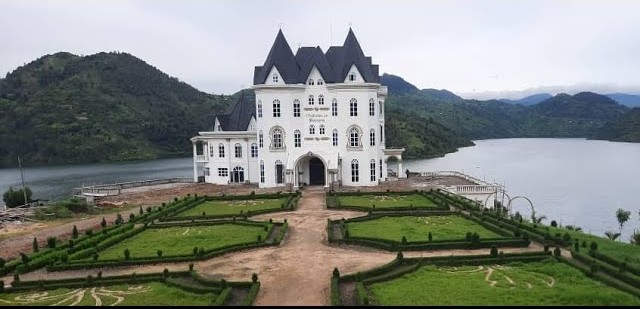
This hospitality facility has been at the center of national storm
We have a very serious issue with feedback in this Rwanda. Today, I will focus on feedback clients offer to businesses that sell to them products and services. For this case, I will call it the “Rwanda Feedback Dilemma.”
There will never be a single scenario when someone comes to Twitter or Instagram and decries the poor services and products they received from a certain establishment and doesn’t get harsh criticism from angry Rwandans who will call them out asking them to solve the issue in private, not social media.
They claim that it is better off discussing such matters with the management of these establishments, in private rather than discussing them on social media as it ruins the reputation of these businesses but hurts the #VisitRwanda campaign in the long term.
Now, what is funny is that these same establishments have social media platforms where they advertise their products and services, not in person, door to door. It is therefore only right that feedback, both negative and positive feedback, is shared on these very platforms.
It is 2025 and we should stop looking at negative feedback against an establishment’s poor services as an attack on the reputation or its proprietors because most of us go to these places when we do not even know who owns them, and honestly don’t care even if we did and absolutely have no interest in seeing them shut down.
There have been many cases where people have come out to publicly talk about the shoddy experiences they received from different service providers. The most vivid examples that come to my mind include Sherrie Silver who provided a logo for t-shirts for her foundation and the supplier did something totally different, a lady that said she got poor customer care from Kivu Noir despite being pregnant and most recently, Chateau le Marara which messed up a couple’s wedding with their poor services.
What is common in all three situations was angry people, mainly on Twitter coming for them and making a lot of shallow minded comments such as they got what they paid for, or that they should have gone to places that would have treated them better and also advised them to reach out to the proprietors of these businesses and sort out the issue in private rather than bring it to twitter.
As a communications practitioner, feedback is very important in our line of work. Be it for a school, hotel, hospital or any type of campaign that you are working on, feedback is so important for it helps you know what you are doing right for you to maintain, or what you aren’t for you to redirect resources in terms of funds, manpower, time etc.
Doing it on social media isn’t a problem because once done in the company’s inbox or via email, chances are that you will receive a “We are aware of the situation and are working around the clock to fix it” message and nothing will get done but when the issue is brought to the public, the powers that be get interested in it as we have seen from the case of Chateau le Marara and steps have been taken to rectify the issue.
People that claim that those that speak up are harming efforts of the government in regards to #VisitRwanda are the ones that are actually doing it a disservice and I will labour to explain with hope that they get it this time.
The government has invested a lot of money in the campaign as we all know. Restaurants, hotels and other facilities such as the arena are a major component because these are places that tourists frequent.
So, when someone decries the slow service they received at a restaurant, or the unhygienic washrooms there, they are actually helping because the facility will immediately step up its game, and if the issue persists, the concerned authority can step in to ensure that there is compliance.
An example that is relatable is the recent scandal that happened at Chateau le Marara where tempers were high among a section of Rwandans who were agitated after what happened at this castle came to light. It was such a mess that the Rwanda Development Board got invested in the issue and on doing its investigations, it was discovered that this hospitality facility has been operating without a licence which led to its temporary closure.
Had no one spoken up about what had happened, none of this would have come to light and chances are, this would have gone on and on and more efforts would be put in boosting tourism while the numbers of tourists would keep dipping because of issues like this that are known but never spoken of publicly because of what happens when people speak up.
Here is another way to look at it, what happened at Chateau Le Marara and what happened next has been an eye opener to different establishments that are operating without licences to get them, and this means they have to comply with what is expected of them before they are certified by RDB.
The irony here is too much. We’re essentially telling people to whisper about bad service while businesses shout about their offerings on the same platforms. It’s like asking someone to critique a movie in private while the cinema advertises it on billboards.
What’s even more amusing is watching grown adults get more worked up about someone complaining about cold food than the actual cold food itself. The energy spent policing feedback could power half the establishments being defended.
Here’s the thing though, and this is where it gets interesting. Every time someone posts about a bad experience and gets attacked for it, they’re inadvertently doing more damage to #VisitRwanda than the original complaint ever could. Because now, instead of one disappointed customer, we have a whole thread of people arguing, name calling, and making Rwanda look like a place where customer feedback is a criminal offense.
By speaking up against poor services, we are, in fact playing a huge role in pushing service delivery and the #VisitRwanda campaign to greater heights.
But let me make this about myself for a moment, because sometimes personal experience drives the point home better than abstract arguments. I have always known that if I ask for something, the worst-case scenario is getting a no, best case scenario, the obvious, getting what I asked for.
I have been in Rwanda for 6.5 years and most of the jobs I have done, I walked up to an MD or CEO of a certain institution, introduced myself, told them what I do and asked them if I could be of support to their Communications team. I was given an appointment and eventually went through the interview process and what not, if there was an opening and most of them, I got in.
This taught me something valuable: speaking up works. Staying silent gets you nowhere. The same principle applies to service feedback. When we remain quiet about poor service, we enable mediocrity. When we speak up, we create accountability.
The author Peter Nkurunziza is a Communications and Media Practitioner in Kigali