



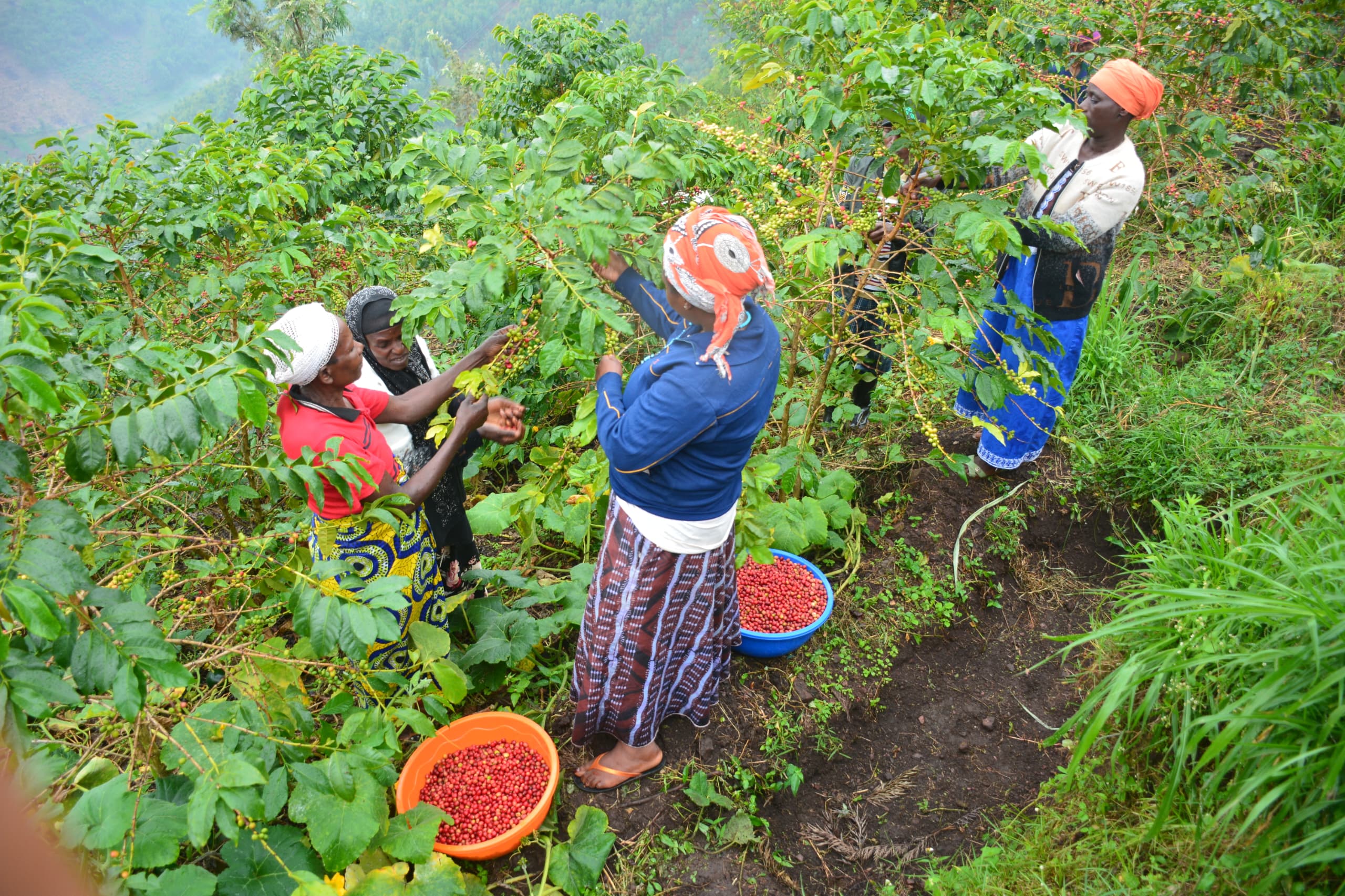
Coffee is widely grown in the south and western regions. Farmers will be eager to go.to their fields, thanks to new price changes
Coffee farmers in Rwanda are set to enjoy record gains in profitability in 2026, a stark contrast to earlier years when lower-quality coffee sold for as little as Rwf 100 per kilogram.
The base price for fully processed coffee cherries has now been set at Rwf 750 per kilogram, a 25 percent increase over 2025’s Rwf 600, reflecting significant improvements in farmer earnings over the past three seasons.
In 2023, fully washed coffee fetched only Rwf 410 per kilogram, while floaters sold for Rwf 100 per kilogram, leaving farmers with limited returns despite the intensive labor involved in cultivation, pruning, fertilization, harvesting, and processing.
The steady rise in prices demonstrates the National Agricultural Export Development Board’s (NAEB) commitment to making coffee farming both profitable and sustainable.
The 2026 price increase is influenced by a combination of factors. Rising international coffee prices have enabled exporters to pay farmers more competitively, while a stronger Rwandan franc against the US dollar has boosted local pricing.
At the same time, expanding global demand for Rwanda’s specialty coffee, particularly in Europe, North America, and Asia, has created a market for high-quality beans.
Improvements in coffee processing have also played a key role. About 80 percent of Rwanda’s coffee is now fully washed to meet international standards, while specialty methods—such as natural, honey, and anaerobic processing—which account for roughly 5 percent of exports, attract premium prices in global markets.
NAEB’s base price serves as a minimum guarantee, protecting farmers from low offers, although market competition often drives actual prices even higher. This approach has helped stabilize incomes and encouraged investment in quality and innovation throughout the coffee value chain.
Coffee remains a pillar of Rwanda’s economy, contributing significantly to foreign exchange.
In 2025, the country exported 23,860 tonnes of coffee, generating over Rwf 216 billion, a sharp increase from Rwf 129 billion in 2024, and substantially higher than revenues in 2023 when lower prices limited earnings. The growth reflects both rising prices and ongoing improvements in quality standards.
Challenges persist, however. Unpredictable weather, including heavy rains and erratic flowering, continues to affect yields in some regions, highlighting the need for sustained support in agronomy, infrastructure, and market access to help farmers fully benefit from favorable conditions.
The 25 percent increase in base prices for 2026 underscores coffee’s strategic importance as a key cash crop in Rwanda.
By securing fair returns while meeting international quality standards, the sector strengthens rural livelihoods and reinforces Rwanda’s global reputation as a producer of specialty coffee.
The trend signals growing profitability, resilience, and sustainability, ensuring coffee remains central to the country’s economic and rural development.
