




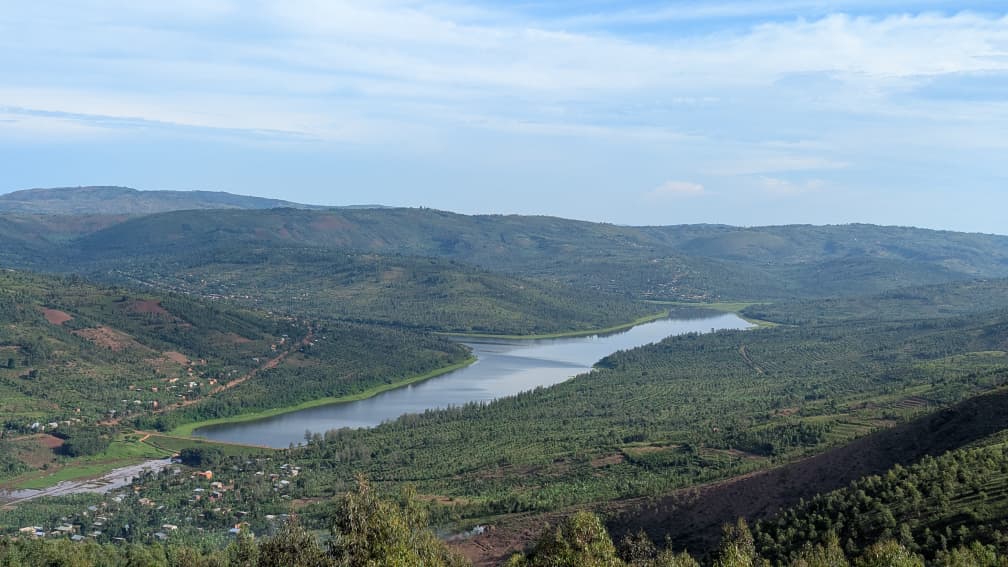
Four years ago, when Kabarondo farmers were asked to hand over their land along the Rwinkwavu Dam and shift from growing bananas to fruits on a massive orchard farm, the resistance was in full swing.
This initiative was introduced in response to prolonged drought conditions that severely affected the Eastern Province.
The proposal was driven by Kayonza district, which requested government intervention to help farmers adapt to climate stress and mitigate drought impacts.
As a result, this promoted fruit tree planting project as an alternative to conventional agriculture, allowing farmers to earn income from fruit harvests while continuing to intercrop food crops.
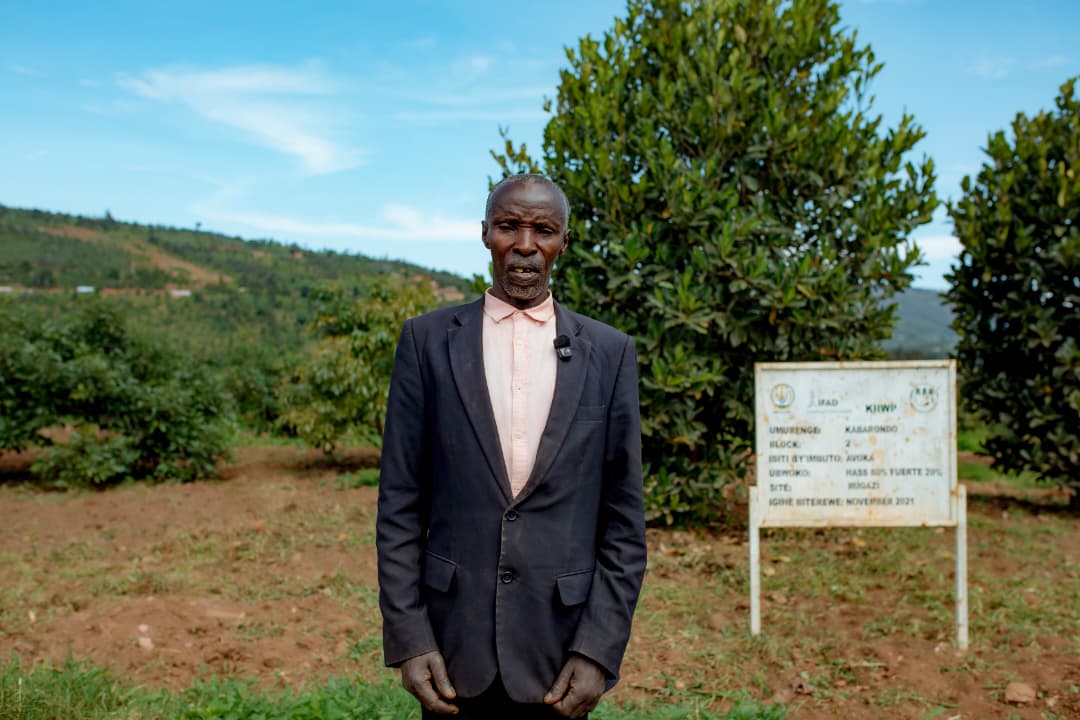
Joseph Nsengiyumva
“We had grown bananas for generations, so it was not an easy concept to conceive that fruits would transform our lives,” says Joseph Nsengiyumva, one of the farmers who was 68 years old and had grown up seeing his parents survive on subsistence farming despite owning almost one hectare of land in the area.
Through intensive education on the benefits of fruit farming and land suitability, farmers were convinced that the orchard would benefit them more than growing food crops, said an area agronomist.
Today, Nsengiyumva owns 333 trees, mainly avocados, oranges, and jackfruit, and he is reaping big money that his family has never earned in decades.
Nsengiyumva says that to change their mindset, it was because of the education from community farmer facilitators and the assurance of free seeds and financial support from the IFAD-funded Kayonza Irrigation and Integrated Watershed Management Project – Phase II (KIIWP 2).
“Change comes with pain, but we trusted in the opportunities that the government had presented. For example, the fact that women and men beneficiaries would get a 75% and 50% financing subsidy was an opportunity for grabs but also a mindset changer,” he said.
Starting from the lower areas, farmers planted 100,000 avocado trees, followed by 160,000 mango trees, 60,000 jackfruit trees, and 60,000 citrus trees, all with support from KIIWP2.
At the time of the high-level officials’ visit, the trees were one year old, and the first harvests were expected between 2024 and 2025. Production was anticipated to begin with avocados, followed by mangoes, citrus fruits, and jackfruit.
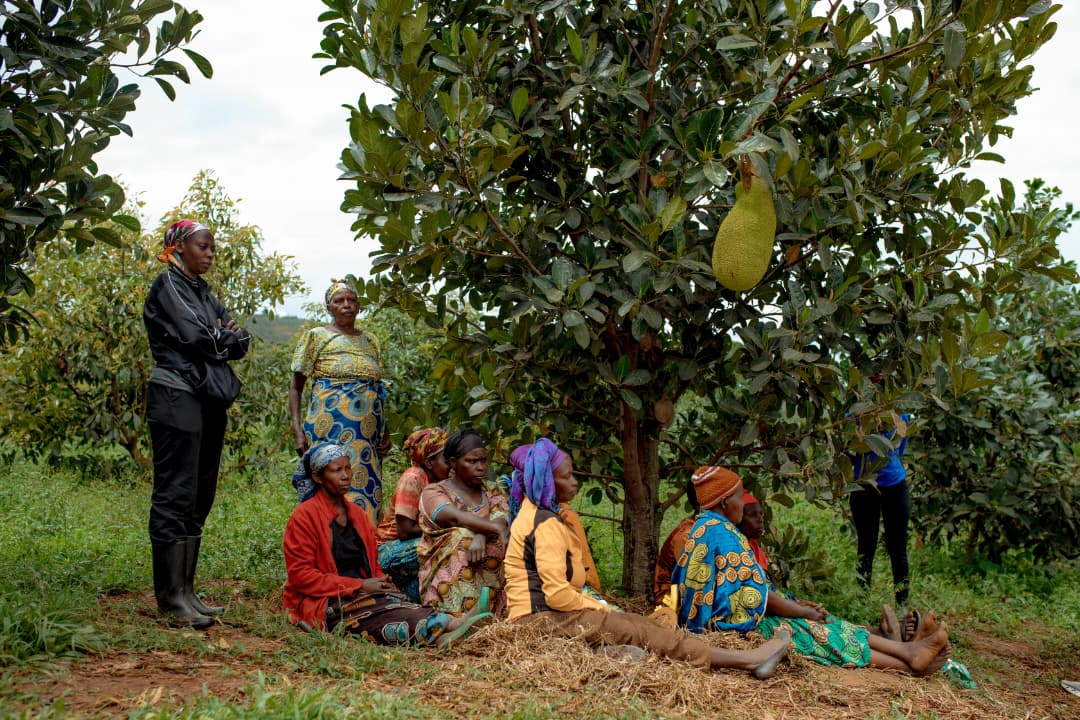
One of the self-help groups mentored by youth facilitator Angelique Uwitonze (left)
To ensure sustainability, beneficiaries were organized into self-help groups of 30 to 35 members. Between 20 and 25 groups form a zone, and 18 zones together make up a cooperative.
The approach has proven effective. Farmers benefited from employment opportunities during land preparation and planting, and fruit sales have already generated approximately Rwf 600 million.
With trees still maturing, revenues are expected to increase further, while the restored vegetation is helping to rebuild the microclimate across the project sites.
“I was able to sell off fruits worth Rwf 700,000 in the first avocado harvest, and this amount is minus the anticipated harvest from my oranges, mangoes, and jackfruits,” Nsengiyumva said.
“This income will sustain my family and grandchildren for ages, and I have no regret over shifting to fruit farming because it’s an assured money maker, thanks to President Kagame and his leadership,” he added.
From the KIIWP 2 project orchard incomes, Nsengiyumva says that it is the first time that he and his wife, Beatrice Mukankuranga, have been able to sleep in a cemented house and have a good night’s sleep without worrying about their retirement.
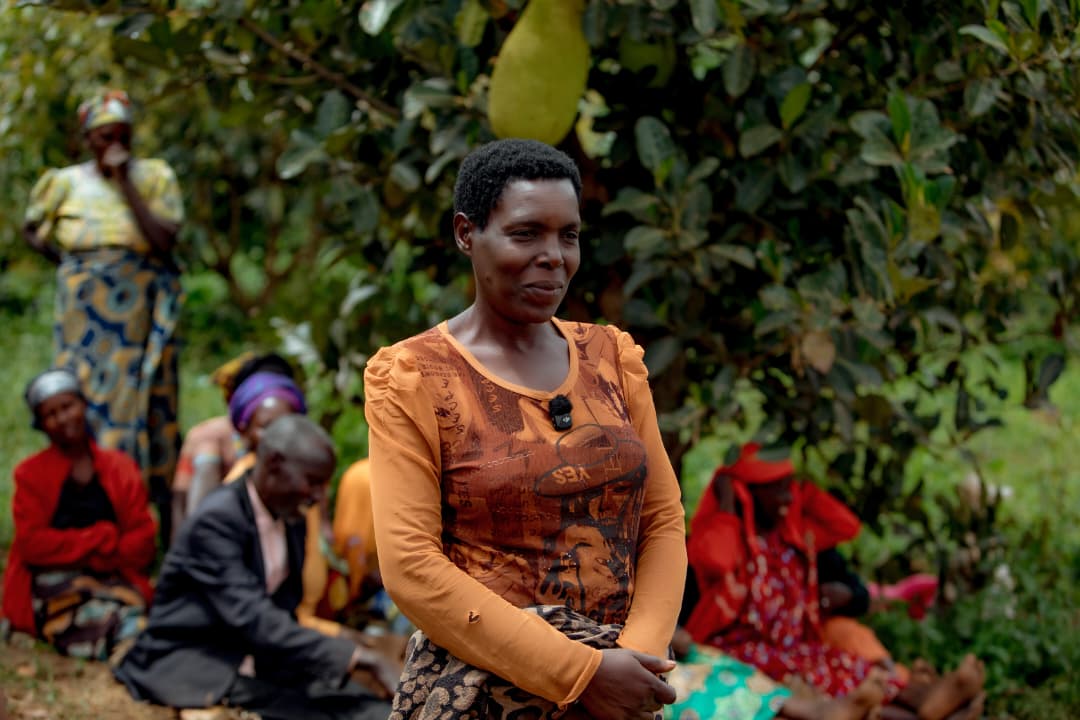
Marie Louise Mukamurwanashyaka
Marie Louise Mukamurwanashyaka, a fruit farmer and facilitator at the Kabarondo orchard with over 50 avocado trees, said that from planting wheat and harvesting four bags worth Rwf 120,000, she currently earns four times more.
Combining orchard farming with Gender equality and equity training through the Gender Action Learning System (GALS) tools training, the KIIWP2 is empowering young people and families to build resilient livelihoods, reduce conflicts, and secure a better future—proving that starting small can indeed take you far.
She said that fruit farming, government support combined with GALS training has accelerated their progress economically.
She noted that while fruit farming created income opportunities, it was GALS training that helped her family to open up about their incomes, especially declaring a cow that she had bought but hid from her spouse.
“I used to earn from farming and hide the income from my spouse, but through the GALS training, we were empowered to work, sell, save together, and make joint decisions about our assets and earnings,” she said.
After spending 16 years in a rented house, she also said that the GALS training has empowered her family in managing agricultural incomes to peacefully and cooperatively construct a new home.
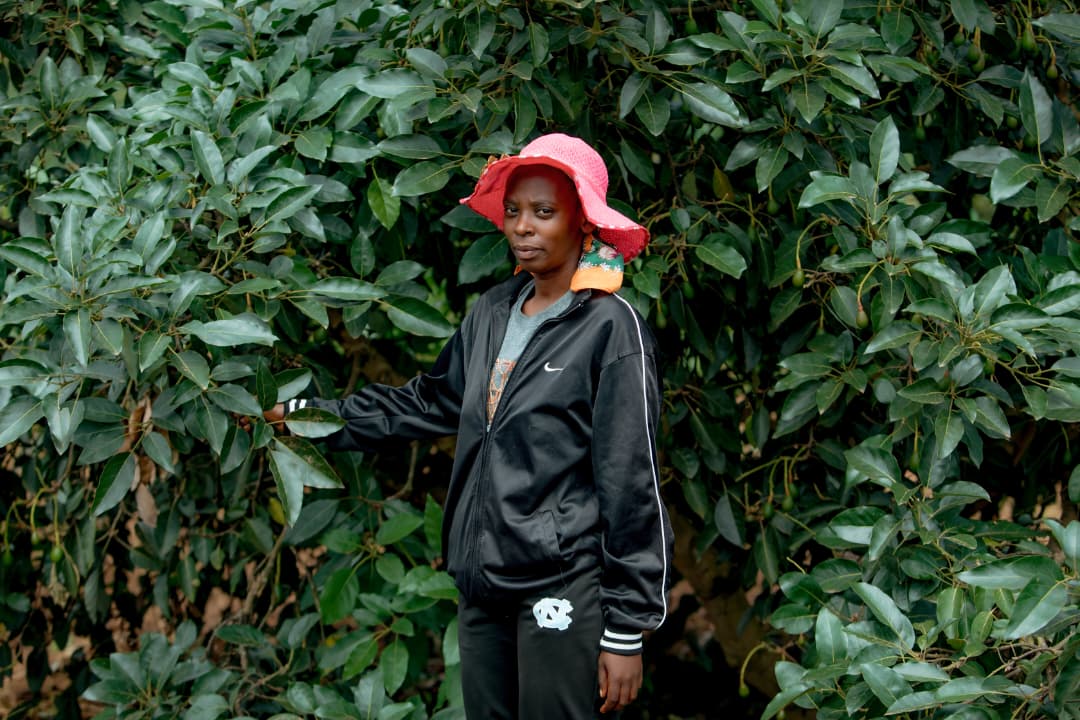
Angelique Uwitonze
This has inspired Kabarondo youths like Angelique Uwitonze and Dieudonne Mutsinzi to love and invest their futures in horticulture farming.
For example, Uwitonze’s only 20 avocado trees planted on land gifted to her by her parents have enabled her to earn and pay for her tailoring technical education.
On the other side, school dropouts Mutsinzi and his brother Oswald established a youth agro company (Agro-Vision Kayonza) and made losses in their first passion friut harvest, are using their father’s rented land to growing all kinds of horticulture crops to prove benefits of horticulture and also training youth through clusters.
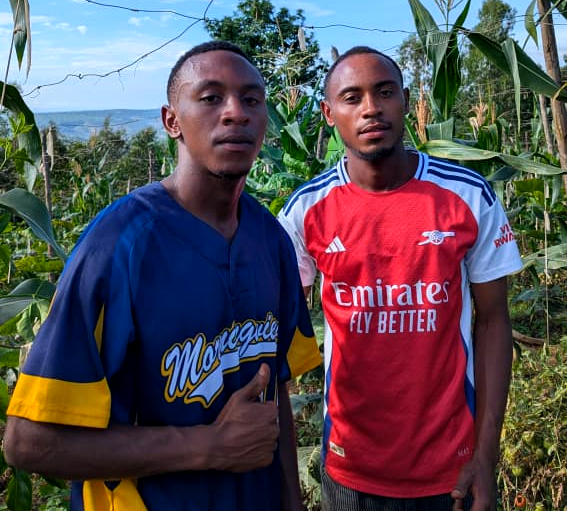
Mutsinzi (left) and his elder brother Oswald
Today, Mutsinzi is pursuing a law degree, sells his products for export, and dreams of buying a supply truck but notes that to reach these goals was because of the mind-awakening experience of learning how to have a goal-oriented and purpose-driven life through the GALS training.
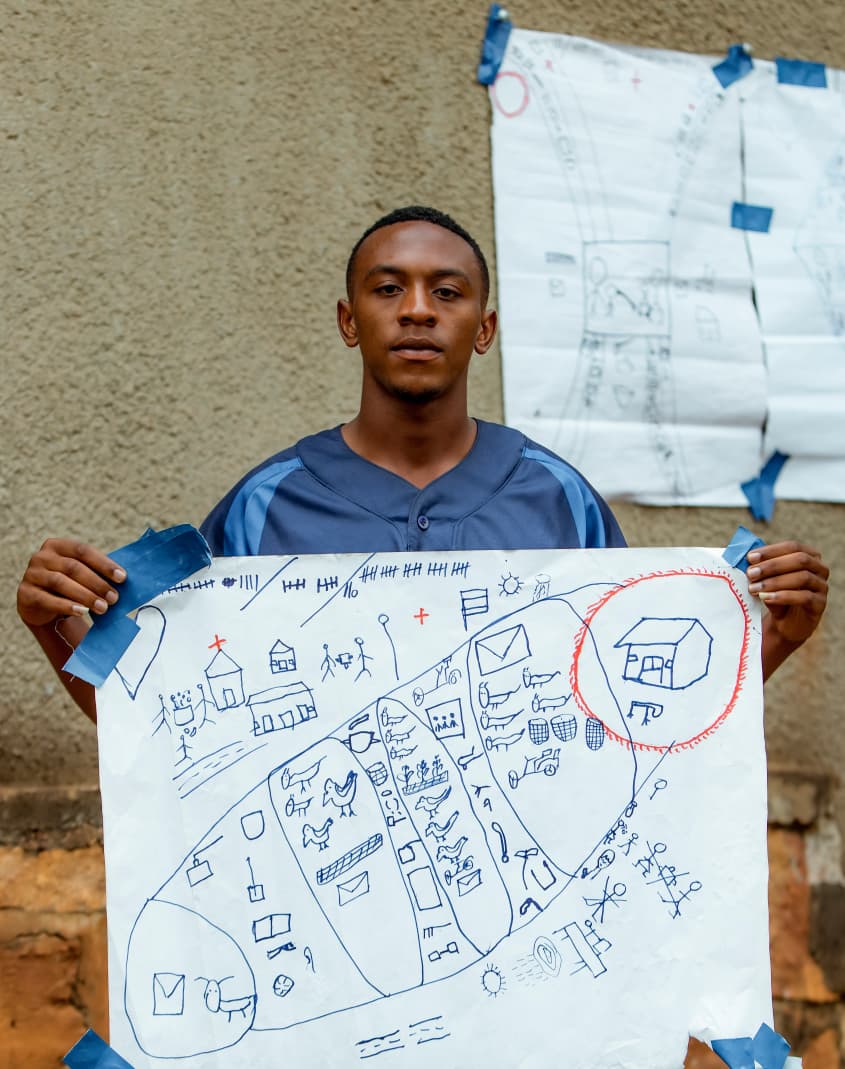
Dieudonne Mutsinzi says that the GALS tool on economic planning opened his mind to work differently from common village youth who spend money on being fashionable
KIIWP project officials say that the beneficiaries will get an irrigation system, and its installment consists of three main components: a powered pumping system, water storage facilities, and a pipe network with hydrants to enable easy access to water.
To maximize the performance and efficiency of the system, additional equipment including dam liners, pipelines, and related accessories will also be provided.
Sustainability and Scale Up:
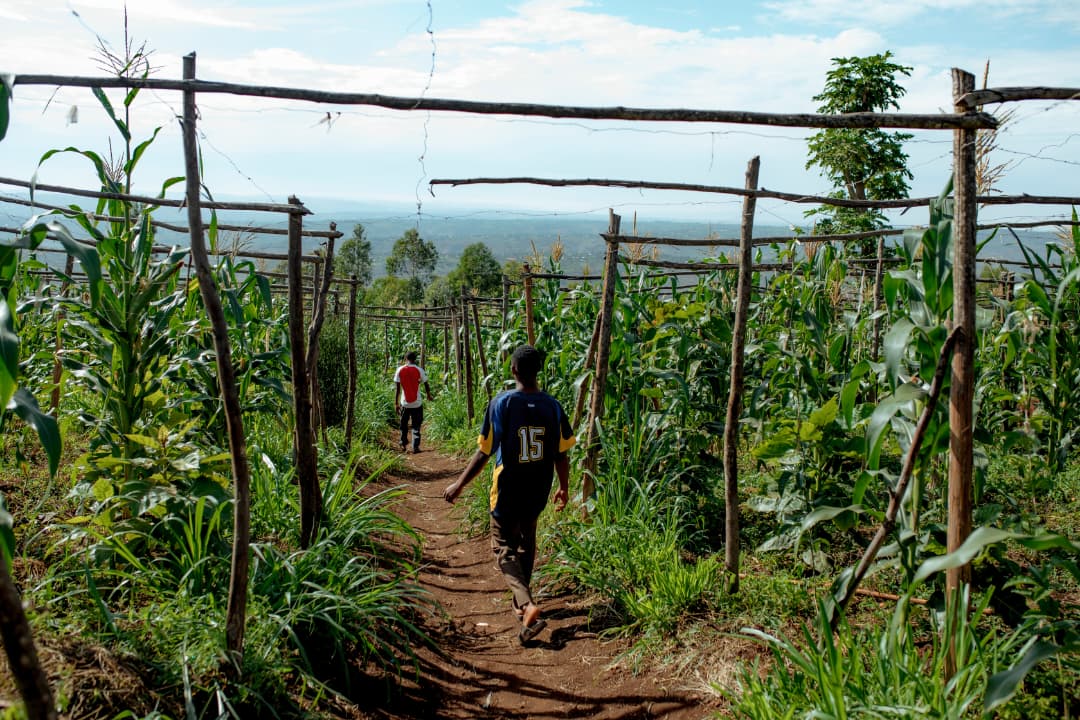
Following Kayonza District’s request to promote fruit tree planting, the project also justified the consolidation approach based on long-standing experience across the country.
This experience showed that scattered fruit tree planting often led to poor management due to limited follow-up by individual owners.
In contrast, consolidated plantations, especially when linked to Farmers’ Field Schools, allow for regular monitoring, peer learning, and more effective management, resulting in better overall performance.
Other sites are also being prepared, including Gishanda, where fruit trees will be planted on 300 hectares (Nyankora) as well as Kanyeganyege and Ndego, where planting will cover 200 hectares.
Preparatory activities are progressing well and are already creating employment opportunities for local community members.