



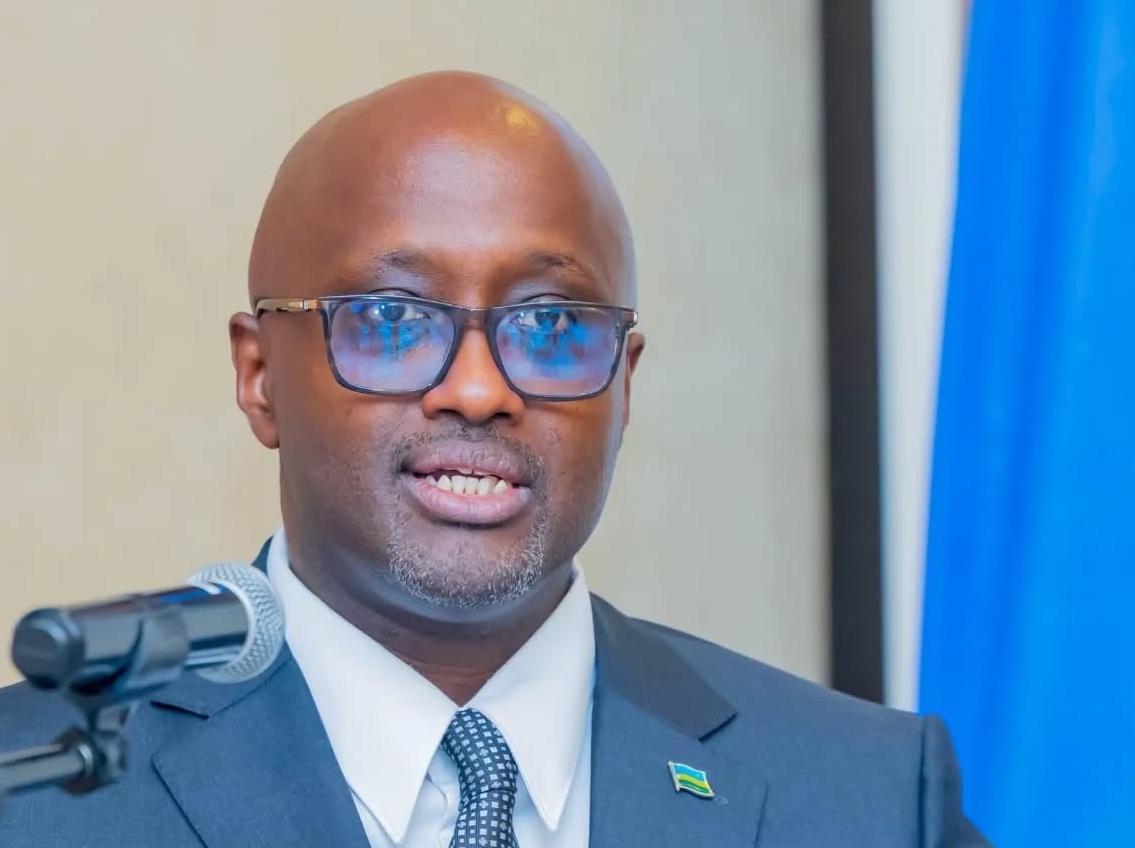
KIGALI — Rwanda’s Minister of Foreign Affairs and International Cooperation, Olivier Jean Patrick Nduhungirehe, has issued a sharp critique of the current diplomatic approach to the conflict in the Democratic Republic of Congo (DRC).
The Minister warns that the proliferation of signed agreements is “in vain” as long as Kinshasa remains committed to a military solution.
In a detailed assessment shared via his X account, the Minister highlighted a startling disconnect between the frantic pace of international mediation and the reality on the ground in Eastern DRC.
A year of paper, a year of fire
While 2024 concluded with a Luanda-led ceasefire following a U.S.-brokered humanitarian truce, 2025 has seen an even more crowded diplomatic calendar.
Minister Nduhungirehe meticulously cataloged no fewer than six major peace agreements or declarations signed in the last twelve months:
April 23: Ceasefire declaration between the Congolese Government and AFC/M23.
April 25: The Washington Principles Declaration.
June 27: Washington Accords for Peace and Prosperity (Ministerial)
July 19: The Doha Principles Declaration.
November 15: The Doha Framework Agreement.
December 4: Washington Accords for Peace and Prosperity (or simply the Washington Accords)
Despite this “stacking” of signatures in global capitals like Washington and Doha, Minister Nduhungirehe noted that the fundamental drivers of the conflict remain unaddressed due to Kinshasa’s persistent violations.
The “Tshisekedi obsession”
Central to Kigali’s analysis is the lack of genuine political will from the Congolese presidency. Nduhungirehe argued that President Félix Tshisekedi remains “haunted by the obsession with an improbable military solution,” choosing to rely on airstrikes and artillery attacks rather than the political dialogue mandated by the very agreements he signed.
“We can stack peace agreements or ceasefire declarations infinitely,” said Minister Nduhungirehe, adding: “but as long as there is no political will from Kinshasa… it will be in vain.”
The Minister’s statement suggests that the DRC government is using diplomatic processes as a “smokescreen” to buy time for military mobilizations, a move that Rwanda has repeatedly flagged as a threat to regional stability.
The “Blind eye” of the International Community
Nduhungirehe did not reserve his criticism solely for Kinshasa. He leveled a stinging rebuke at the international community, accusing global actors of “turning a blind eye to Kinshasa’s whims.”
By failing to hold the DRC accountable for violating the terms of the Washington and Doha frameworks, the Minister suggests that international mediators are inadvertently enabling a cycle of “contradictory politics”—where Kinshasa signs deals in the morning and authorizes shelling by evening.
The verdict for 2026
As the region enters the second month of 2026, the Minister’s message serves as a reality check for the brokers of the “Washington Accords” and the “Doha Process.”
For Rwanda, the path to peace is not found in the quantity of documents, but in the quality of their implementation.
Without a decisive shift away from the military-first approach and toward the “irreversible and verifiable” neutralisation of genocidal elements like the FDLR—as agreed upon in the Luanda and Washington processes—the diplomatic achievements of 2025 risk being remembered as mere footnotes in a continuing tragedy.
