


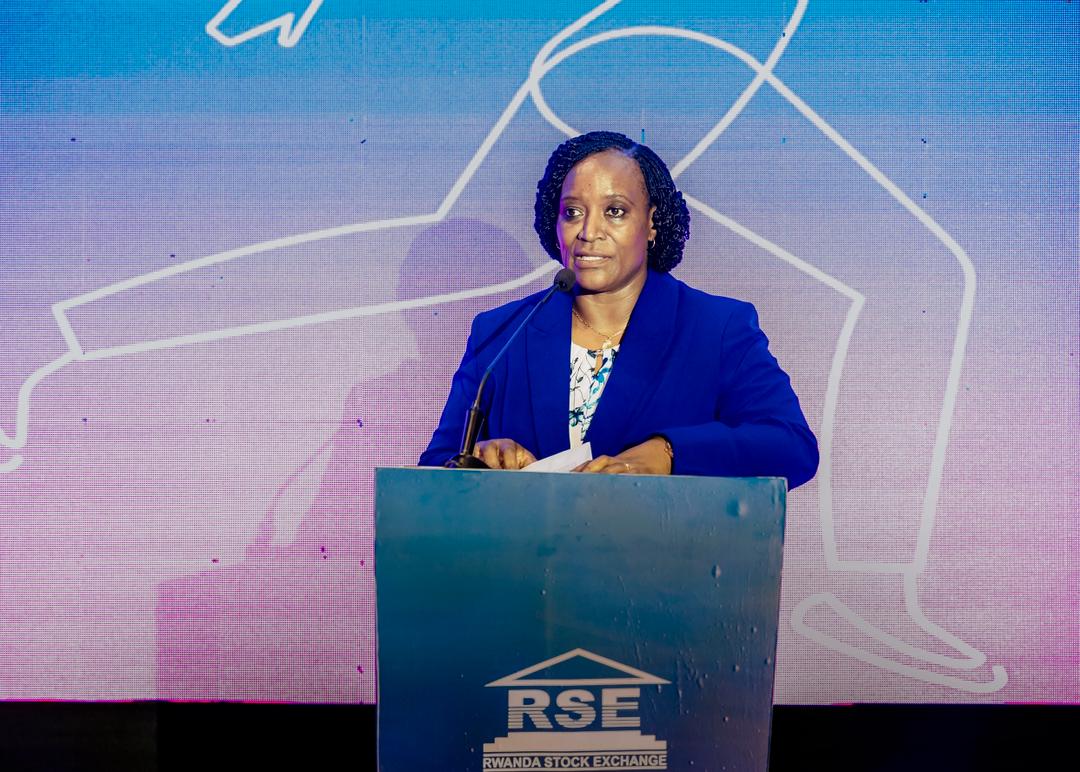
Consolée Uwimana, the Minister in charge of Gender and Family Promotion, says that the private sector must take more decisive action to close gender gaps in economic participation.
KIGALI – Rwanda’s financial sector looks towards expanding women’s participation in business leadership and investment, as policymakers and regulators warn that the country’s progress in political representation must now be matched by greater inclusion in the private sector.
Speaking during an annual gender equality commemoration hosted by the Rwanda Stock Exchange, Consolée Uwimana, the Minister in charge of Gender and Family Promotion, noted that the private sector must take more decisive action to close gender gaps in economic participation.
“While Rwanda is globally recognized for having the highest number of women in political decision-making, we must do better in the private sector,” she said.
Uwimana noted that although the private sector employs nearly 90 percent of Rwanda’s workforce, women remain underrepresented in several industries. Women account for only 4 percent of workers in transport, 13.4 percent in construction, and 20 percent in mining.
Women also occupy about 32 percent of decision-making positions in the private sector and own roughly 34 percent of businesses, according to figures referenced during the event.
Private Sector Seen as Key to Economic Equality
The minister called on financial institutions, regulators and private companies to work together to expand opportunities for women entrepreneurs and professionals.
She urged companies to set measurable targets for women’s leadership, invest in women-led enterprises and support girls entering traditionally male-dominated sectors such as energy, infrastructure, ICT and mining.
“To bridge the gap, we do not only pledge, we act. Stronger collaboration between government and the private sector would be essential to achieving Rwanda’s long-term development ambitions under Vision 2050,” Uwimana said.

Women in uniform are also at the forefront of Rwanda’s next gender equality frontier. They were also part of the annual gender equality commemoration hosted by the Rwanda Stock Exchange.
Capital Markets and Inclusive Growth
Leaders in Rwanda’s financial sector also emphasized the role of capital markets in promoting inclusive economic growth. Pierre Celestin Rwabukumba, CEO of the Rwanda Stock Exchange, said financial markets must actively support women entrepreneurs and investors.
“Stock exchanges are more than trading platforms. They mobilize investment, promote transparency and shape corporate behavior,” he said, adding that companies with gender-diverse leadership often perform better and foster stronger innovation, making gender equality not only a social priority but also an economic one.
Similarly, Romeo Ngarambe, CEO of the Capital Market Authority Rwanda, said empowering women financially has far-reaching benefits.
“When you empower a woman, you empower her children, her household and her community. Research shows that women reinvest up to 90 percent of their income back into their families and communities,” he said.
Ngarambe added that Rwanda’s capital markets must remain accessible and understandable to all citizens, including women entrepreneurs, professionals and first-time investors.

Guests attending the annual gender equality commemoration hosted by the Rwanda Stock Exchange.
Global Financing Gap Remains a Challenge
Despite progress in Rwanda, gender inequality remains a global challenge. Tikikel Tadele Alemu, representing UN Women, warned that the world still faces an estimated $360 billion annual financing gap needed to achieve gender equality.
“At the current pace, it could take more than a century to achieve full gender equality. Gender equality in corporate leadership is not just a matter of fairness, it is also an economic driver,” she said, citing estimates from the World Economic Forum.
Alemu said businesses and financial institutions have a critical role in accelerating progress by supporting women’s leadership and expanding access to economic opportunities.
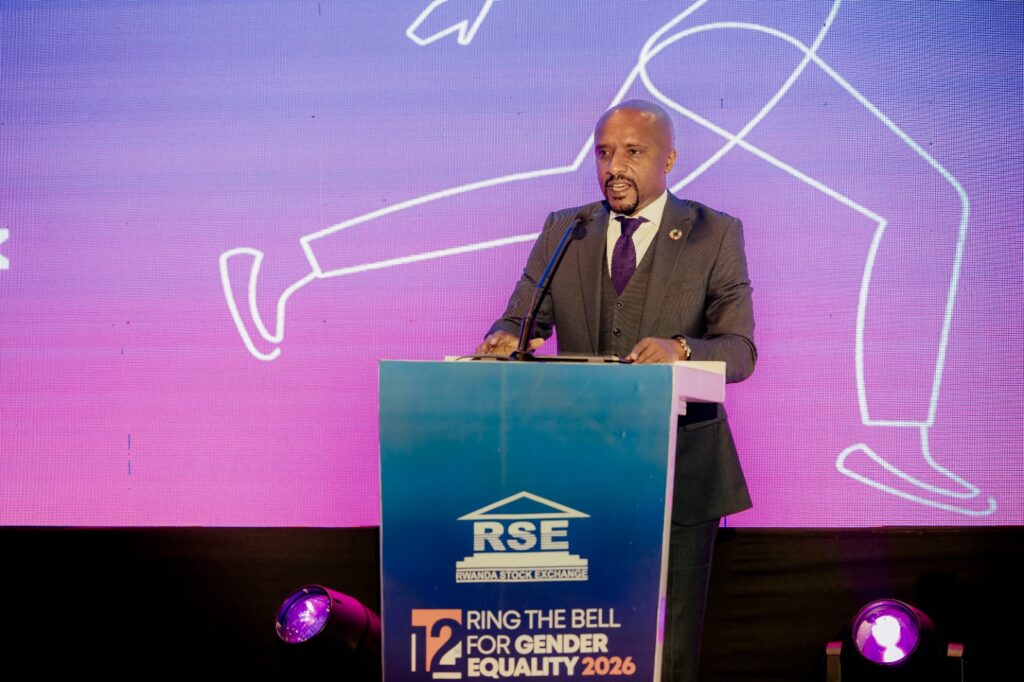
Pierre Celestin Rwabukumba, CEO of the Rwanda Stock Exchange, said financial markets must actively support women entrepreneurs and investors.
Inspiring the Next Generation of Women Investors
The gathering also focused on inspiring young women to participate in financial markets.
Students from Gashora Girls Academy of Science and Technology attended the event, with members of the school’s student investment club showcasing initiatives aimed at promoting financial literacy and investment culture among youth, particularly girls.
Officials said empowering young women with financial knowledge and investment skills is essential to building a more inclusive financial ecosystem where women are not only employees but also entrepreneurs, investors and leaders shaping Rwanda’s economic landscape.
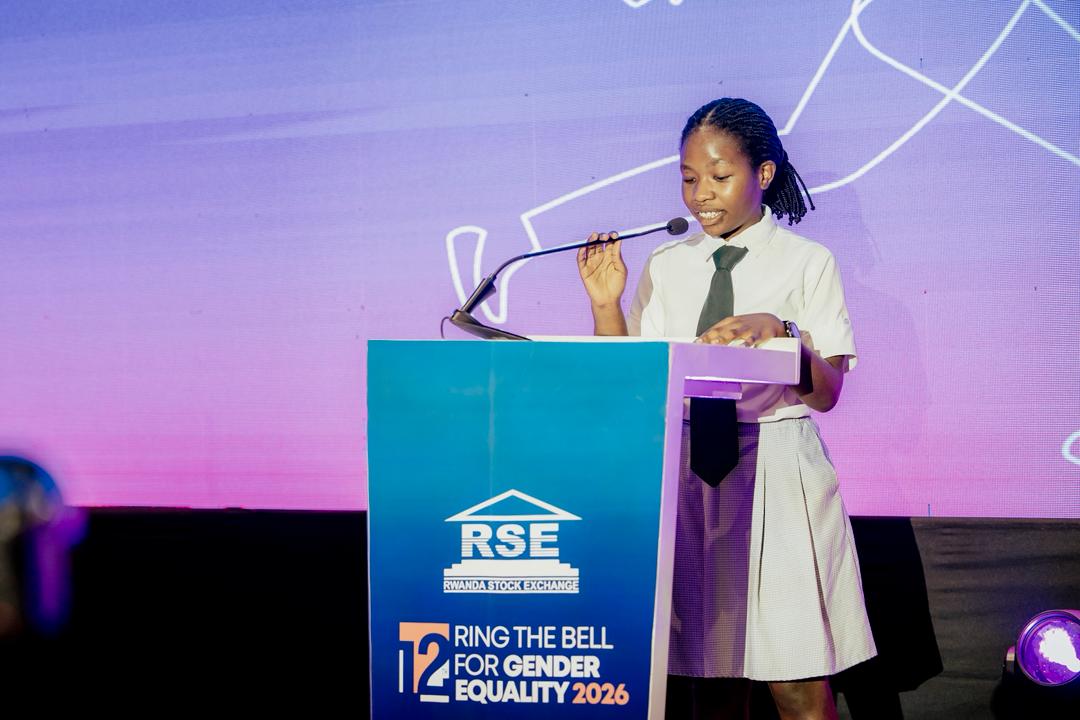
A student from Gashora Girls Academy of Science and Technology explains the school’s students’ investment club initiatives.