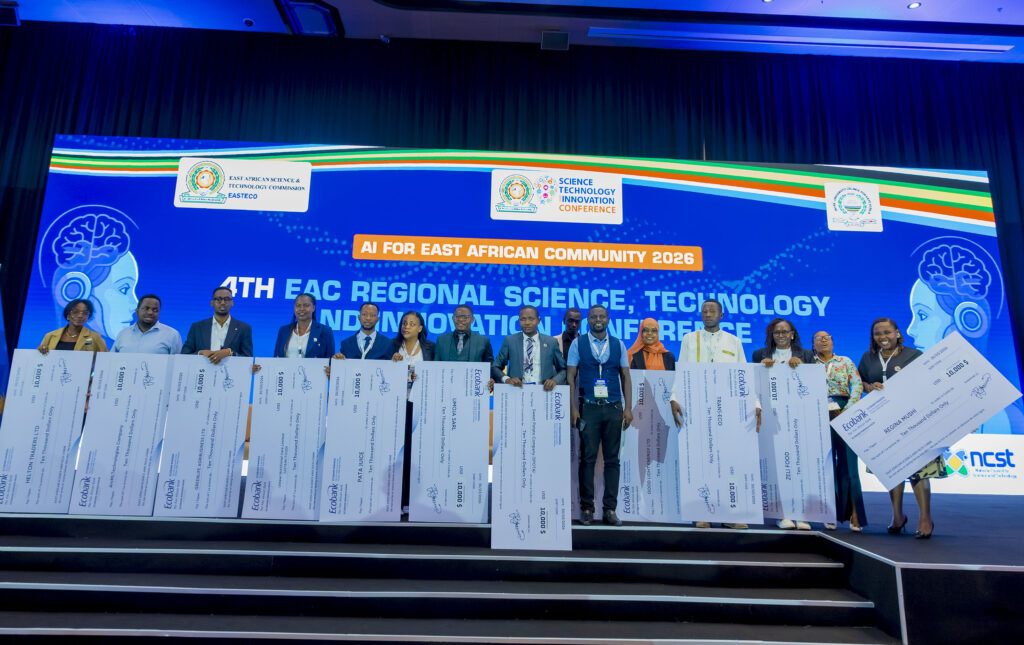
A group of young innovators and entrepreneurs stand on stage in Kigali, holding oversized cheques awarded in recognition of their cutting-edge solutions in AI.
KIGALI -In a bid to pivot from digital consumers to global competitors, East African Community (EAC) member states have launched a regional Artificial Intelligence (AI) technologies fund designed to spark homegrown research and commercialize “bankable” projects across the bloc.
The announcement, made Tuesday at the conclusion of the 4th EAC Regional Science, Technology and Innovation (STI) Conference, marks a strategic shift in how the region intends to insulate its economy against a rapidly evolving global landscape where value is increasingly defined by data rather than physical assets.
For over a decade, East Africa’s digital growth has been defined by expanding mobile connectivity and the adoption of imported platforms. However, officials noted that while technology has become embedded in daily life, the “economic center of gravity” remained elsewhere, with profits and data sovereignty flowing out of the region.
“This is about moving from participation to ownership,” said conference organizers. The new fund aims to address the “immeasurable” imbalance of benefits by financing flagship programs that allow the region to generate, process, and monetize its own intelligence.
The three-day summit in Kigali didn’t just focus on high-level policy. The closing ceremony doubled as a showcase for the region’s human capital, with awards presented to young innovators who have developed AI solutions for local challenges. These ventures range from precision agriculture to fintech, signaling a push to turn raw ideas into commercially viable, cross-border enterprises.
By pooling resources, the EAC—which includes Burundi, the Democratic Republic of Congo, Kenya, Rwanda, South Sudan, Tanzania, Somalia, and Uganda—hopes to create a unified AI ecosystem capable of attracting large-scale investment and driving structural economic transformation.
From Digital Access to Economic Control
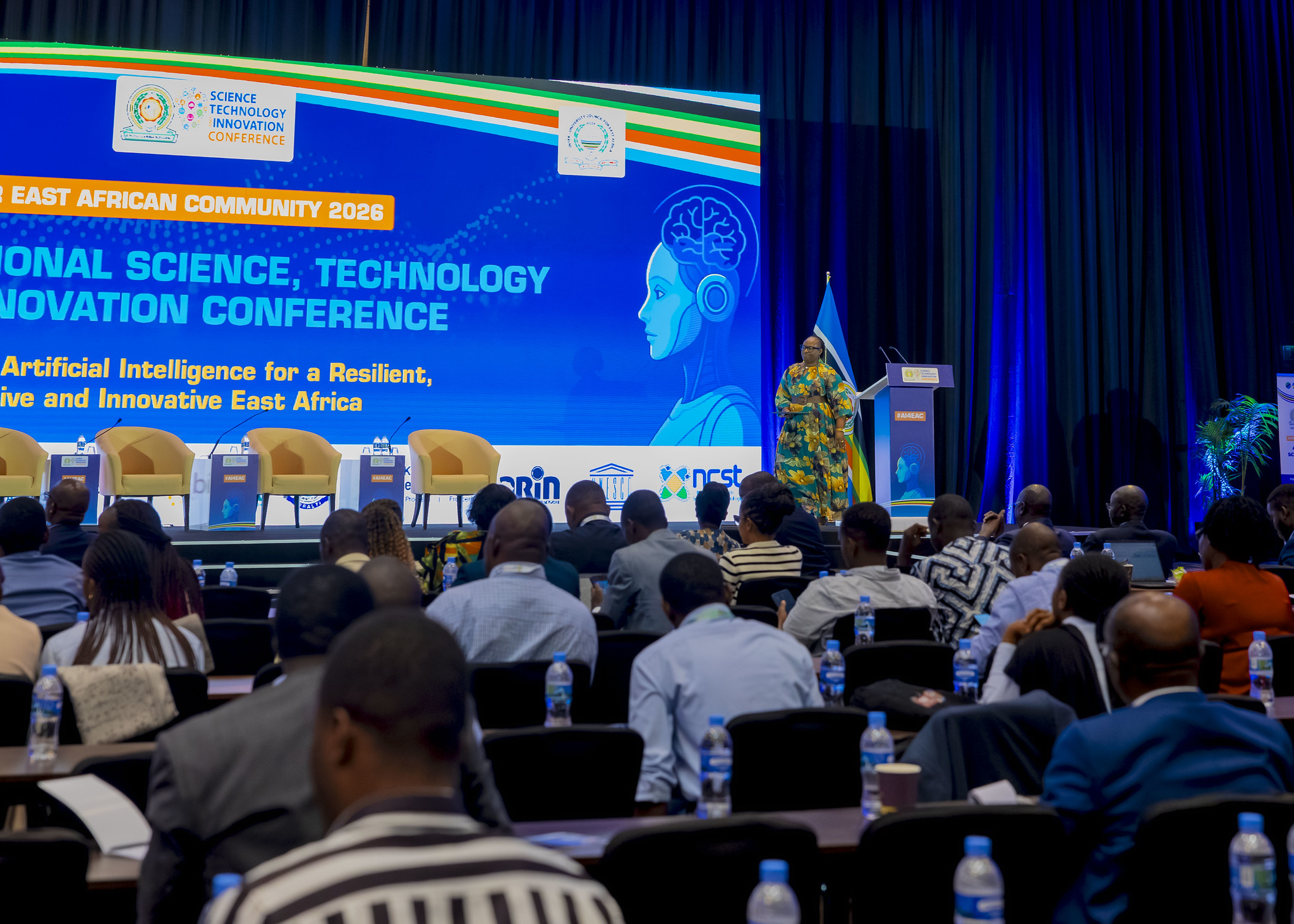
The 4th EAC Regional Science, Technology and Innovation (STI) Conference concluded on April 1, 2026 in Kigali.
Across East Africa, policymakers are increasingly treating AI as an economic layer that cuts across agriculture, healthcare, trade, education, and governance. Its applications are already visible.
But beneath the practical gains in improving weather forecasting for farmers, enabling remote diagnostics in underserved communities, and streamlining cross-border trade systems, underlies a strategic question of who owns the systems that make these efficiencies possible.
Uganda’s Minister of Science, Technology and Innovation, Dr. Monica Musenero Masanza, framed this concern with urgency, describing AI as a transformative force redefining how economies function and grow.
Speaking via Zoom from the US, she argued that the traditional pillars of production—land, labor, and capital—are steadily giving way to knowledge and data as primary drivers of value. In this shifting landscape, data is no longer a mere byproduct but a critical asset.
Yet much of Africa’s data, she warned, remains underutilized or leveraged by external players, leaving the continent at risk of deepening its role as a passive consumer in the global digital economy.
“With the fund, our deliberate interventions will curb any possible increase in the cost of access to AI tools, and the ownership of outcomes will remain unlimited,” Musenero explained.
The Regional AI Technologies Fund is designed to disrupt the pattern by mobilizing blended finance and attracting private sector participation. It seeks to convert regional innovation into callable enterprises, thus ensuring that value generated within EA is also retained within it.
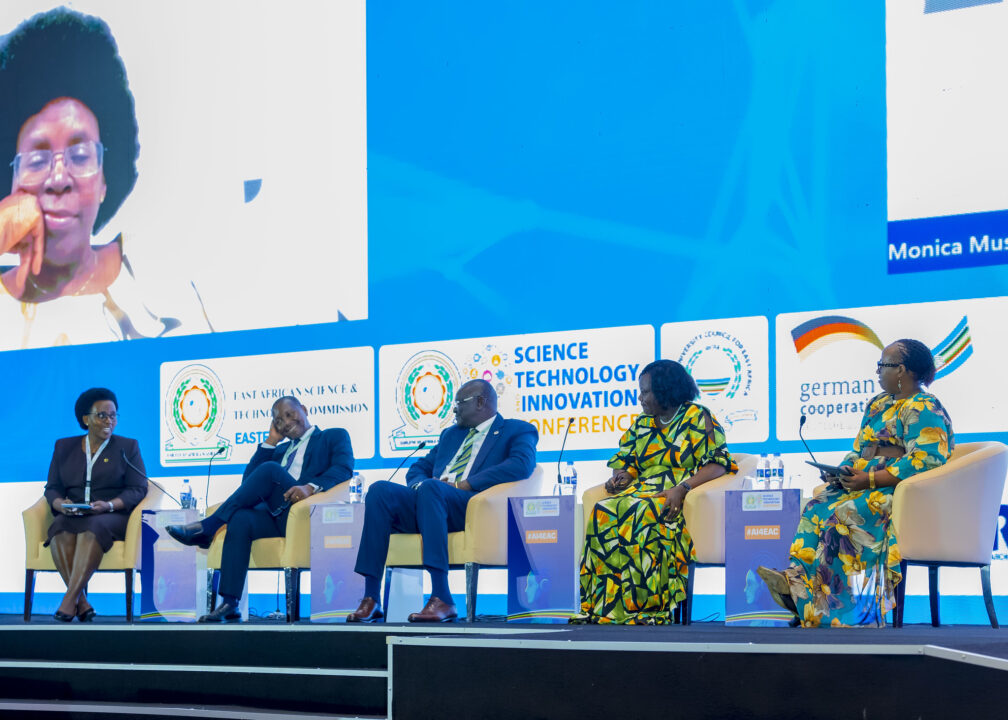
Dr. Monica Musenero, Uganda’s Minister of Science, Technology and Innovation, described AI as a transformative force while peaking online from the US.
Building Capacity to Match Ambition
Financing alone cannot sustain an AI-driven economy, according to Tanzania’s Minister for Education, Science, and Technology, Prof. Adolf Mkenda. He emphasized that the region must invest as heavily in human capital as it does in infrastructure.
“We should not just be consumers; we should also produce knowledge,” Prof. Mkenda stated, highlighting the need to cultivate a generation capable of “advancing the frontiers of artificial intelligence.”
His remarks reflect a broader regional push to strengthen human capital through targeted training, international partnerships, and specialized education in data science. The goal is to equip the workforce with the digital skills necessary to serve as primary drivers of innovation.
Similarly, efforts to harmonize data governance frameworks, development of shared digital infrastructure, and establishment of centres of excellence, point to a strategic initiative away from fragmented national approaches.
Kenya’s Cabinet Secretary for the EAC and Regional Affairs, Beatrice Askul Moe, defined this as an urgent and opportunistic moment. “Artificial intelligence, is no longer a distant or abstract concept. It is a critical tool for our survival and prosperity,” she noted.
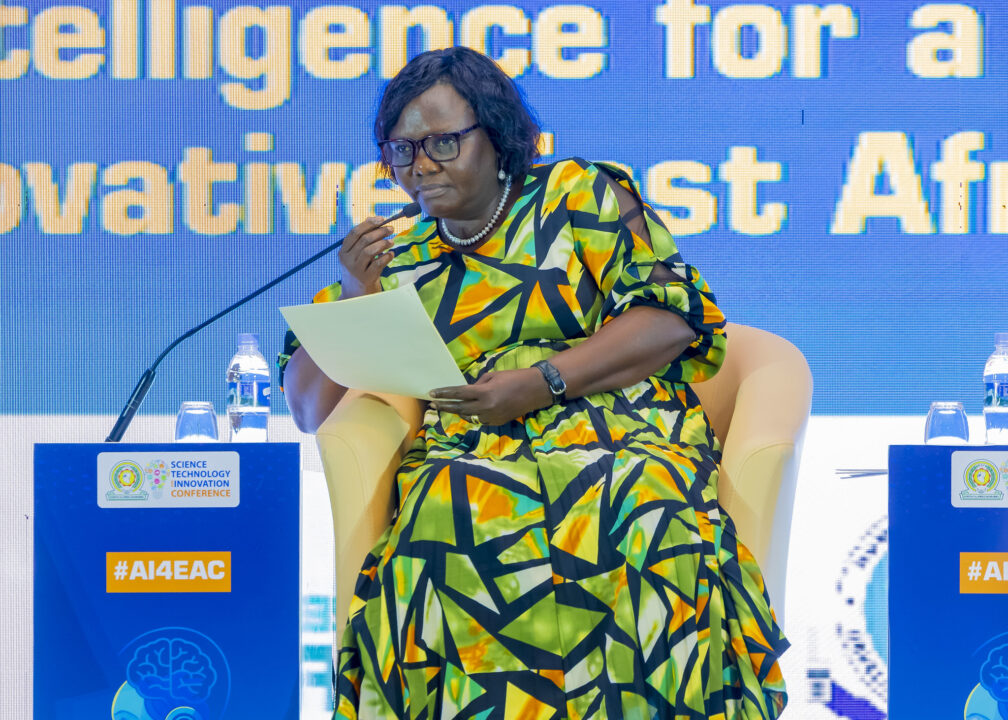
Kenya’s Cabinet Secretary for the EAC and Regional Affairs, Beatrice Askul Moe speaking to the delegates.
The Test of Implementation
Though the establishment of the fund marks a strategic breakthrough, its success will depend on execution as South Sudan’s Minister of ICT and Postal Services, Ateny Wek Ateny cautioned.
“The real measure of progress lies not in declarations, but in delivery. These deliberations would have no meaning if we do not actualize them with concrete actions,” he said, pledging to translate commitments into tangible outcomes in his own country.
The emphasis on implementation is echoed across the region, where the challenge is no longer defining priorities, but aligning resources, policies, and institutions to deliver on them.
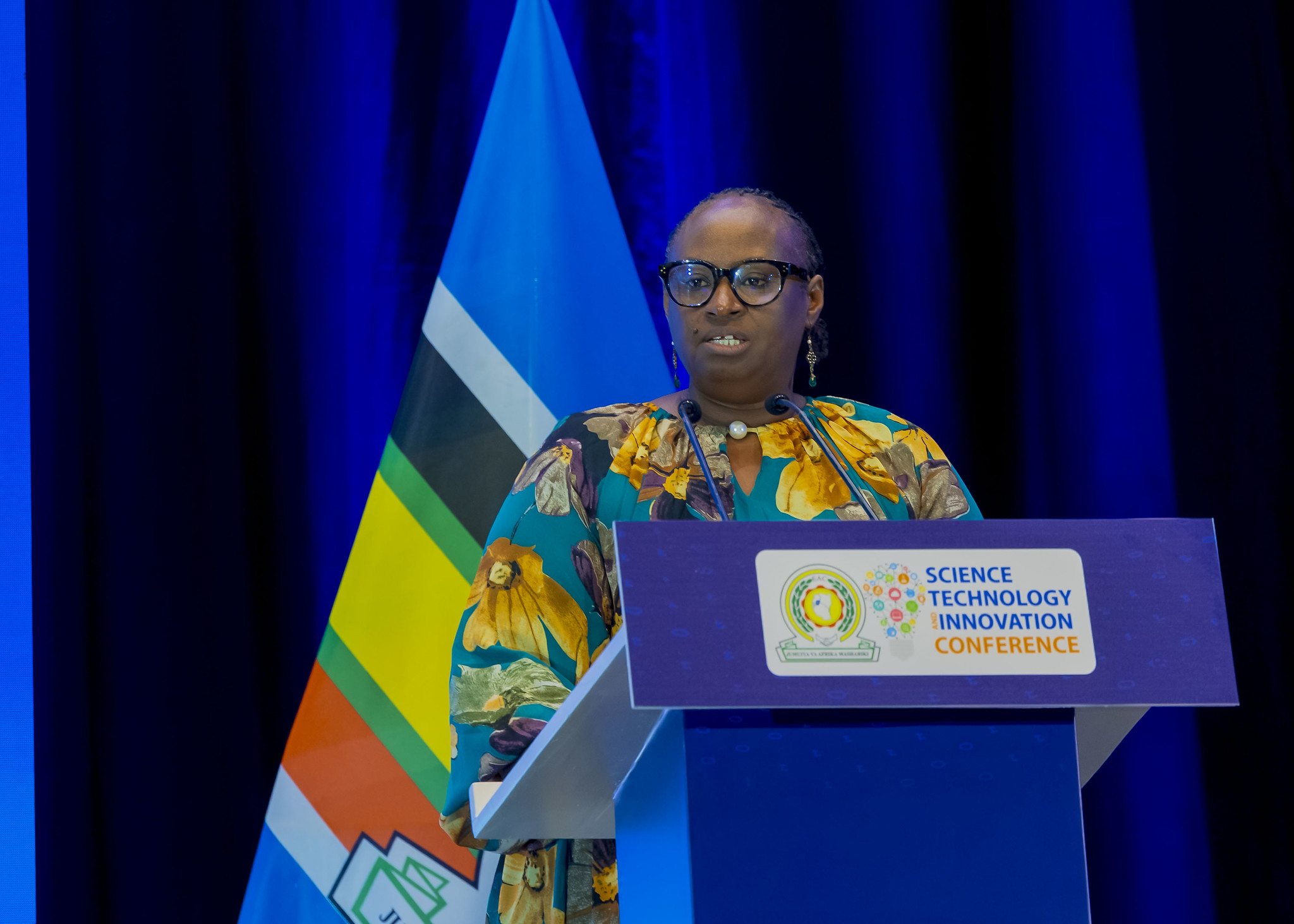
Rwanda’s Minister of State for Foreign Affairs, Dr. Usta Kaitesi, pointed to the broader significance of this fund.
Rwanda’s Minister of State for Foreign Affairs, Dr. Usta Kaitesi, pointed to the broader significance of this alignment, noting that coordinated regional action will be essential in addressing persistent gaps in infrastructure, skills, and investment.
She underscored the importance of translating strategic vision into measurable impact through sustained commitment and collective effort. Kaitesi acknowledged that the establishment of the Regional AI Technologies Fund offers a starting point.
The established regional AI technologies fund introduces a mechanism through which ambition can be financed, innovation scaled, and economic transformation accelerated. More importantly, it is a shift in mindset and a strategic financial instrument.
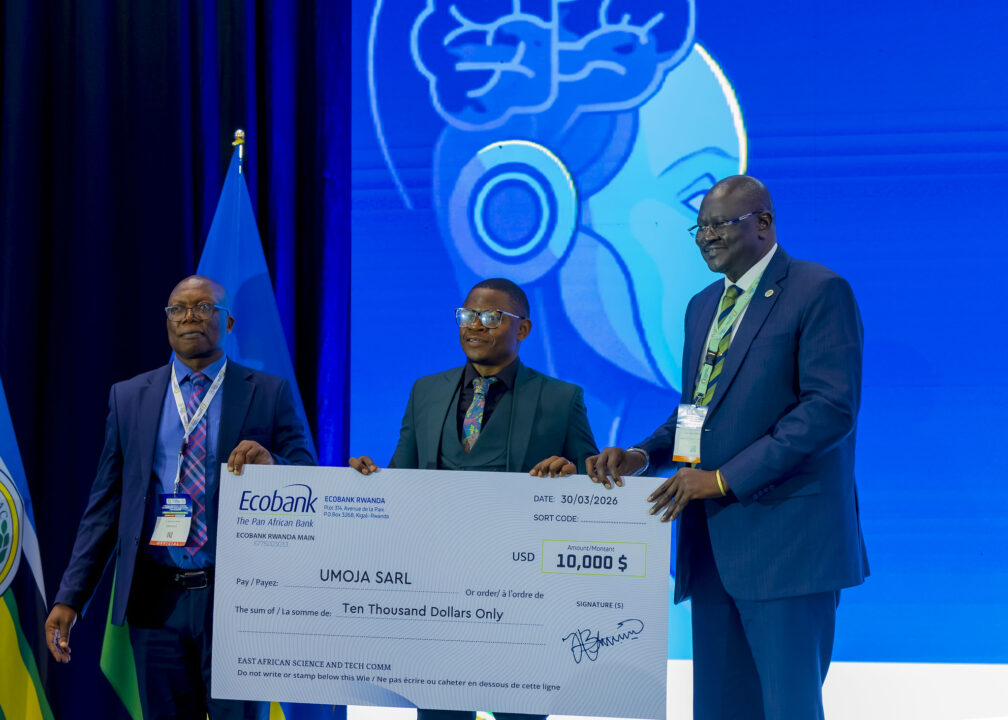
Sudan’s Minister of ICT and Postal Services, Ateny Wek Ateny (R) hands over a dummy cheque of $10,000 to one of the winners. He explained that success of AI in EAC will depend on execution.