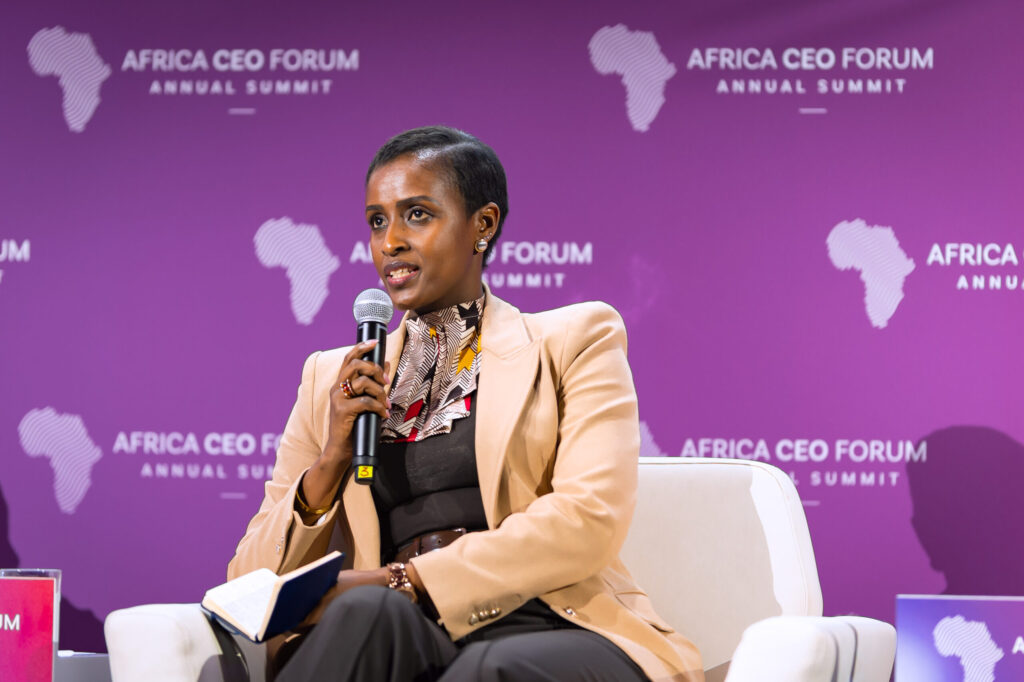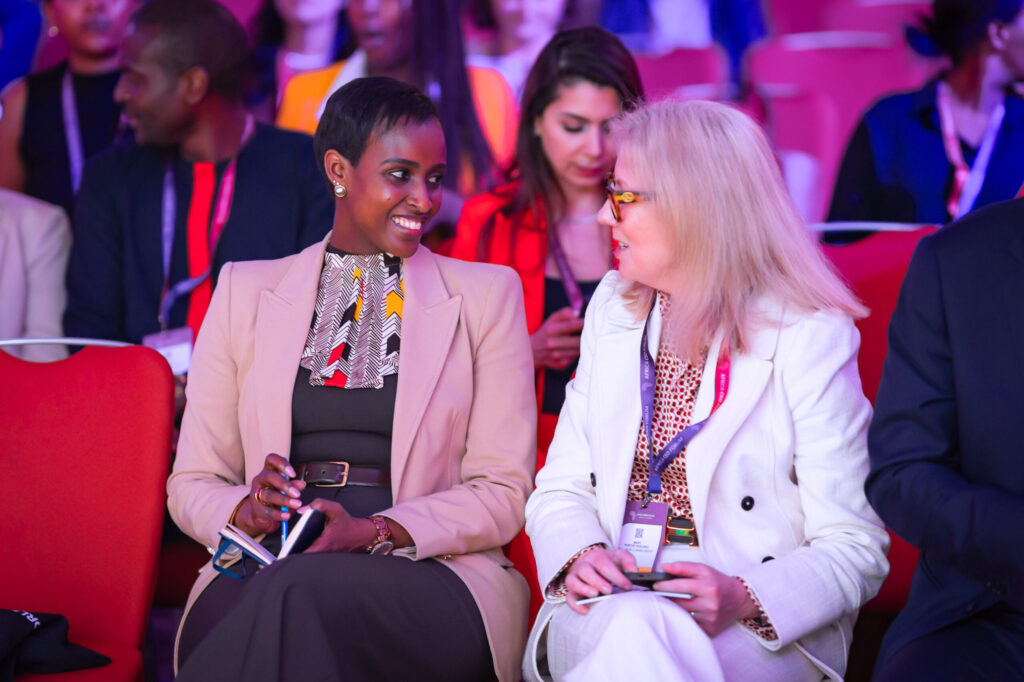
Minister of Sports, Nelly Mukazayire, interacting with a guest at the Africa CEO Forum 2026.
KIGALI – Six years ago, Rwanda made a decision many considered too ambitious to work by building a modern indoor arena in just six months and bet that global sport could become part of the country’s economic future.
Today, that gamble is delivering commercial results far beyond basketball.
The Basketball Africa League (BAL), which launched its inaugural season in Kigali in May 2021, says it has secured 20 new commercial partners this year alone, a sign that global investors are beginning to see African sport not simply as entertainment, but as a serious economic industry.
At the Africa CEO Forum 2026 in Kigali, Rwanda’s Minister of Sports, Nelly Mukazayire, and BAL President Amadou Gallo Fall outlined how Africa’s sports economy is entering a new phase driven by infrastructure, media, technology and private investment.
For decades, Africa produced world-class athletes and massive audiences, but much of the financial value tied to sponsorships, broadcasting rights and sports infrastructure was captured outside the continent. That imbalance, they argued, is beginning to shift.
The Arena That Changed Everything
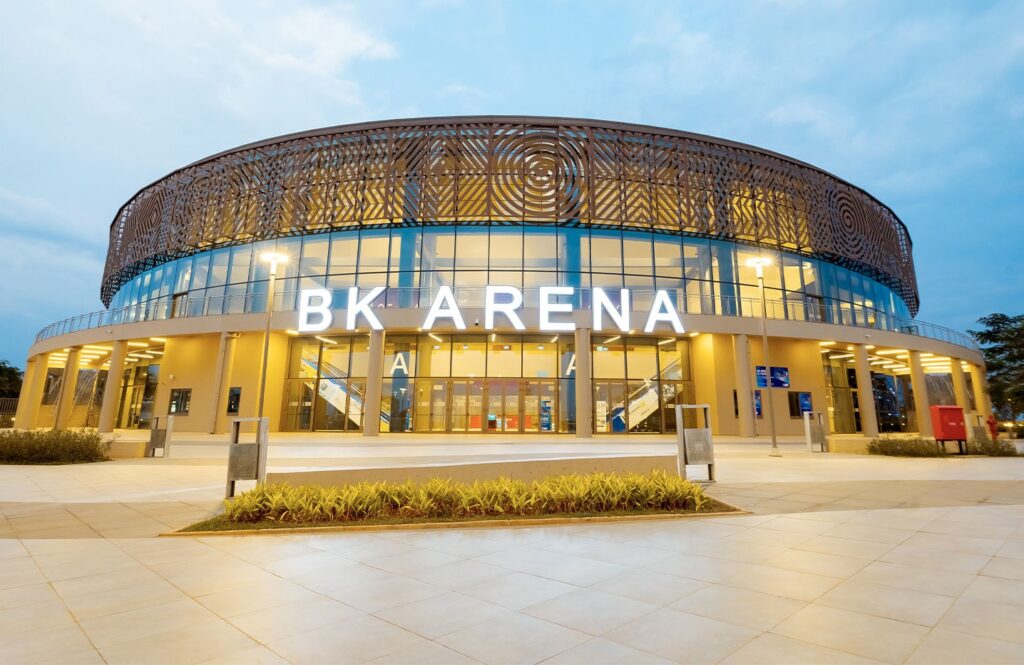
The Basketball Africa League (BAL) launched its inaugural season in Kigali in May 2021 at the BK Arena.
Before BAL could attract sponsors and institutional investors, it needed a credible stage. The BK Arena became that stage.
Completed in 2019, the arena quickly transformed Kigali into the center of a growing African sports and entertainment conversation. It later hosted BAL’s inaugural season and became proof that world-class sports infrastructure could succeed on the continent.
“If you heard about the genesis of BAL, the first phase happened here in Rwanda,” Mukazayire said, describing the arena as part of a larger strategy to position Rwanda as a destination for global events and sports tourism.
Around BK Arena, the Remera neighborhood has steadily evolved into a sports and entertainment hub, with restaurants, hospitality ventures and new commercial developments reshaping the area’s identity.
The arrival of Zaria Court, backed by Masai Ujiri through Zaria Group, accelerated that transformation further by creating an ecosystem built around sport, lifestyle and entertainment.
For Rwanda, sport increasingly represents an economic sector rather than a standalone activity. “When we add hotels, restaurants and entertainment spaces around sports infrastructure, we create value,” Mukazayire noted.
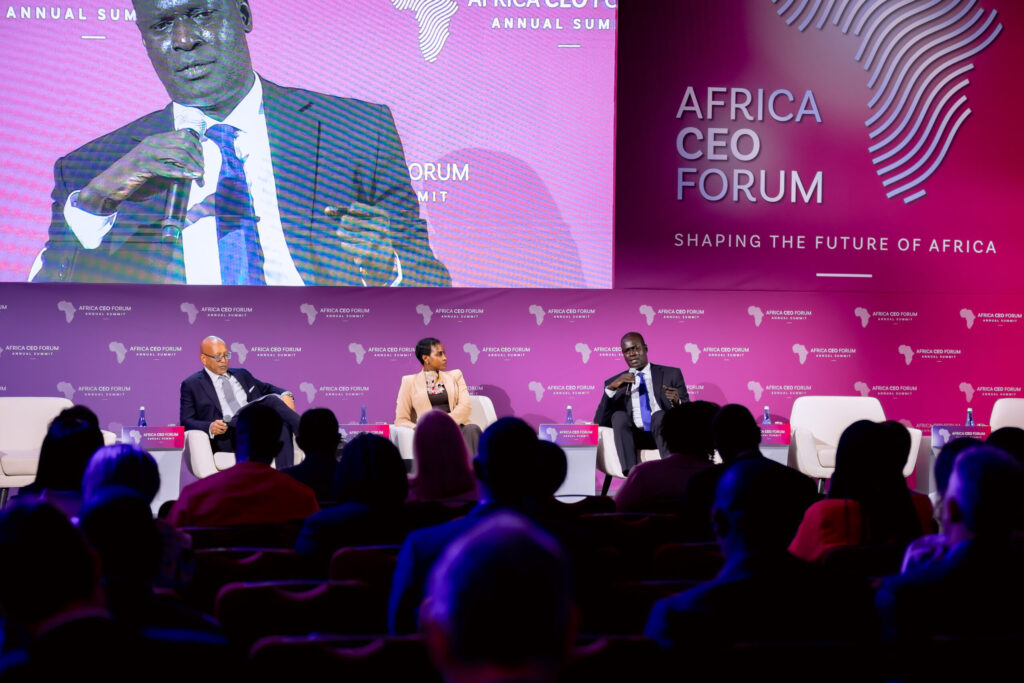
BAL President Amadou Gallo Fall says that this year alone, BAL brought in 20 new commercial partners.
BAL’s Commercial Leap
BAL President Amadou Gallo Fall says that the growth of BAL is a result of years of groundwork by the NBA and its partners across Africa.
The strategy started with grassroots development, academies and coaching systems before eventually creating a professional league capable of retaining more African talent and commercial value on the continent.
“We had to stop thinking talent must leave Africa to succeed,” Fall said. That long-term investment is now beginning to produce measurable business momentum.
BAL says the league generated 720 million social media views last season and 15.8 billion digital impressions globally, while games are now broadcast in more than 200 countries through partners including Canal+ and MultiChoice.
The commercial growth has also attracted global technology firms, lifestyle brands and institutional investors eager to enter Africa’s fast-growing sports market.
“This year alone, we brought in 20 new partners,” Fall said, describing the milestone as evidence that investors are increasingly viewing African sports properties as scalable businesses.
The timing is significant.
Africa’s sports economy is expanding rapidly, fueled by a young population, rising digital consumption and growing global demand for African entertainment products. The 2023 Africa Cup of Nations alone generated nearly two billion global views across television and digital platforms.
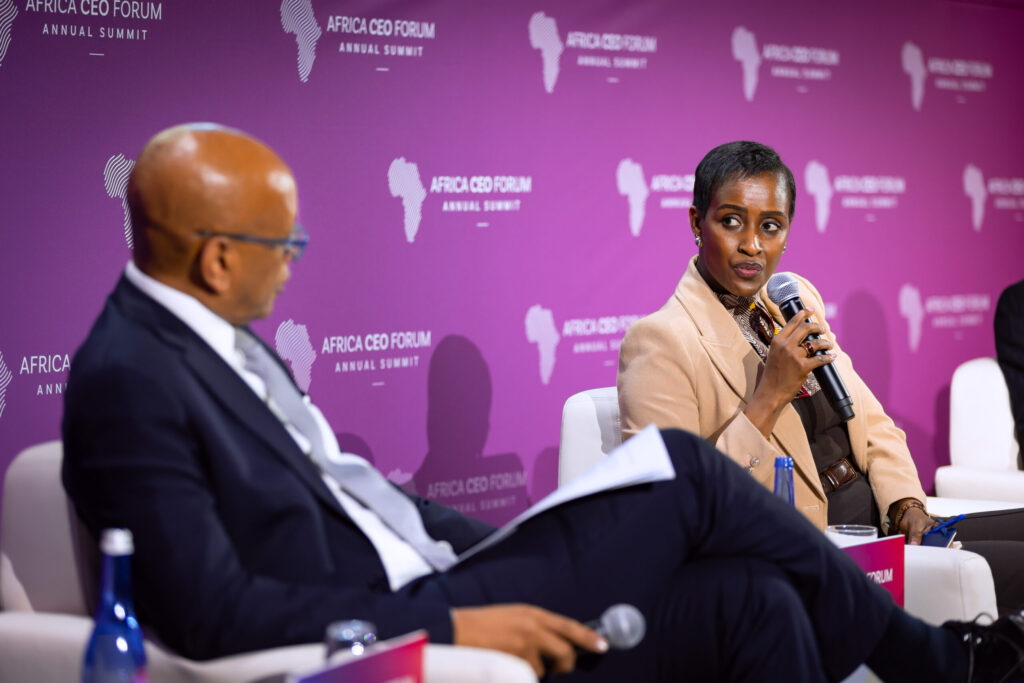
Minister of Sports, Nelly Mukazayire speaking during a panel discussion at the Africa CEO Forum 2026.
Beyond Basketball
Both speakers said the future of African sport lies in ownership of media rights, sponsorships, data, infrastructure and the broader business ecosystems surrounding sport.
BAL is now pushing toward a franchise-style model designed to create stronger clubs, recognizable stars and more stable local business operations capable of generating jobs and recurring revenue.
The wider ambition stretches beyond basketball itself.
Fall described African sport as part of a larger cultural economy tied to music, fashion, entertainment and youth identity, industries where Africa already commands global influence.
“This is bigger than basketball. It is about building an African sports and entertainment economy that the world wants to consume,” he said.
In Kigali, that transition is already visible.
A few years ago, Remera was known mainly for a stadium.
Today, it is increasingly becoming a blueprint for how African cities could transform sport into a serious engine of investment, tourism and economic growth.