



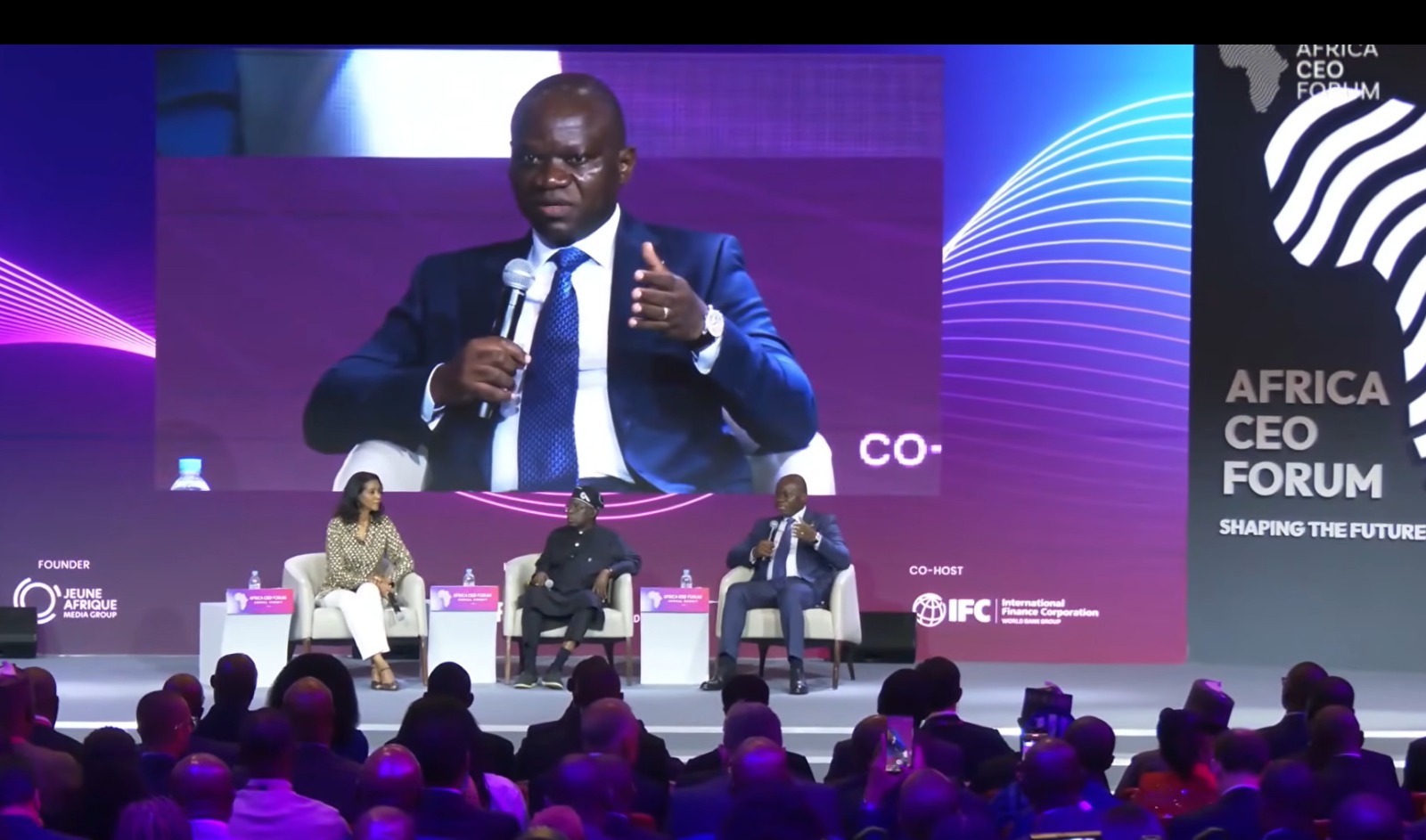
Gabon President Brice Clotaire Oligui Nguema (R) speaking on panel with Nigerian President Bola Tinubu, moderated by Zeinab Badawi
At a high-profile presidential panel during the Africa CEO Forum 2026 in Kigali, President Brice Clotaire Oligui Nguema delivered a warning to one of the biggest foreign mining operators in his country: begin transforming Gabon’s manganese locally, or make way for others willing to do so.
The company at the center of the ultimatum is Compagnie Minière de l’Ogooué, better known as Comilog, a subsidiary of the French mining and metallurgy group Eramet.
Nguema said his government had given the company until 2029 to move beyond simply extracting and exporting raw manganese ore — one of Gabon’s most strategic resources — and begin processing it domestically.
“There are some capable companies in this room that can do that,” Nguema said, looking across an audience packed with investors, industrialists and African business executives.
The remark drew immediate attention because manganese is not merely another mineral for Gabon. It sits near the center of the country’s economy.
Why Manganese Matters So Much to Gabon
Gabon is among the world’s leading producers of manganese, a metal essential for steel production and increasingly important in electric vehicle batteries and energy storage technologies.
Manganese exports account for a major share of Gabon’s mining revenues and foreign exchange earnings, making the sector critical to the country’s economic future.
For decades, however, much of that wealth has followed a familiar African pattern: raw extraction with limited local transformation.
Ore is mined in Gabon, shipped abroad and processed elsewhere — leaving much of the higher-value industrial activity, skilled manufacturing and downstream profits outside the country.
Nguema’s comments reflected a broader shift spreading across resource-rich African nations, where governments are increasingly demanding that foreign mining firms process more minerals locally rather than simply exporting raw commodities.
“Shared Ownership”
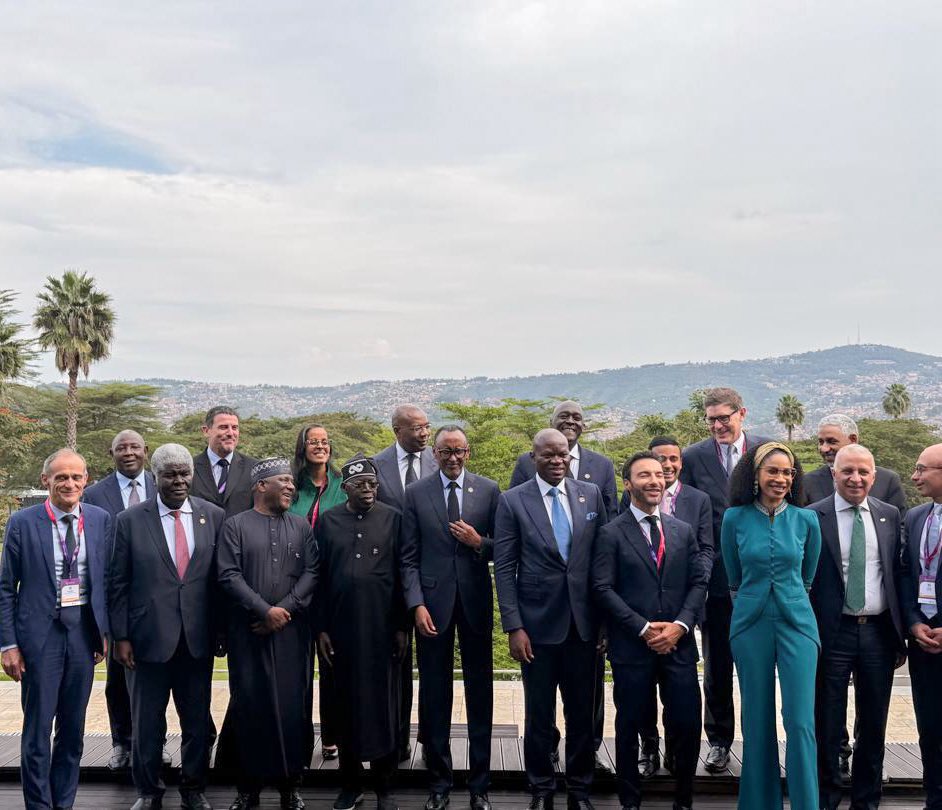
The Presidents and Heads of Government attending the Forum in a group photo with host President Kagame
The message fit squarely within the broader theme dominating this year’s Africa CEO Forum 2026: “Scale or Fail: Why Africa Must Embrace Shared Ownership.”
Throughout Day One of the two-day summit, presidents, executives and investors repeatedly argued that Africa can no longer afford to remain primarily an exporter of raw materials while value addition, industrial processing and manufacturing happen overseas.
The presidential panel itself — themed “The Sovereign Test: Can Africa Turn Continental Alliances into Assets?” — focused heavily on how African economies can build industrial scale through regional cooperation, intra-African trade and local transformation of natural resources.
Nguema’s warning to Comilog became one of the clearest examples of that agenda in practice.
His comments also reflected the political repositioning underway in Gabon since he seized power in the August 2023 coup that ended more than five decades of rule by the Bongo family.
Since then, Nguema has sought to portray himself as both a reformer and an economic nationalist determined to extract greater value from Gabon’s natural resources.
At the forum, he said his government had already moved quickly to overhaul laws affecting the private sector in an attempt to create a more attractive business environment while simultaneously demanding greater economic returns for Gabon itself.
Tinubu Pushes for African Commodities Exchanges
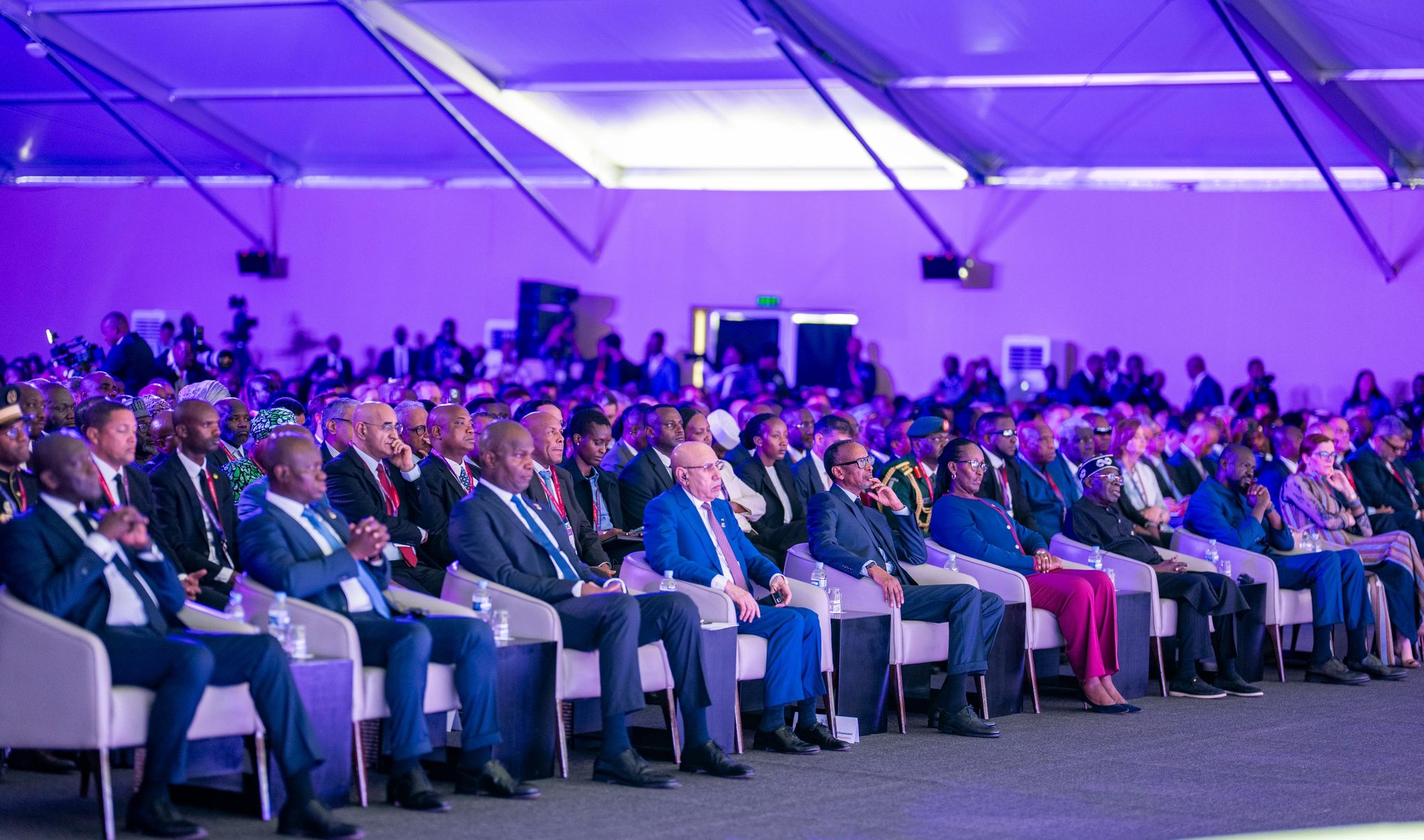
Appearing alongside Nguema was Nigerian President Bola Ahmed Tinubu, who argued that Africa must stop operating as fragmented national economies and begin building continental systems capable of competing globally.
Tinubu proposed the creation of African commodities exchanges that would allow African countries to trade strategically important resources among themselves rather than relying overwhelmingly on foreign-controlled markets.
“Africa needs to put its money where its mouth is,” Tinubu said.
But when moderator Zeinab Badawi pressed him on why such systems still do not exist and when concrete action would happen, the Nigerian president avoided giving specific timelines or commitments.
Instead, Tinubu shifted toward the need for research and development investment across the continent, arguing that Africa cannot industrialize without investing heavily in innovation and technology.
The audience applauded as he called for stronger mechanisms to protect local producers, comparing the idea to his own “Nigeria First” economic policies aimed at prioritizing domestic industries.
The exchange captured one of the central tensions running through the forum: African leaders increasingly speak the language of economic sovereignty and value addition, but implementation often remains slower and more complicated than the rhetoric.
Still, Nguema’s intervention suggested some governments may now be prepared to apply direct pressure on multinational corporations to accelerate that shift.
Critical Minerals and Africa’s Industrial Future
Nguema’s challenge to Comilog underscored the growing strategic importance of critical minerals in the global economy.
As demand rises for electric vehicles, battery technologies and renewable energy systems, African countries possessing minerals such as manganese, cobalt and lithium are finding themselves under mounting pressure to ensure they capture more of the industrial value chain.
For Gabon, manganese is especially important.
The country’s Moanda deposits — operated largely by Comilog — are among the richest in the world. Yet despite decades of extraction, Gabon still struggles with unemployment, limited industrialization and dependence on commodity exports.
Nguema suggested that model must change.
And if existing foreign operators are unwilling to adapt, he implied, African firms themselves could step in.
Agriculture, Infrastructure and Africa’s Youth
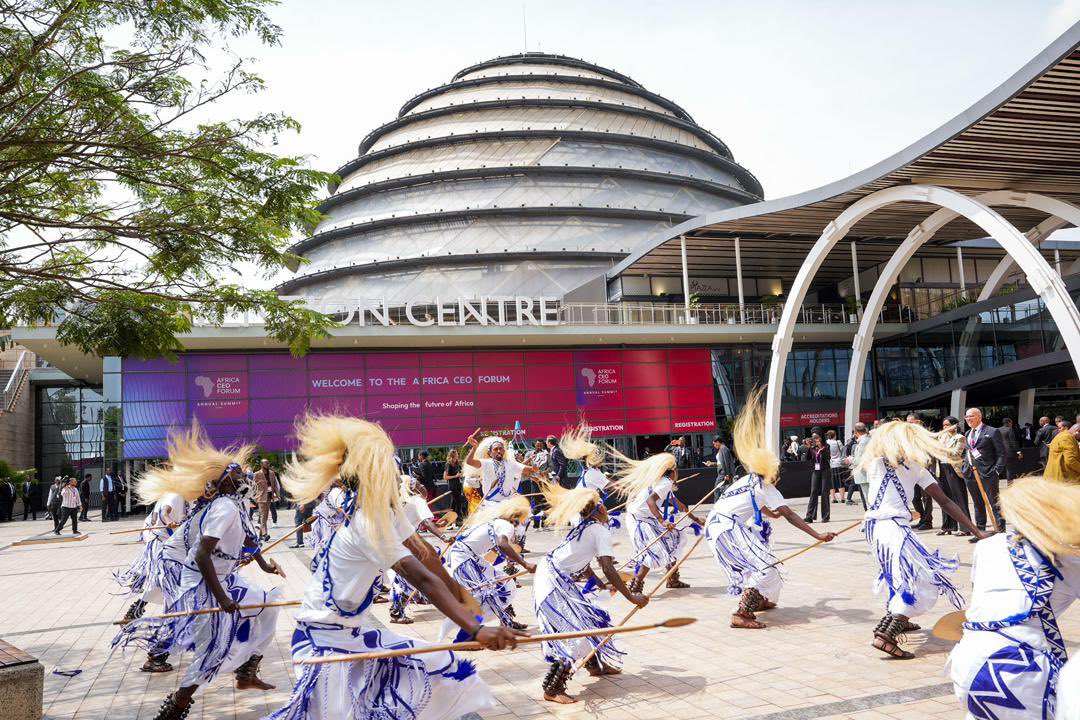
The broader panel moved across several other themes central to Africa’s economic future.
Tinubu argued that transforming agriculture would require connecting farmers to markets through major infrastructure investments, citing a massive regional highway linking Nigeria to Benin and Ghana being constructed with cement supplied by Aliko Dangote’s company, Dangote Cement.
“The road will last up to 500 years,” Tinubu said.
Nguema, meanwhile, argued that reliable energy infrastructure would be critical to modernizing African agriculture and invited investors to explore what he described as vast amounts of unused land in Gabon.
He also warned about what he called “bureaucratic youth” — young Africans who overwhelmingly prefer office and oil-sector jobs rather than agriculture.
“Africa’s young people,” he said, “must be encouraged to join agriculture.”
The Battle for Africa’s Digital Future
On technology and digitization, Tinubu stressed the need for stronger fiber-optic infrastructure and private investment, arguing that Africa must “de-risk” the sector to attract capital.
He described Nigeria’s youth population as “vibrant” and “restless,” adding that they would not tolerate political failure indefinitely.
“If I don’t perform,” Tinubu said, “they will throw me out.”
Nguema closed by pointing to Rwanda as an example of what African digital transformation could look like.
What Rwanda had done in technology and digitization, he argued, could be replicated elsewhere across the continent.
But he warned that Africa risks losing control of the artificial intelligence revolution unless it trains its own youth and builds locally owned digital infrastructure.
“Africa needs to have some form of control on the AI revolution,” he said, arguing for African-operated data centers rather than continued dependence on foreign technology firms.
By the end of the panel, the message from both presidents had become unmistakable: Africa’s future, they argued, cannot depend solely on exporting raw materials and importing finished products.
The continent, they said, must begin owning more of the value it creates.
