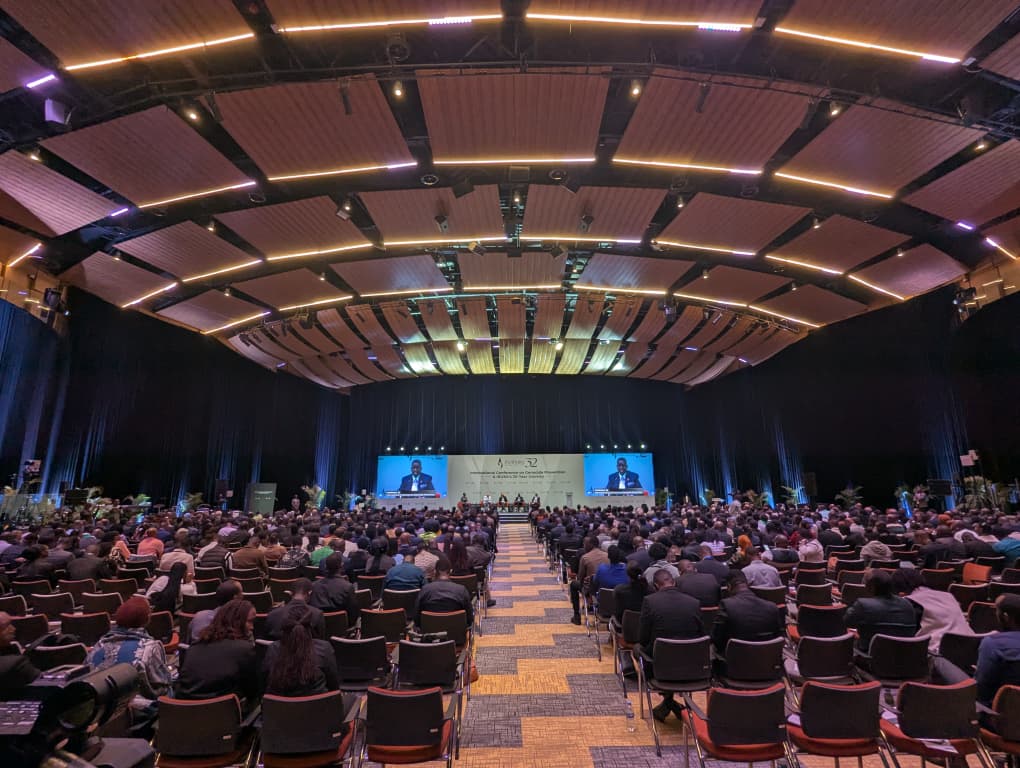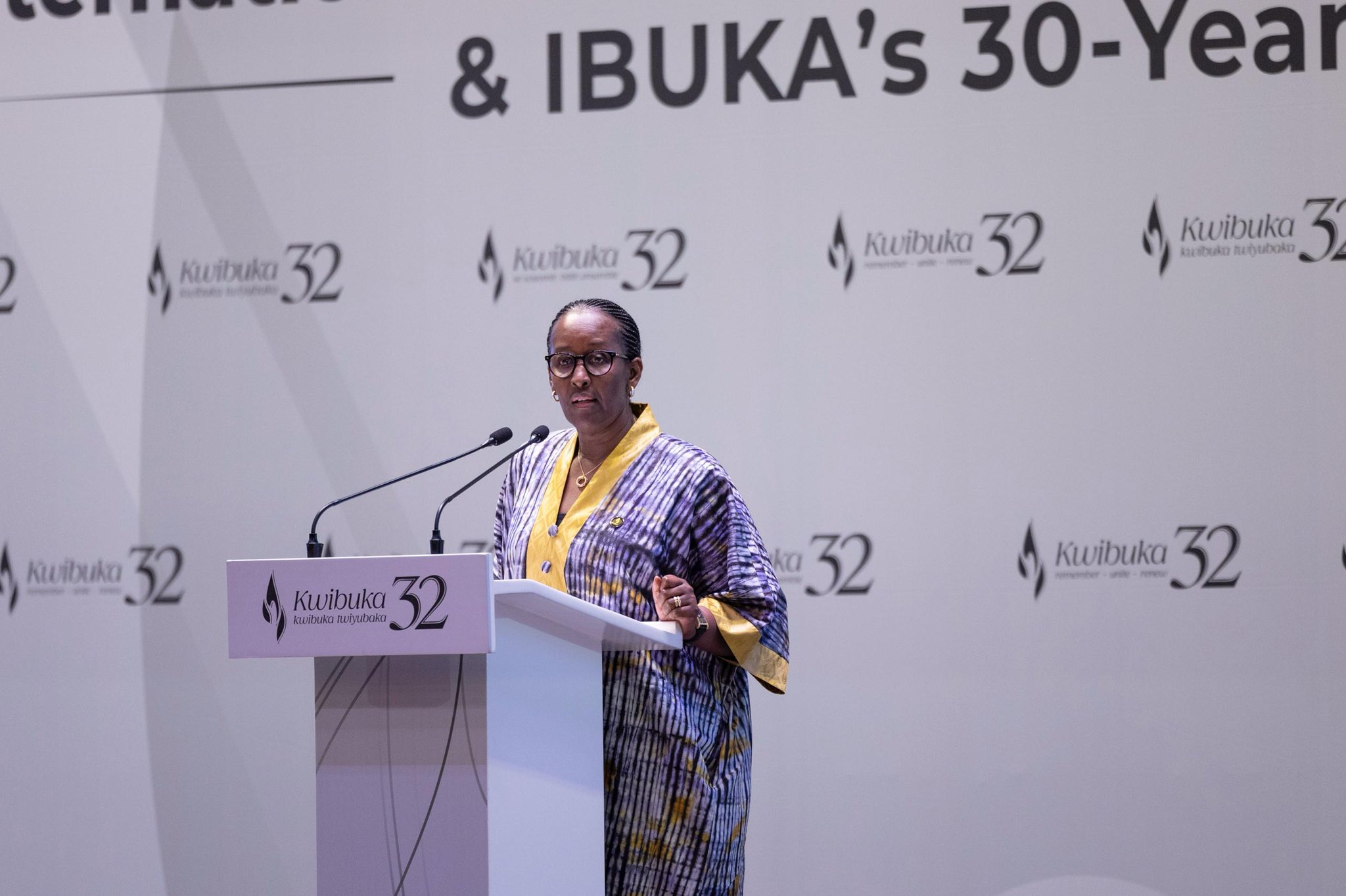
First Lady Mrs Jeannette Kagame addressing the gathering
KIGALI — First Lady Mrs Jeannette Kagame on Wednesday delivered a message of enduring reassurance and vigilance to genocide survivors, speaking at a high-profile event that blended international dialogue on prevention with a tribute to three decades of survivor advocacy.
Her address came during the International Conference on Genocide Prevention & IBUKA’s 30-Year Journey, held at the Intare Conference Arena in Rusororo, as part of Rwanda’s ongoing Kwibuka 32 commemorations marking the 32nd anniversary of the 1994 Genocide against the Tutsi.
The conference drew more than 500 participants, including diplomats, United Nations officials, genocide survivors, academics, researchers, senior Rwandan government figures and international guests.
It served as a platform for discussions on combating genocide ideology, denial and the global failure of “Never Again.”
Speakers included Chaloka Beyani and Dani Dayan, Chairman of Yad Vashem.
The First Lady attended as guest of honor, and her remarks formed a central part of the tribute segment honoring IBUKA’s milestone.
“Ibuka is a word that gives us an important responsibility: the duty to remember, because a society that does not remember is lifeless,” Mrs. Kagame told the gathering.
She thanked the founders and partners of IBUKA, who “showed courage by starting something from nothing in a time full of darkness and grief, choosing to build rather than surrender to despair.”
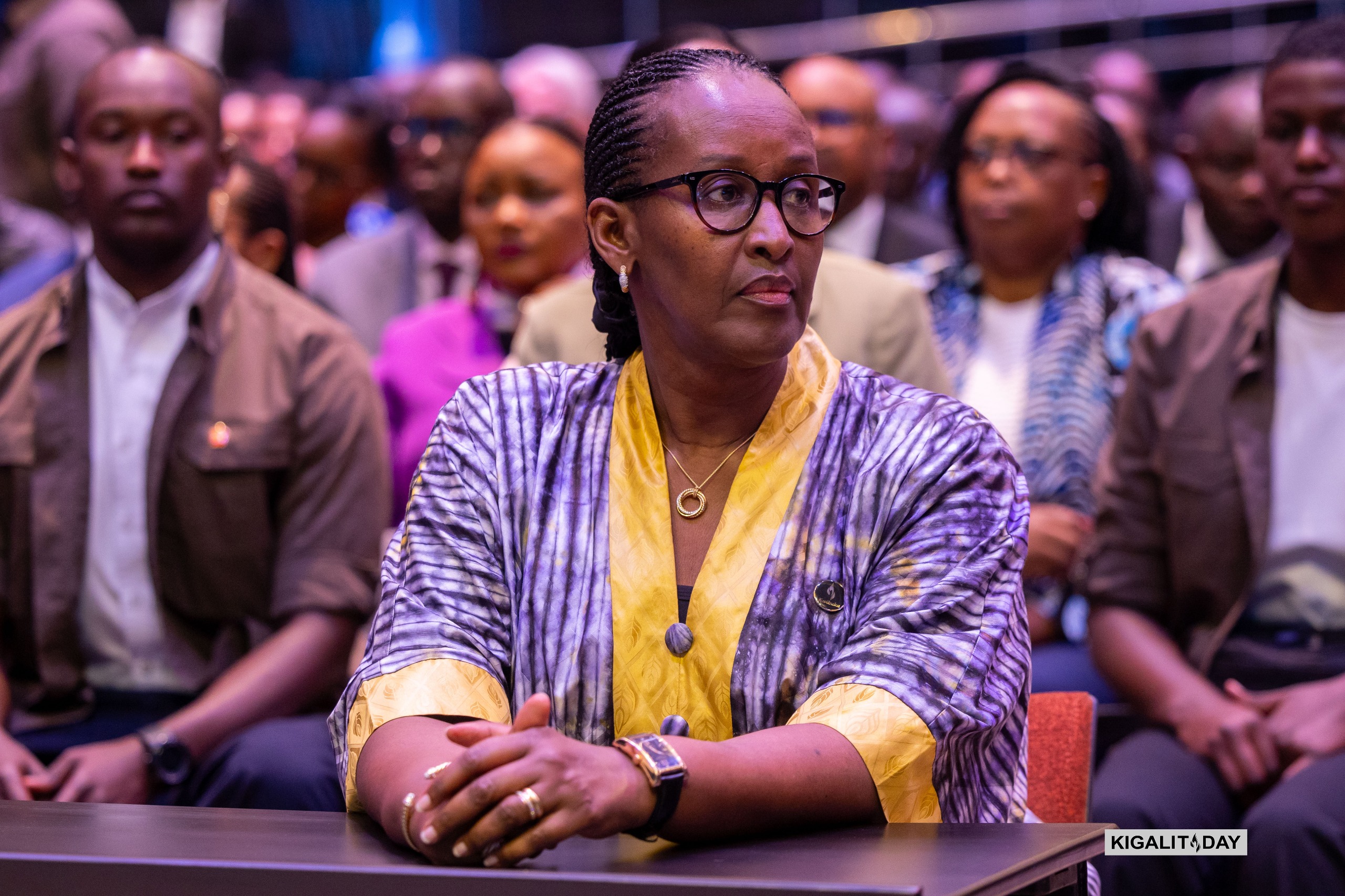
The timing carried deep symbolism. Kwibuka 32 coincides with the 30th anniversary of IBUKA, the umbrella organization for associations of genocide survivors.
It was formally established in December 1995 with 16 objectives signed by 152 individuals and organizations.
Mrs. Kagame described the overlap as “meaningful and strong,” underscoring that remembrance preserves the values and legacy of those lost while imposing duties on current and future generations.
She recalled the comforting message many survivors first heard from the Rwandan Patriotic Front (RPF) forces, known as the Inkotanyi, who halted the genocide: “Live, you will not die” — or in Kinyarwanda, “Humura ntugipfuye” (“Don’t worry, you are safe now”).
“Take comfort: do not fear; the cost of perseverance is priceless and beyond question,” she said, acknowledging the difficult journey survivors had endured.
“You accepted to bear anger when necessary and wielded it responsibly.”
Mrs. Kagame stressed the need for continued vigilance.
“If we are not vigilant, what we achieved, and what cost the lives of Rwandan children, could be lost in a very short time,” she warned.
“That is why Never Again should not just be a saying, but an eternal promise to ourselves, our relatives, those we lost, and our country.”
She cautioned against those who distort or deny history, urging young Rwandans in particular to remain committed to building and protecting an inclusive nation.
“The struggle belongs to all generations,” she said.
Philbert Gakwenzire, president of IBUKA, also addressed the event, tracing the organization’s roots to the immediate post-genocide period and the enabling policies of the government led by President Paul Kagame.
He recalled the same reassuring words from the Inkotanyi — “Humura ntugipfuye” — as a promise that was reinforced through sustained support for survivors.
At IBUKA’s inaugural General Assembly in December 1995, its guiding principles focused on promoting survivors’ welfare, preserving the true history of the genocide and seeking justice.
Gakwenzire outlined the organization’s achievements in social welfare, support for the Gacaca community courts and the International Criminal Tribunal for Rwanda.
He also highlighted remembrance activities including commemorations, publications, songs and survivor testimonies aimed at educating future generations and preventing genocide worldwide.
“Everyone should continue to cooperate with the government to fight genocide and its ideology, study our history, continue recording it, preserving it, and sharing it as it truly happened,” he said.
“We must confront genocide ideology wherever it appears.”
He emphasized ongoing collaboration, advocacy and the need to empower youth as custodians of memory under the anniversary theme “Our Memory, Our Future.”
The conference and tribute unfolded against the backdrop of Kwibuka 32, which officially began on April 7 with President Paul Kagame and the First Lady lighting the Flame of Remembrance at the Kigali Genocide Memorial and joining thousands of youth in a Walk to Remember.
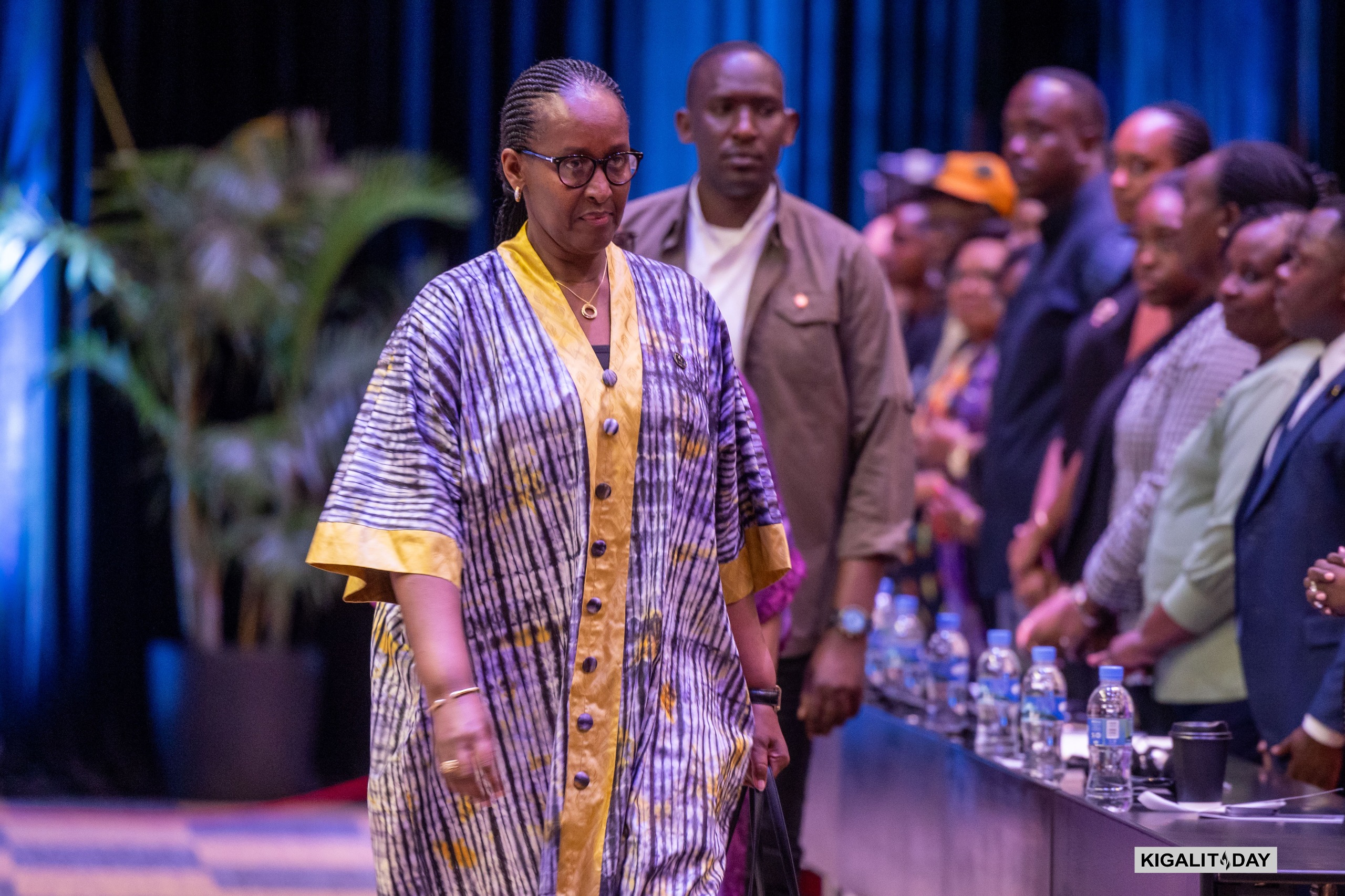
IBUKA’s work over 30 years has been central to survivor healing, justice and the national commitment to ensure that the progress achieved since 1994 — built on the ashes of more than one million lives lost in 100 days — is safeguarded for generations to come.
For survivors gathered at Intare Arena, the First Lady’s words distilled a three-decade reality: through remembrance, vigilance and collective resolve, they are safe now — and, as long as the duty to remember is upheld, they always will be.