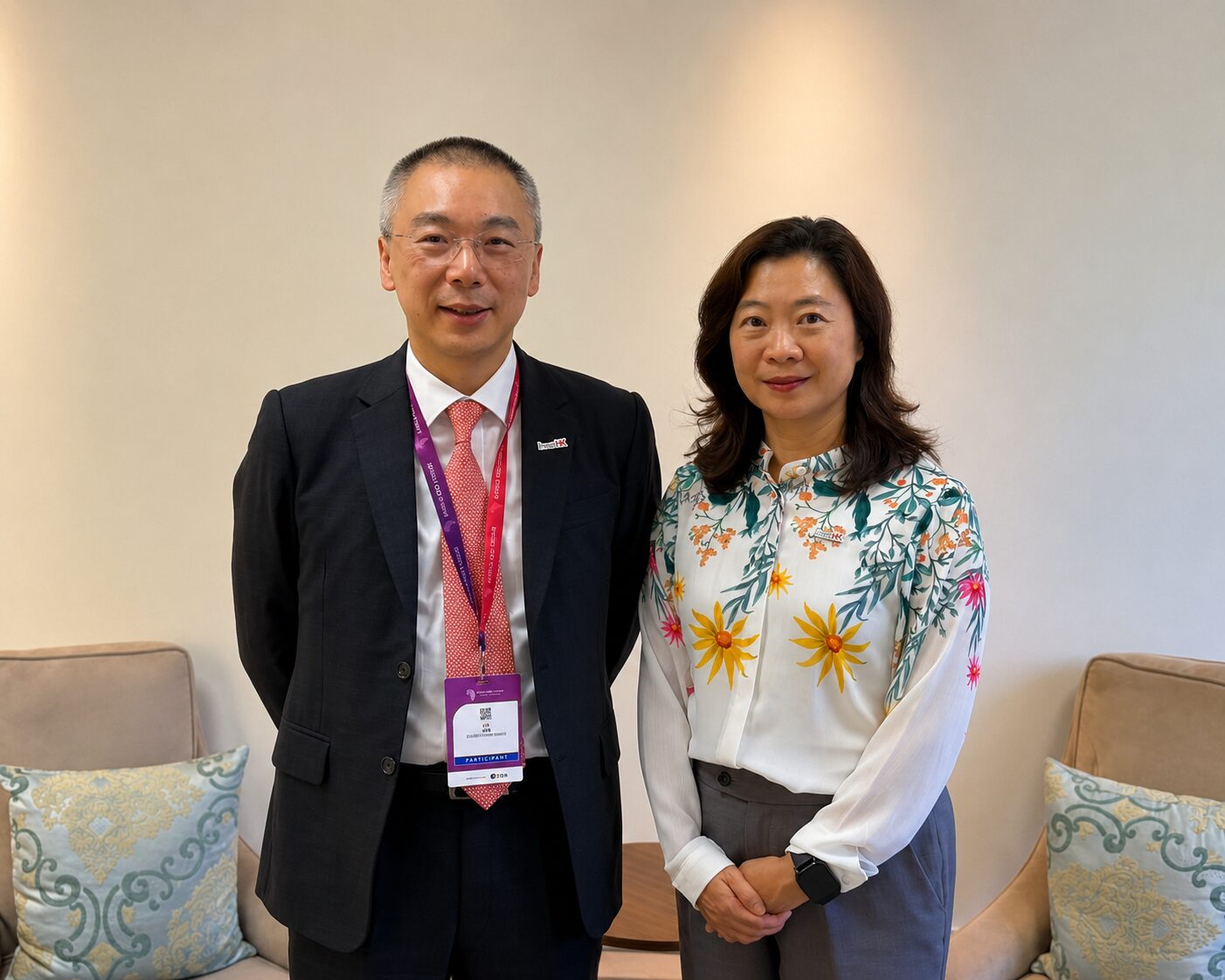
Loretta Lee (right), the Associate Director-General of Invest Hong Kong and K C Lam, Deputy head of International Markets, Consulates and Chambers (left).
For the first time, Hong Kong investment officials have visited Africa, using the 2026 Africa CEO Forum in Kigali as a launchpad to position Hong Kong as a strategic financial, trade, and investment gateway for African businesses seeking deeper access to Asia and China.
The delegation, led by Loretta Lee, attended the May 14–15 summit that brought together more than 2,500 CEOs, investors, and heads of state under the theme “Scale or Fail: Why Africa Must Embrace Shared Ownership.”
Lee said the visit marked a deliberate effort by Hong Kong to build on the decades-long relationship between China and Africa forged under the Forum on China-Africa Cooperation (FOCAC), while introducing African businesses to opportunities unique to Hong Kong’s global financial and legal systems.
“We know too little about Africa, and this trip is really to come and listen and learn,” Lee said during an interview with KTPress in Kigali. “Africa is the next wave of global growth, and we want African businesses to think of Hong Kong as part of their future expansion.”
Hong Kong positions itself as Africa’s bridge to Asia
Throughout the discussions, Hong Kong officials repeatedly described the territory as a “super-connector” between Africa, mainland China, and the broader Asia-Pacific region.
Unlike mainland China, Hong Kong operates under the “One Country, Two Systems” framework, giving it a separate legal and financial system while still serving as China’s main international business gateway.
Lee argued that this arrangement creates major opportunities for African companies, including those from Rwanda, seeking easier access to Chinese and Asian markets.
“Hong Kong is part of China, but we have our own system, our own currency, and a common law legal system similar to many African countries,” she said. “That allows us to play a role as an international financial hub for African companies expanding eastward.”
Among the key incentives highlighted by the delegation were Hong Kong’s low-tax environment, absence of VAT, no capital gains tax, unrestricted capital movement, and its strong position as one of the world’s leading fundraising and wealth management centers.
Hong Kong officials said African firms that establish entities in Hong Kong could benefit from simplified taxation while still trading directly with Chinese manufacturers and Asian markets.
“Our profit tax is only 16.5 percent, and for the first tranche of profits it is even lower,” Lee explained. “We have no VAT, no capital gains tax, and no withholding tax. These are advantages African businesses can use.”
New opportunities for Rwanda and African exporters
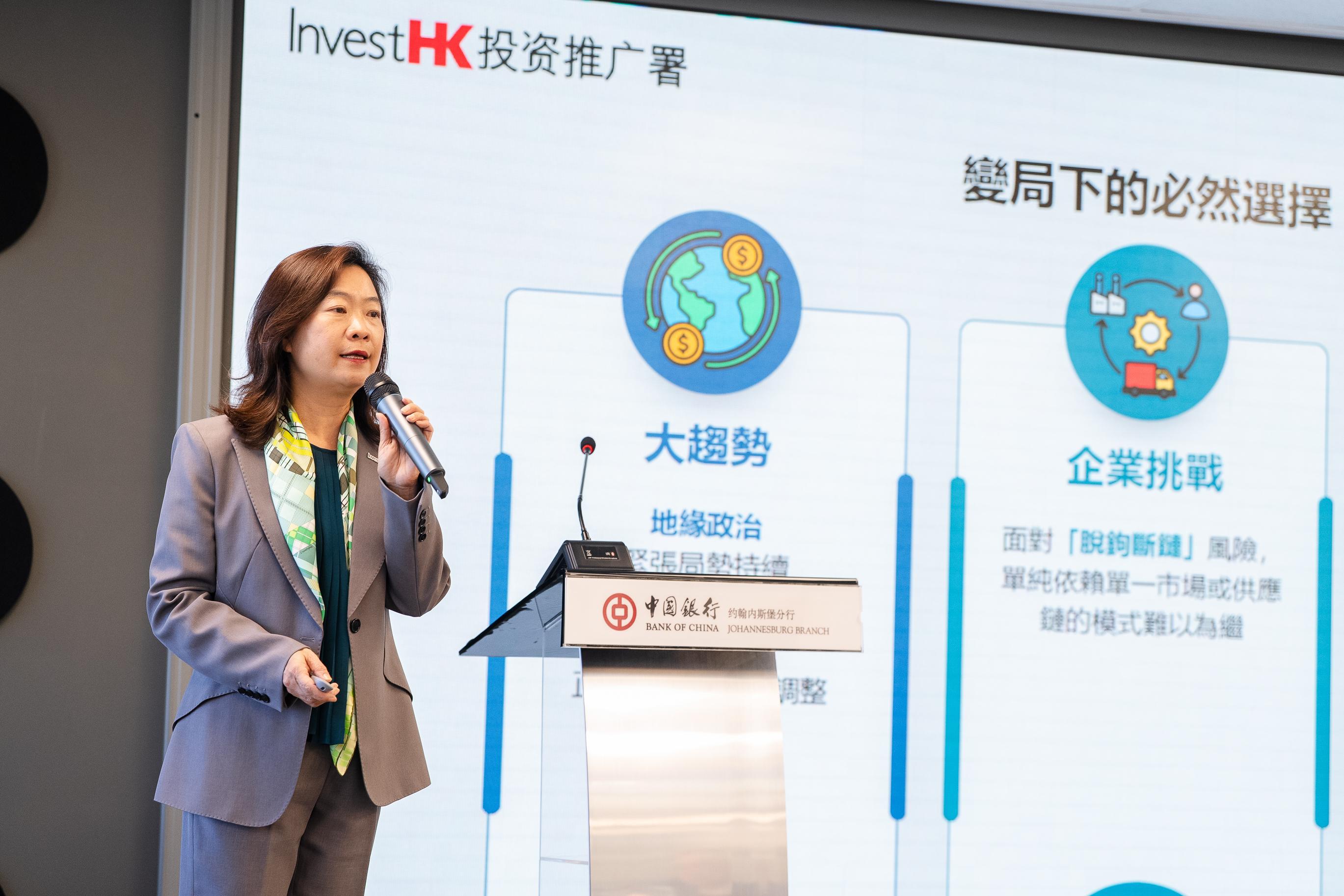
Loretta Lee, presents Invest Hong Kong opportunities at the 2026 Africa CEO Forum in Kigali
The delegation also hinted at future efforts to connect African products and industries to Asian investors and consumers through Hong Kong.
Officials specifically pointed to sectors such as mining, coffee, tourism, hospitality, and cultural industries as areas with strong potential for Rwanda and the wider continent.
Hong Kong’s geographic location was also presented as a major advantage. Officials said a four-hour flight radius from Hong Kong reaches most of Asia, while a five-hour radius covers nearly half the world’s population.
For African exporters and investors, this could create a strategic entry point into Asian supply chains, financial markets, and consumer economies.
The delegation further revealed plans to organize inward and outward business missions linking Hong Kong and African companies, including potential partnerships with institutions such as the Rwanda Development Board.
“We want to build a long-term relationship,” Lee said. “Investment is always a two-way flow. Collaboration must be win-win.”
Beyond finance: tourism, culture, and healthcare
While much of the discussion focused on finance and trade, the Hong Kong officials also promoted cultural exchange, tourism, sports, and healthcare cooperation.
They described Hong Kong as both a business and tourism destination, citing international sporting events, arts festivals, concerts, and easier access to mainland China through high-speed rail systems.
The officials also revealed that Hong Kong medical personnel are already working in Rwanda through an exchange program involving Chinese medical teams stationed in local hospitals.
The delegation expressed admiration for Rwanda’s governance, cleanliness, hospitality, and efficiency, saying these qualities had challenged many preconceptions they held before arriving in Africa.
“We feel a lot of hope and optimism here,” one official said. “The efficiency, the hospitality, the vision of the country — these are things we recognize and appreciate.”
Building on China-Africa ties
Hong Kong officials emphasized that their outreach to Africa is not intended to compete with mainland China’s long-standing presence on the continent, but rather to complement and strengthen it.
For over two decades, China has expanded its influence across Africa through infrastructure financing, trade partnerships, industrial projects, and diplomatic cooperation under FOCAC.
The Hong Kong delegation now believes the territory can add another layer to that relationship by offering financial services, legal systems, international fundraising platforms, and global market connectivity.
“We are not separate from China,” Lee said. “We want to help upscale the China-Africa relationship to the next level.”
As Africa seeks new models for growth, regional integration, and reduced dependence on traditional external financing, Hong Kong’s first direct engagement with African business leaders could signal the beginning of a broader economic partnership between the financial hub and the continent.