A Racist Habit, Disguised as Activism
Among many of those who claim to fight ethnicism and racism in the African Great Lakes region, there is a reflex that fancies itself lucid yet only deepens the wound. The move is always the same: rather than interrogating the very category of the “ethnic,” they take the racist at his word and answer him with a supposed “true rule.” Oh, but a Muluba’s identity passes through the mother, so children born to a foreign woman are none of it, to disturb the racist Muluba. Or: the Banyamulenge were recognized as Congolese by such-and-such decision of a colonial or neocolonial government from such-and-such date, and we found the original proof so the matter is settled.
One imagines one has outwitted them, cornered them by their own logic. One assumes the air of rigor, almost of revolution, while in truth conceding the very thing that matters most: the existence of pure belongings, the validation of rulings handed down by racist and divisive authorities.
And all the while, unknowingly, one wields the very instruments forged by those who corrupted our identities in the first place.
Fluidity Was the Rule, Not the Exception
Let us begin, once more, by dismantling an assumption taken for granted: the notion that ethnicities (African tribes or races) were ancient entities, stable and sharply bounded.
Precolonial history reveals the contrary. Concerning the Kingdom of Kongo, the historian John Thornton has shown the following: between the sixteenth and nineteenth centuries, the very rule of descent shifted three times. First a matrilineal system, the kanda, that kinship group which governed access to land. Then a turn toward patrilineage, when the Atlantic trade made the captive the wellspring of power. Then a cognatic mode as the kingdom disintegrated, and finally a return to the kanda once land became again the primary resource.
It is easy to recognize that the rule of belonging reconfigures itself to the rhythm of economic shifts and pressures. It then reveals itself for what it is, a political instrument instead of a law of nature.
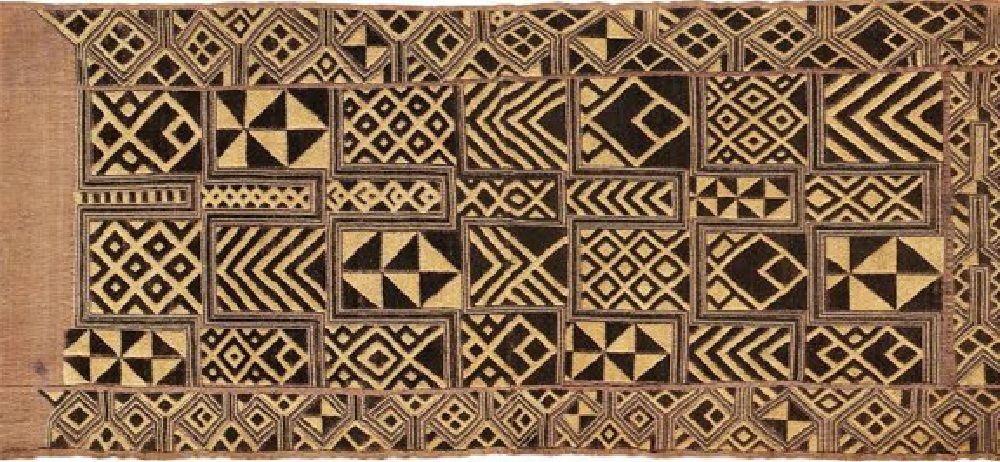
The Kingdom of Kuba offers another illustration: a conglomerate of heterogeneous chiefdoms; Bushong, Kete, Coofa, Twa, all gathered together through conquest and … adoption! Its founder, Shyaam a-Mbul, was a foreigner. The great polities thus took shape by absorption: marriage alliance, blood pact, clientage, the incorporation of pawned captives.
Clans and “tribes” were bound and unbound according to alliances, migrations, ruptures. Belonging was a position within a living social fabric, revisable, negotiated and renegotiated. Nothing was ever carved into the blood at birth.
Old (and very old) sentiments of belonging did, of course, precede the colonizations and the various slave trades. What European colonization, born of the framework and ideologies of white supremacy, produced was their fixing, their naturalization, their racialization.
The Trap, and Why the Moralizers Lay It Beneath Their Own Feet
The work of Frantz Fanon and Charles Mills cuts to the heart of the matter. Beyond bodies and lands, white supremacy colonized the very minds and categories through which the colonized conceives of himself. Mills calls this the racial contract: an order that assigns essences and ranks humanity by degrees.
Let us return, then, to the commentators mentioned at the outset. In brandishing a so-called (racist) “true rule” against the ethnicist/racist, they reenact the colonial operation to the letter: they take as given a pure belonging, a mechanical transmission, an identity one might possess or be stripped of.
The genuine critique of ethnicism and racism (and let us not forget that in the African context, ethnicity is instrumentalized precisely to soften and naturalize the colonial process of racialization, so a spade had better be called a spade) does not consist in saying “you are applying the rule badly,” but in saying “the rigid rule you defend is a colonial artefact.”
One does not undo an essence by substituting another, better calculated and more to one’s liking; one undoes it by showing that no essence has ever held, and that every such essence has led only to the vulnerability of our peoples and the impossibility of solidarity and resistance.
Our belongings were positions, attachments, alliances bound and unbound across the course of history. To restore that suppleness to them is to strip from the ethnicist, from the racist, the very ground on which he cultivates his borders and his stratagems.
To beat him at his own game, by contrast, merely furnishes him with sharper weapons and condemns us to forever chasing after him, accepting his agenda as the sole horizon of the possible. To fight racialization with the categories of racialization is to serve it. To disarm it demands that we think it from elsewhere, from what we were – and above all, how we once organized ourselves – before we were ever assigned our boxes.
Jessica Mwiza is a doctoral student and adjunct professor at City University of NewYork, Sociology Department.