



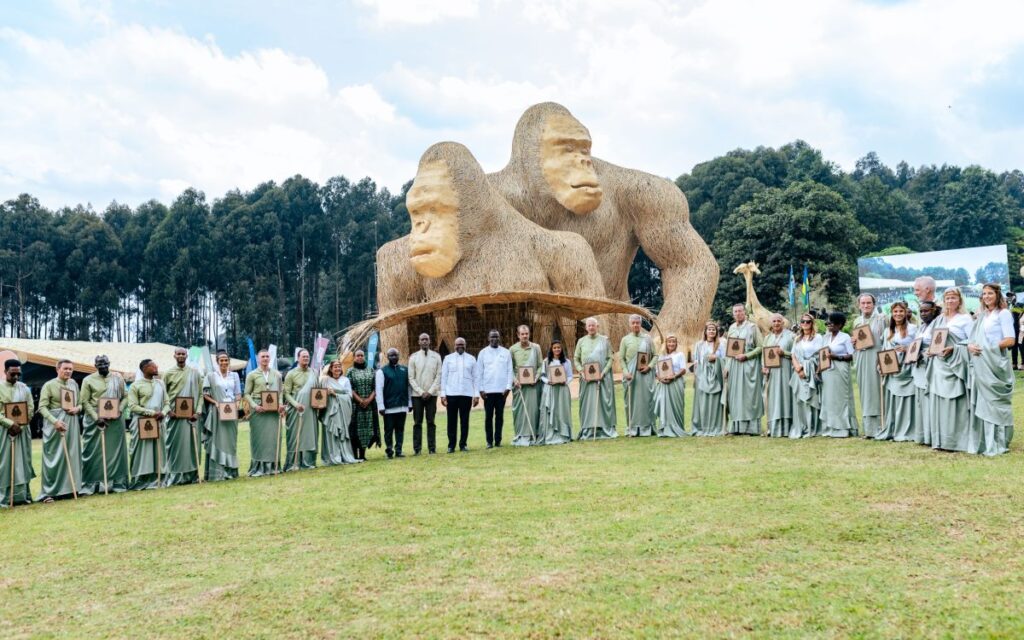
All the namers at the Kwita Izina 2026
In the shadow of the misty Virunga Mountains, a centuries-old tradition has rewritten the trajectory of one of the planet’s most vulnerable species. Kwita Izina, translated from Kinyarwanda as “to give a name,” is traditionally a ceremony where families gather to welcome and name a newborn child.
In 2005, the Rwandan government formalized this cultural ritual into an annual national event to celebrate the birth of baby mountain gorillas in Volcanoes National Park.
Over the past 21 years, Kwita Izina has grown from a local conservation initiative into a global benchmark for community-led biodiversity restoration. The story of the mountain gorilla is one of the rare success stories in modern wildlife conservation.
In the late 1970s and 1980s, relentless poaching, human encroachment, and habitat fragmentation had pushed the species to the brink of extinction, reducing the global population across the Virunga Massif to fewer than 250 individuals.
Today, that narrative has flipped entirely. Across the Virunga Massif and Bwindi Impenetrable Forest, the wild population now exceeds 1,060 mountain gorillas.
They remain the only great ape species on Earth whose wild population is steadily increasing, a milestone that prompted the International Union for Conservation of Nature (IUCN) to reclassify them from “Critically Endangered” to “Endangered.”
A central pillar of this recovery has been the individual monitoring made possible by naming. Since the official inception of Kwita Izina, 460 infant gorillas have been given names.
Assigning names rather than numbers to individual primates allowed researchers, veterinarians, and park rangers to track social family structures, health conditions, and population dynamics with precision.
Beyond scientific utility, assigning names created a profound psychological bond between humans and wildlife, elevating individual gorillas into recognized members of the national heritage.
Kwita Izina has proved that long-term conservation cannot succeed without local economic alignment. Historically, local communities living near the park border faced severe crop damage from wildlife while deriving little benefit from protected lands, leading to tensions and opportunistic poaching.
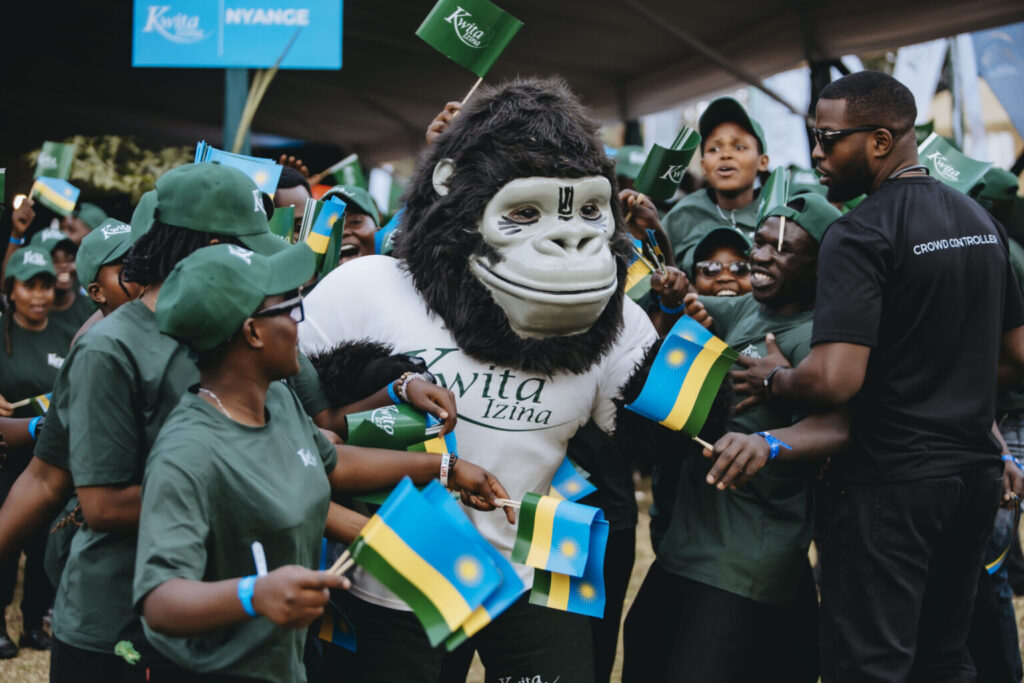
Rwanda countered this friction through its Tourism Revenue Sharing Scheme, introduced alongside the formalized ceremony. Under this policy, 10% of all national park tourism revenue is funneled directly into local communities bordering the parks.
Over two decades, these funds, exceeding 23 billion Rwandan Francs (over $17 million USD), have financed nearly 1,300 community infrastructure projects.
Local residents have seen gorilla-generated revenue build modern schools, clean water networks, health clinics, and agricultural cooperatives.
Former poachers were integrated into conservation frameworks as park rangers, trackers, and porters. By transforming neighboring populations into direct financial stakeholders, the park turned local residents into the frontline defenders of the forest.
As Kwita Izina completes its 21st year, Rwanda’s conservation model faces new challenges born of its own success. With mountain gorilla numbers continuously expanding, the current footprint of Volcanoes National Park is reaching capacity.
To accommodate this growth, Rwanda has embarked on an ambitious park expansion project to increase the protected habitat by nearly 23%, alongside buffer zones designed to further minimise human-wildlife conflict.
Twenty-one years of Kwita Izina demonstrate that wildlife preservation requires more than fence posts and anti-poaching patrols.
By embedding ecology into indigenous culture and tying species survival directly to human prosperity, Rwanda offers a blueprint for sustainable conservation worldwide.
Each name bestowed on a newborn gorilla is an ongoing pledge to protect the shared future of humans and nature alike.
