



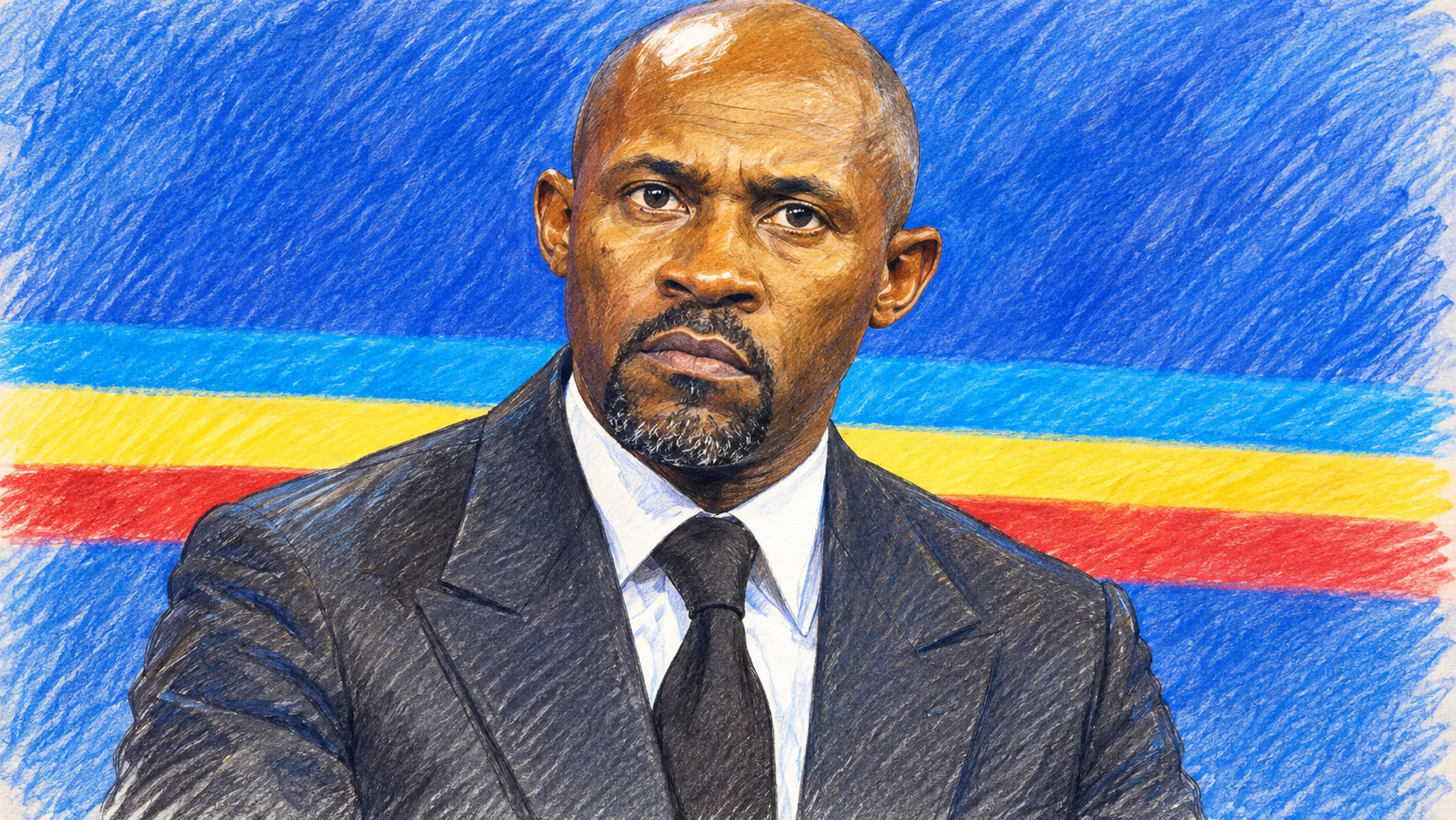
Patrick Muyaya, the publicist-in-chief of the FDLR genocidal militia
While Patrick Muyaya’s propaganda machine promises victory, on the ground and in New York, Kinshasa is losing.
Addressing the UN Security Council in New York, Rwanda’s representative, Ambassador Martin Ngoga exposed Kinshasa’s persistent refusal to honor its commitments under the U.S.-brokered Washington Accord.
Throughout 2026, the Congolese government has continued its systematic operational cooperation with the FDLR, undermining peace while shielding the genocidal militia under false diplomatic guises.
A few weeks ago, in an effort to deflect international pressure, Kinshasa announced a controversial protocol claiming that a faction of the FDLR had agreed to a voluntary disarmament and cantonment process.
However, diplomatic briefs presented at the UN Security Council expose this maneuver for what it really is: a political farce designed to circumvent binding obligations. The Washington Accord explicitly requires the total neutralization and dismantling of the FDLR.
Instead of enforcing that requirement, the Tshisekedi administration has tried to legitimize the group as a political stakeholder, even floating rebranding initiatives such as the proposed Front Commun pour la Libération Rwandaise (FCLR) to sanitize the militia’s public image while leaving its military command intact.
This double game directly violates UN Security Council resolutions, including Resolution 2825, which has repeatedly sanctioned the FDLR for atrocities, illicit resource exploitation, and human rights abuses, and demands its neutralization. By substituting genuine military action with superficial political protocols, Kinshasa has actively sabotaged the security architecture agreed upon in Washington.
Meanwhile, images from the frontlines show what Kinshasa is trying to hide: military failure, broken promises, and a regime that prioritizes war over regional stability.
While government spokesperson Patrick Muyaya uses state-funded media campaigns to convince the Congolese public that the FARDC is making military gains in eastern Congo, footage from the battlegrounds like Ikenge shows a starkly different reality. The state-led military coalition continues to suffer severe tactical defeats.
The structural collapse on the frontlines highlights the core weakness of Tshisekedi’s strategy: victory cannot be manufactured through public relations. The expulsion of the EAC Regional Force (EACRF) and the deliberate obstruction of parallel diplomatic initiatives, including the Nairobi, Luanda, and Qatar-led Doha frameworks, reveal a consistent pattern: peace processes are discarded whenever they require the state to dismantle its illegal militia partnerships.
The proceedings in New York show that international observers and the Security Council are fully aware of Kinshasa’s double-dealing.
The state’s narrative of ongoing military triumphs is an expensive political shield used to cover up its military and diplomatic failures and to boost public morale amid governance failures, rampant corruption, and a worsening humanitarian crisis in the east.
The Congolese public can no longer afford to be misled by state propaganda. Lasting stability in the Great Lakes region depends on total transparency and strict enforcement of signed peace agreements.
Citizens must reject the regime’s deceit and demand immediate, clear answers from Félix Tshisekedi regarding the ongoing military failures, the state’s allegiance with genocidal forces, and its total neglect of national security.
