



For five years, President Félix Tshisekedi has been telling a story about Rwanda that the world no longer buys. In his latest flight of fancy, Tshisekedi tried to invert reality, claiming he had put an end to Rwanda’s thirty-year campaign to demonise the DRC and undermine its institutions and their credibility, and adding that the looting of Congolese minerals has become more difficult thanks to his hard work. The problem is that these are lies.
The reality is that his regime has spent the past five years trying to demonize Rwanda, with little success.
Visit Rwanda’s sports sponsorship deals, which the DRC has tried to sabotage, are still standing and even expanding to the US. Event and conference planners are still choosing Rwanda as their host, with Formula 1 as the icing on the cake.
Rwanda remains Africa’s most important troop contributor to the United Nations peacekeeping missions, and its military intervention in Mozambique is still supported by international partners despite Kinshasa’s lobbying to put a stop to all of it.
In truth, nobody serious really listens to a regime in Kinshasa that has lost credibility, not because of Rwanda’s lobbying, but because of its own actions.
Consider that millions from the Ebola response have disappeared while the doctors and nurses on the front line are still demanding salaries that have gone unpaid for months.
As a result, Ebola is now spreading into neighbouring countries. Why would any reasonable person need Rwanda to convince them that the administration in Kinshasa is more dangerous than useful?
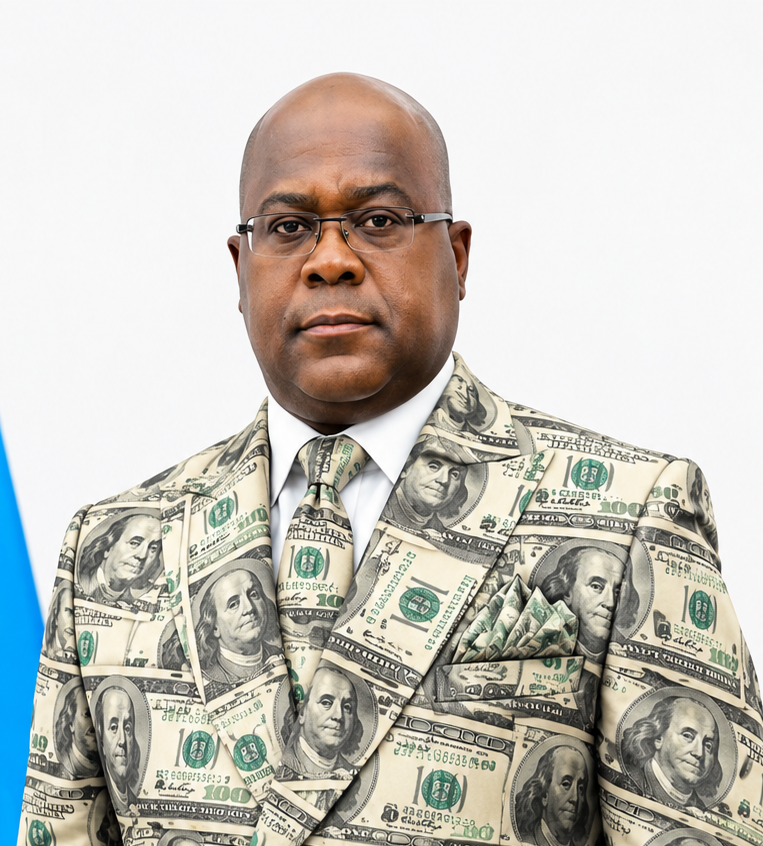
Meanwhile, the minerals Tshisekedi claims to be protecting are being looted, not by Rwanda, but by his own family.
Belgian police conducted simultaneous raids in October 2026 on properties linked to Tshisekedi’s relatives as part of a money-laundering investigation tied to the plunder of mines in Haut-Katanga and Lualaba. The First Family’s property portfolio in Belgium is a case file.
Worse still, not a single one of Kinshasa’s commitments under the Washington or Doha peace processes has ever been fulfilled, and even American officials with a vested interest in securing deals for Congo’s critical minerals are finding it hard to defend a regime that is corrupt to the core and unable to keep its word.
But Kinshasa is oblivious to this shift in perception on the international stage. Tshisekedi, clinging to whatever hope Western sanctions on his enemies gave him, went as far as to say he had Kigali on the ropes, which, according to him, is why former president Joseph Kabila took the helm of the newly formed rebel coalition, to give “the Rwandan aggression a Congolese flavour.”
The problem with Tshisekedi’s story is that it is all illusion. News from the front lines offers no success against the rebel coalition that he could paint as a victory over Rwanda. Quite the contrary.
As for adding a Congolese flavour to the rebellion, such a move may be necessary for a Congolese public that has been indoctrinated to hate Congolese Banyarwanda, but for international actors, there is no doubt that the rebels are Congolese.
Even the heavily biased Massad Boulos says the Doha process remains the missing piece of the peace puzzle, as he put it recently on France 24. And guess what: the Doha process is between Congolese parties.
It is clear that no one of consequence outside the Congolese regime still clings to the external aggression narrative as an explanation for Congo’s crisis. It is a lie. And so is any illusion of the regime’s military victory.
Everyone knows it, especially now that even the contracted Western mercenaries are telling tales of their own defeats.
The real question is: when will Kinshasa come to the same conclusion as everyone else and choose peace with its own citizens and neighbours?
