

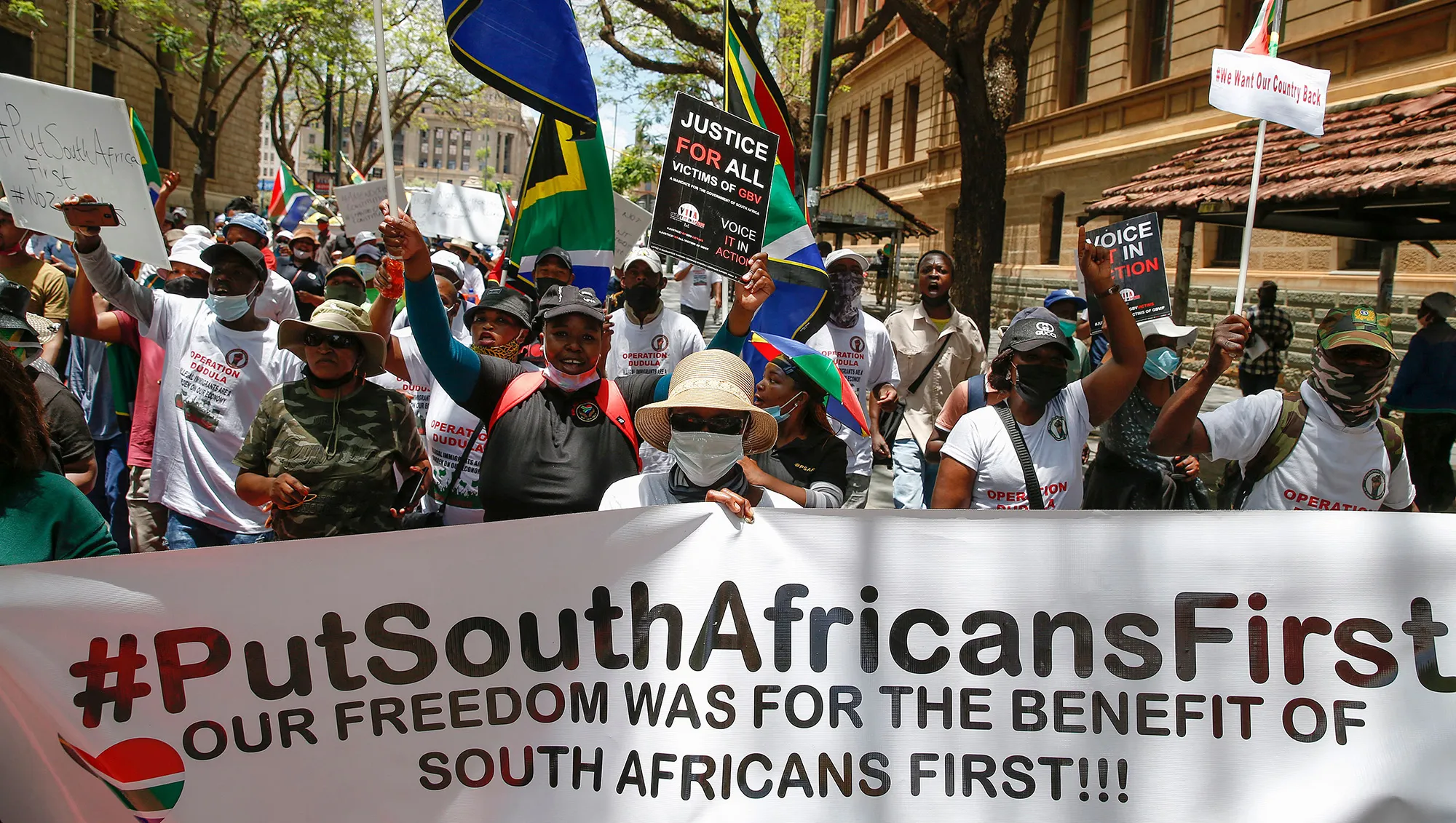
Across the continent, xenophobic attacks have exposed the hostility directed at fellow Africans.
America’s evolving political representation raises an uncomfortable question for Africa: Can we genuinely embrace democracy while allowing ancestry, ethnicity and perceived foreignness to determine who belongs and who has the right to lead?
The recently concluded United States midterm elections offer an interesting opportunity for reflection, particularly for those of us observing political developments from Africa. Beyond the victories and defeats of political parties, these elections bring into focus a deeper question about citizenship, identity, representation and the meaning of belonging in a democratic society.
Consider the changing face of political representation in America. These elections produced several historic breakthroughs that challenge long-held assumptions about who can occupy positions of political authority. Georgia elected Keisha Lance Bottoms as the first Black woman governor in American history.
New Mexico elected Deb Haaland, making her the first Native American woman to become a governor. Texas elected Gina Hinojosa as its first Latina governor, while Minnesota elected Peggy Flanagan as the first Native American woman to serve in the US Senate.
In New Hampshire, Chris Pappas became the first openly gay man elected to the US Senate. Wisconsin also elected David Crowley as its first Black governor.
These achievements are significant not simply because they represent historical firsts, but because they challenge established assumptions about who can govern, who can represent a nation and whose voice deserves a place in political leadership.
America is certainly not a model of perfect equality. Its history is marked by slavery, segregation, racial violence and persistent discrimination.
Yet its democratic journey presents Africa with an important question: Why should a person’s ancestry remain a political liability in a country where that person is a legitimate citizen?
There is perhaps an even deeper lesson here. Political leaders do not simply find their way into office; they must earn the support of voters. Citizens, through their ballots, can choose candidates whose racial backgrounds, ancestry, gender or identities differ from their own.
Equally important, constitutional and democratic institutions establish rules that protect the electoral process. An incumbent president cannot simply overturn a legitimate election because they dislike the identity or background of the person voters have chosen.
This presents an interesting question for Africa.
Are our societies equally prepared to elect people they perceive as descendants of foreigners, even when those individuals are citizens and meet the constitutional requirements for leadership? Do our institutions adequately protect their right to compete for political office? Or have ideas about indigenous identity, ancestral ownership and national belonging become so deeply rooted that even constitutional guarantees struggle to overcome them?
The contradiction deserves serious examination. In some African societies, sections of the electorate may be willing to look beyond ethnic and ancestral boundaries.
Yet political rhetoric and identity-based mobilisation can create barriers around who is considered entitled to lead. In other cases, exclusionary attitudes may also exist among voters themselves. The challenge, therefore, is not only institutional but also political and social.
Across the continent, xenophobic attacks have exposed the hostility directed at fellow Africans, particularly migrants from countries such as Zimbabwe, Mozambique and Nigeria in South Africa. People who establish businesses, create employment and contribute to local economies can become targets simply because they are perceived as foreigners.
Beyond xenophobia, questions of indigenous citizenship, ancestral origins and parental nationality have also become controversial features of constitutional and political debates. Zambia, for instance, has experienced prolonged controversy surrounding presidential eligibility requirements, particularly constitutional provisions relating to the citizenship of a candidate’s parents.
Of course, countries have legitimate reasons to establish citizenship requirements for public office. National sovereignty, constitutional order and security are important considerations that cannot simply be dismissed. However, there is a fundamental difference between establishing legitimate eligibility requirements and creating barriers that deliberately exclude individuals because of their ancestry or perceived origins.
Consider the contradiction: someone may be born in an African country, educated there, speak its languages, pay taxes, employ its citizens and invest their entire life in its development, yet still face questions about whether they genuinely belong.
Meanwhile, another person may enjoy unquestioned acceptance simply because their ancestors have deeper historical connections to that territory.
Is ancestral proximity really a more reliable measure of national commitment than a person’s actual contribution to society?
Africa must also confront the historical irony surrounding its geographical boundaries. Many of our present borders emerged from colonial arrangements that divided communities, combined territories and disregarded existing cultural relationships. As a result, African families have cross-border roots, share languages, intermarry and maintain historical connections that existed long before modern nation-states were established.
It is therefore contradictory that we celebrate Pan-Africanism, promote continental integration, establish the African Continental Free Trade Area and advocate greater regional mobility while sometimes treating fellow Africans as strangers simply because colonial geography placed them on opposite sides of a border.
We cannot convincingly advocate African unity while practising exclusion within our own societies.
More importantly, political representation should not become another instrument of exclusion. Historical marginalisation deserves recognition, and inclusive political participation is essential. However, inclusion should expand opportunities rather than create new categories of people considered unsuitable for leadership.
The standard should be straightforward: citizenship establishes legitimate belonging, constitutional rights protect political participation, and voters determine whom they wish to entrust with leadership, within the requirements of the law.
A person’s surname, accent, complexion or grandparents’ birthplace should not automatically become a referendum on their loyalty to the country.
The American experience does not offer a perfect democratic model, and greater political representation does not automatically translate into competent governance. Elected leaders must still demonstrate integrity, accountability and the ability to deliver. Nevertheless, the expansion of political representation provides an important opportunity for African societies to reconsider their own assumptions about identity, citizenship and leadership.
Our greatest resource is not ancestral purity. It is human potential.
Perhaps the real question is not where someone’s grandparents came from, but what that person is prepared to contribute to the country.
A nation should not be an inheritance reserved for families with the oldest roots. It should be a shared responsibility entrusted to capable and accountable citizens.
The author, Sylivanus M. Karemera is Station Manager, KT Radio 96.7FM, which is under Kigali Today Ltd
