




Rwanda Plans Rigorous Gas Emissions Test for Motorcycles, Vehicles
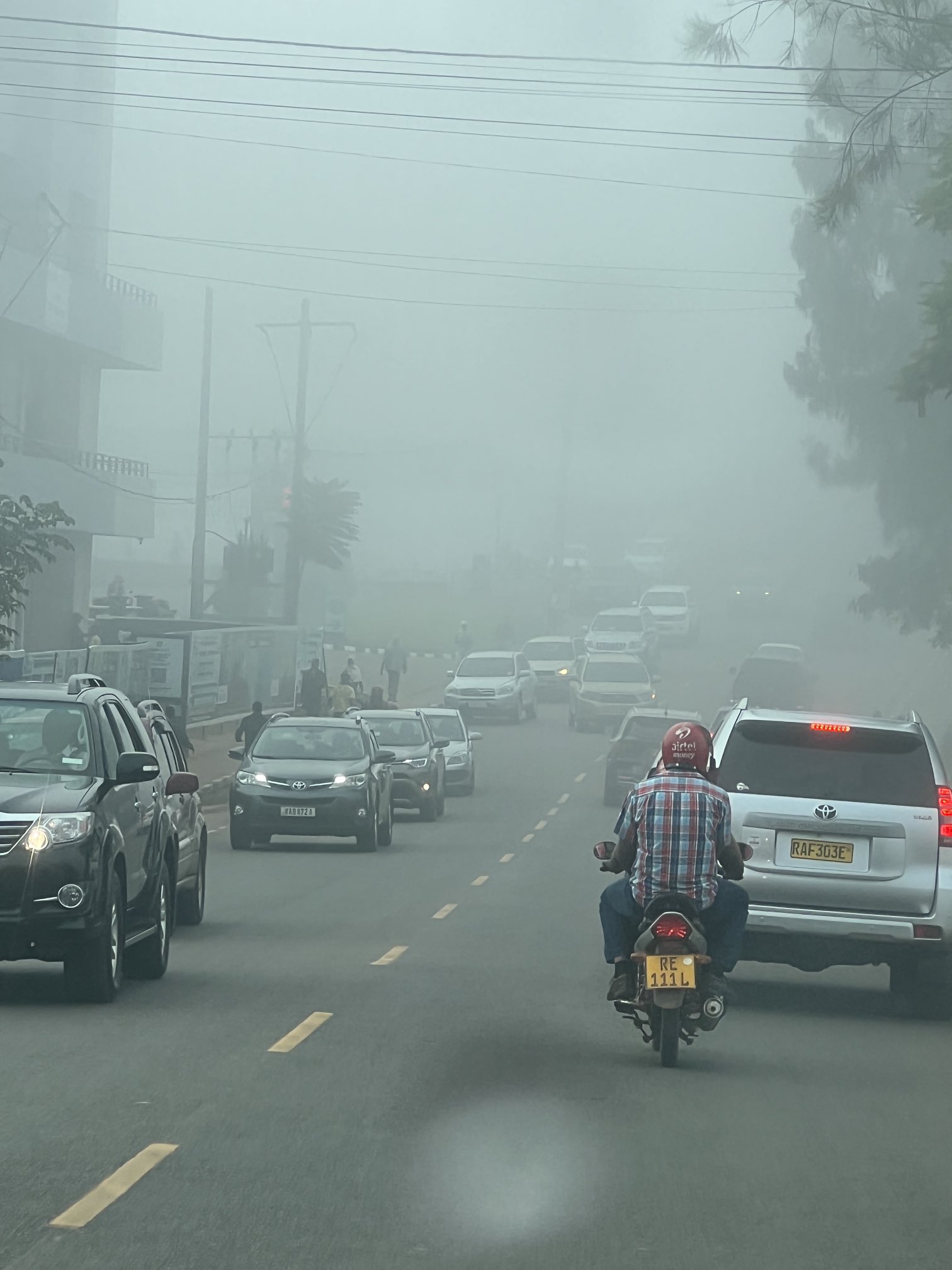
YES it is fog, a common occurrence in Kigali and around the country. But it is exacerbated by the alarming levels of air pollution
Rwanda is preparing to roll out a more rigorous gas emissions testing regime for all motorcycles and vehicles on its roads, signaling a new era in environmental regulation and public health protection.
The planned transition — already in advanced stages to be launched later this year, — will for the first time allow authorities to scientifically measure what pollutants are being emitted by every vehicle. It will require vehicle owners to take corrective action if their emissions exceed acceptable limits.
Unlike the standard roadworthiness inspections — which already test for issues like brakes, tires, and suspension, and only conduct a basic smoke opacity test — the new regime will measure the chemical composition of vehicle exhaust.
That means inspectors will now be able to identify exact pollutants coming out of a vehicle’s tailpipe, including carbon monoxide (CO), hydrocarbons (HC), nitrogen oxides (NOₓ), and particulate matter (PM2.5).
This matters because poor air quality in Rwanda — particularly in Kigali and other urban valleys — has reached alarming levels. The Government’s own data actually shows the air quality in the country five times worse than globally recommended.
According to a comprehensive government air quality report from 2018, PM2.5 concentrations are up to five times higher than the WHO-recommended annual exposure limit of 5 µg/m³. Vehicle emissions, especially from poorly maintained engines, are among the top contributors to this problem.
The goal of the new system is clear: vehicles that emit more than 0.1 grams per kilometer of harmful pollutants will be flagged for maintenance or possibly taken off the road if not repaired.
This threshold aligns with Euro 4 standards, which Rwanda is adopting as a transitional benchmark due to the high prevalence of used vehicles in its fleet. Euro 7, the most stringent standard, would render most currently registered vehicles non-compliant.
The shift to Euro 4 reflects a pragmatic balance — improving air quality without destabilizing livelihoods that depend on older vehicles.
Beyond Mechanical Checks: What’s Changing?
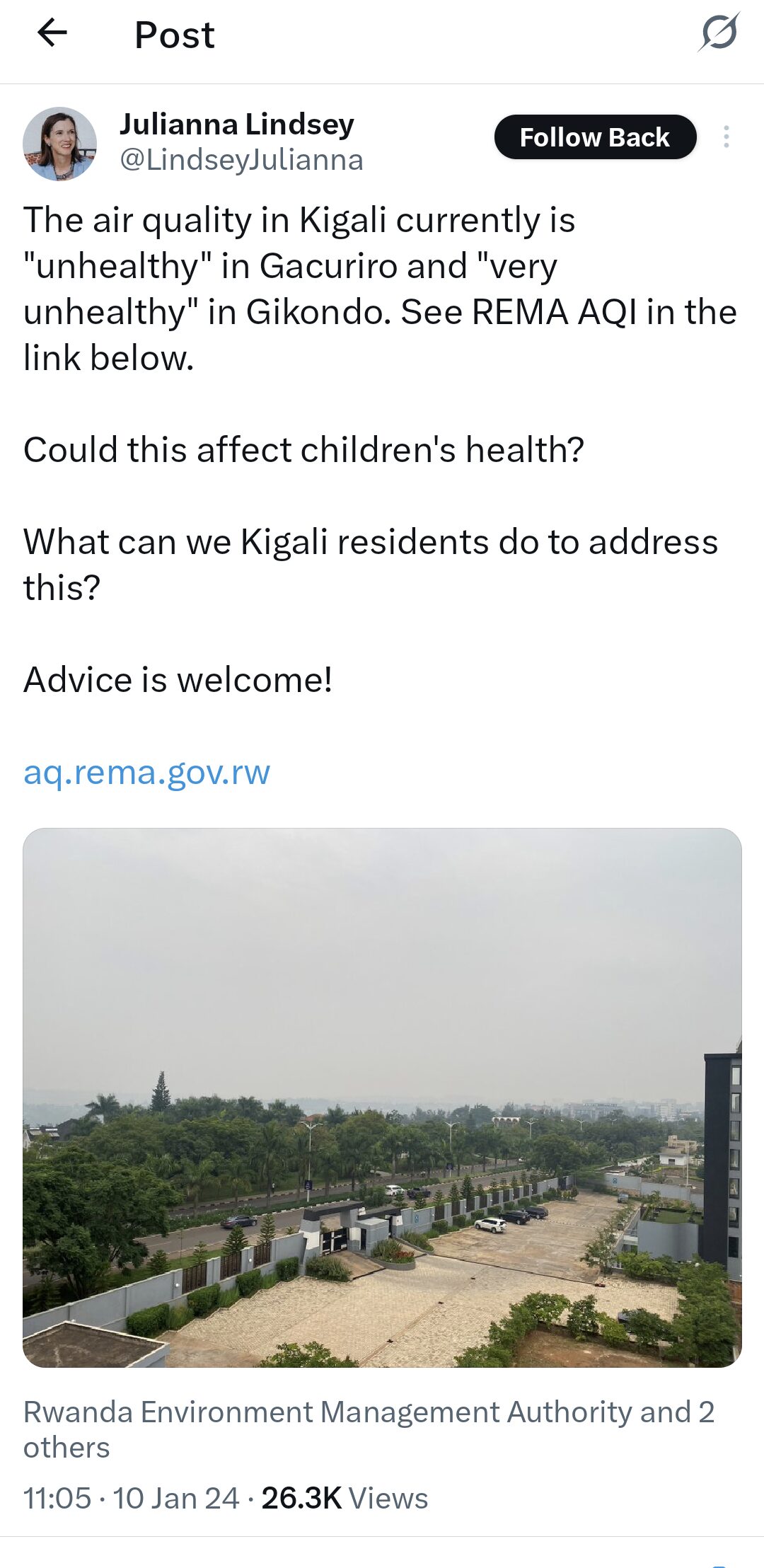
A social media user highlighting the problem
The current “contrôle technique” primarily focuses on mechanical safety. While it does include a visual inspection of exhaust smoke (especially for diesel engines), it does not evaluate the specific types of gases or particles being released.
In contrast, the new testing regime will use advanced gas analyzers and possibly on-road testing technologies like Portable Emissions Measurement Systems (PEMS) for heavy-duty vehicles. This system will be run by the Rwanda Environment Management Agency (REMA), but housed in same facility with the Police system.
This move brings Rwanda closer to international best practices and aligns with the country’s Nationally Determined Contributions (NDCs) under the Paris Climate Agreement, which call for reduced emissions in the transport sector.
How Much Will It Cost?
The government has released a tiered fee structure designed to match both the emissions potential and income levels of vehicle owners:
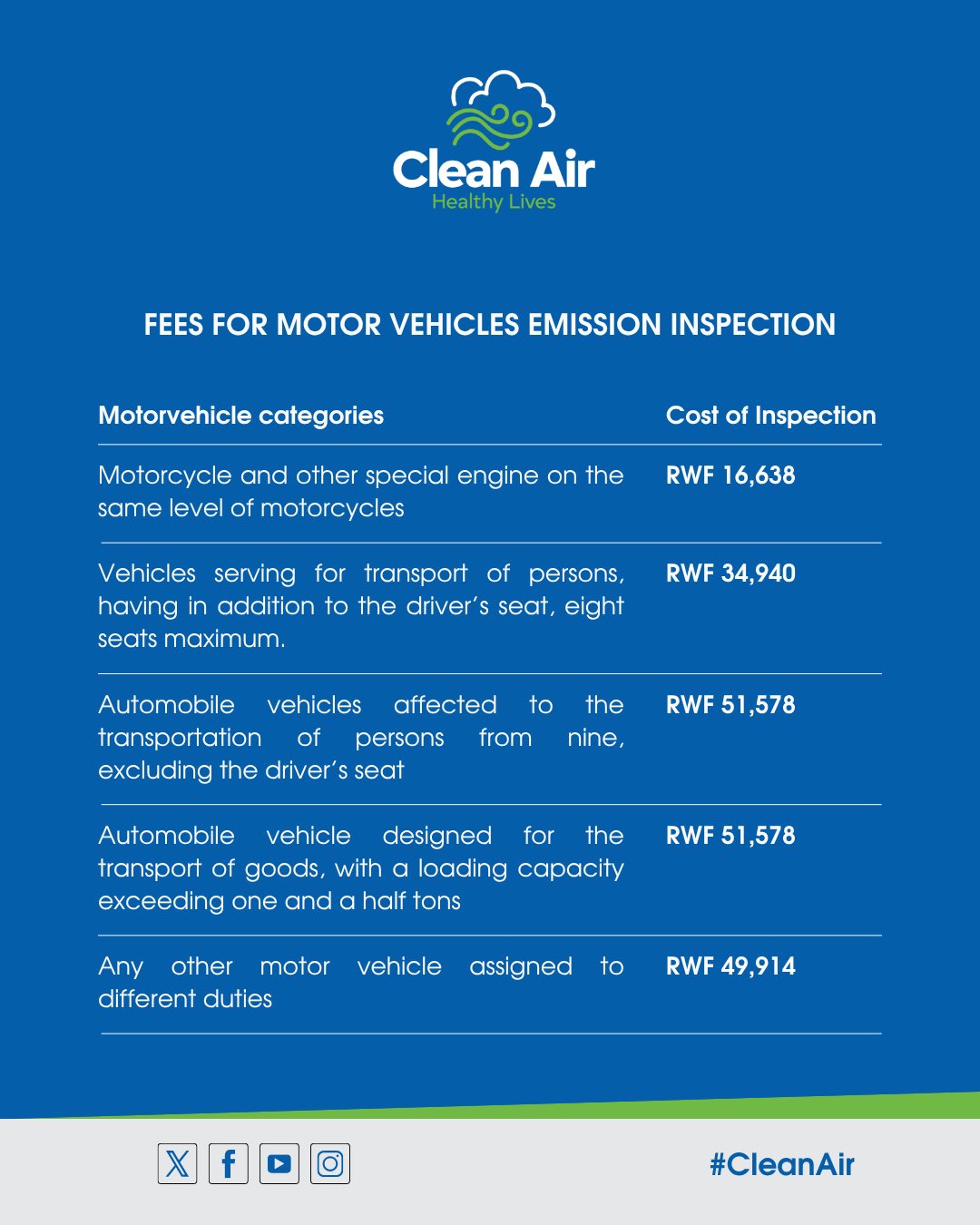
While some vehicle owners may be concerned about repair costs if their vehicles fail the test, the broader environmental and health benefits — including reduced respiratory illness, better fuel efficiency, and cleaner urban air — are expected to outweigh these initial expenses over time.
A Public Health Emergency
Rwanda’s topography makes the country especially vulnerable to trapped air pollution. With much of Kigali situated in valleys, pollutants tend to settle instead of dispersing, increasing exposure for the urban population.
The government’s own health data from 2023 shows that over 3.3 million people sought treatment for respiratory illness — a sharp warning sign of the human cost of dirty air.
Motorcycles, which account for over 30% of all vehicles in the country, are a major part of the problem. Many operate with aging engines that release disproportionate levels of CO, HC, and fine particulates.
The rollout of emissions testing is therefore seen as a key step toward phasing out high-emitting units and promoting cleaner alternatives like electric motorcycles.
The country already has a real-time air quality monitoring platform. You can personally log onto https://aq.rema.gov.rw/ to view this data. In addition, there is an Android phone App which you can install on your phone.to see for yourself the kind of fumes we are taking in.
On a Tuesday July 25, air quality tracking system showed that Kigali was in the RED, while similar international systems installed in India, for example, showed the air quality was yellow for Delhi – in short, better than Kigali, yet Indian capital is known for thick smog chocking its atmosphere.
Public Concerns Addressed
As an observer of the process, it’s clear that many citizens will be asking these questions:
Why now? Won’t this hurt ordinary people who rely on old vehicles? What about regional fairness? Is Government looking to generate money?
Authorities have acknowledged these concerns and appear to have factored them into the policy design. First, Rwanda is not jumping straight to Euro 6 or 7, which would have excluded nearly all used vehicles.
Instead, Euro 4 allows for gradual compliance and a reasonable adjustment period. The fees, too, are designed to be within reach, especially for commercial operators like moto-taxi drivers and city cab owners.
Crucially, this is not a revenue-raising measure, as some skeptics could claim. In any case. In any case, running that system cc could be more expensive than the collections.
Another facet to the testing program is that once your vehicle fails. You will be given a list of gases that must be eliminated or reduced from you exhaust. All garages are going to be trained on how to carry out this emissions testing technology. It is said, the corrective measures largely include usual service like changing oils, or using better quality than buying from roadsides.
The program responds directly to health and environmental data — and it is backed by scientific evidence, not bureaucratic guesswork.
Regional Action Needed — But Rwanda Leads
Despite having fewer vehicles than neighboring countries, Rwanda is acting first, and decisively. Rwanda can’t force regional action — but can lead by example. Air pollution does not respect borders, and the prevailing wind patterns carry pollutants from across the region into Rwanda’s airspace.
There are already East African regional air quality standards, but implementation varies widely. Rwanda’s new testing system could set a new bar for regional cooperation and spur similar initiatives in neighboring states.
What’s Next?
- August 2025: Full rollout of sensitization campaign for motorcycle uses on emissions testing
- 2026 onward: Gradual expansion to private vehicles, SUVs, taxis, and eventually heavy-duty vehicles
- Ongoing: Expansion of real-time air quality monitoring stations and data-sharing infrastructure
The long-term vision is a healthier, cleaner Rwanda, where transport systems serve public mobility without sacrificing air quality. This policy, while technically ambitious, sends a clear message: clean air is not a luxury — it’s a right.
