



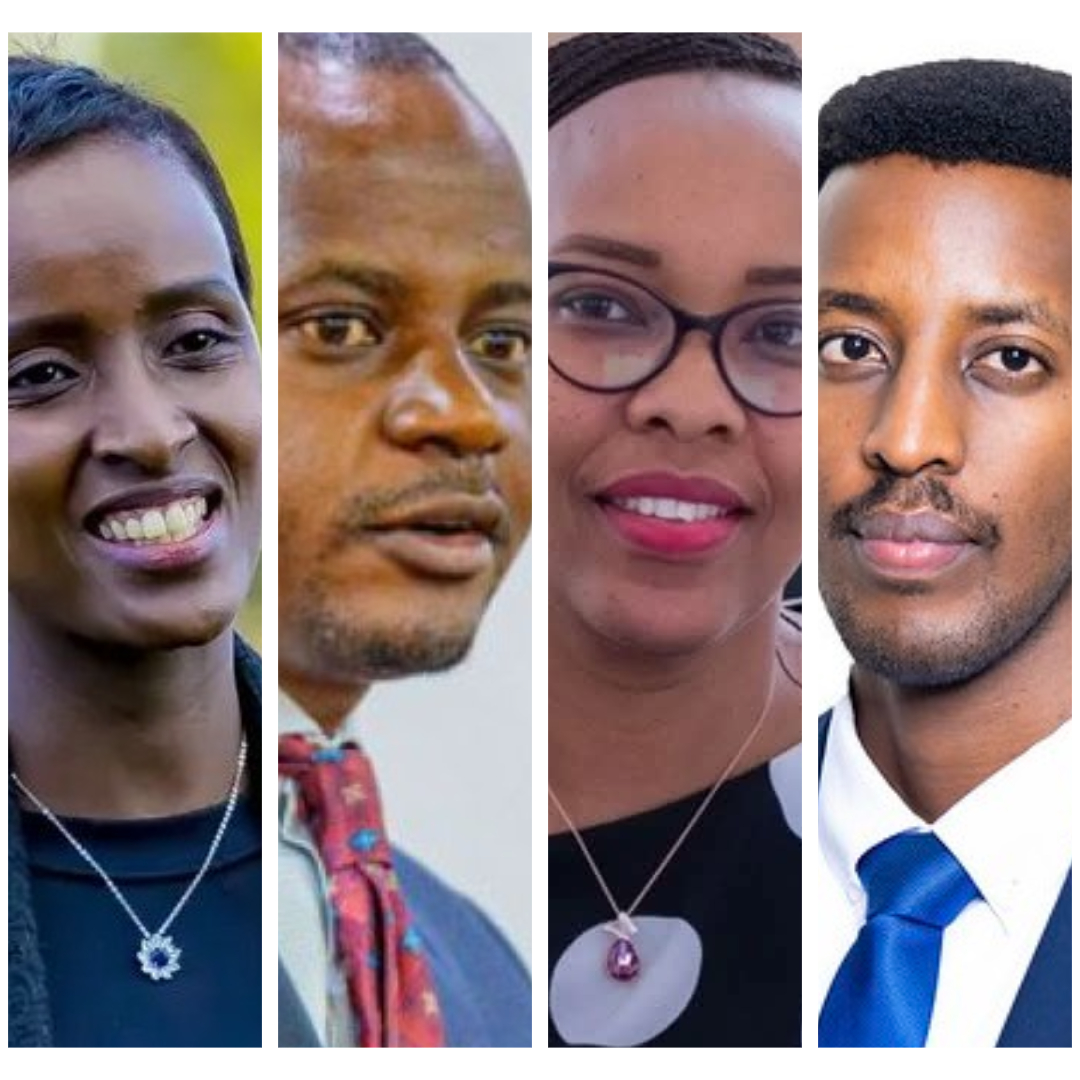
Sports Minister Nelly Mukazayire, Zephanie Niyonkuru, Aurore Mimosa Munyangaju – Former Minister of Sports and current State Minister for Sports, Rwego Ngarambe
For decades, sports in Rwanda started and ended with football. Community enthusiasm largely remained local, and national attention fixated on a few iconic matches. But that era is rapidly giving way to something bolder.
From the rise of professional cycling to increasingly competitive basketball and volleyball leagues, Rwanda is consciously reshaping its sporting identity—at the very highest level.
The sports sector is no longer about leisure. It is emerging as an engine of investment, employment, urban planning, infrastructure development, and even diplomacy. A deeper transformation is underway—driven not just by athletes or fans, but by Rwanda’s top leadership.
President Paul Kagame has moved the Ministry of Sports from the margins to the center of government strategy. The clearest sign of this has come from the recent cabinet reshuffles, where a group of high-performing officials—many with no background in professional sports—have been transferred into the ministry.
The appointments caught many by surprise. But taken together, they point to a deeper strategy: the “CEO-style” leadership model that defines Kagame’s governance is now being applied to the sports sector.
The Village Urugwiro-to-Sports Pipeline
Among the names is Nelly Mukazayire, the latest appointee as Minister of Sports, was previously the CEO of the Rwanda Convention Bureau and a central figure in shaping Rwanda’s hospitality and MICE (Meetings, Incentives, Conferences and Exhibitions) strategy. Meanwhile, Mimosa Uwiragiye, the previous sports minister, who joined from SONARWA—one of Rwanda’s largest insurance firms—brought with her significant private sector experience to the Ministry.
Another is Zephanie Niyonkuru, formerly Deputy CEO at RDB and previously involved in Rwanda’s investment promotion effort.
This past week, another key appointment deepened the plot. Candy Basomingera, who was from serving as Deputy CEO of the Rwanda Convention Bureau — the government agency responsible for marketing Rwanda as a premier destination for global events — was tapped to become the Permanent Secretary at the Ministry of Sports.
Rwego Ngarambe, is Rwanda’s youngest minister, appointed in December 2024 as Minister of State for Sports. A trained international sports lawyer, he previously played basketball in France and earned a Master’s in Sports Law in Spain. Passionate about youth empowerment, he envisions Rwanda thriving through sports and active youth participation.
Nearly all share common denominators: they have worked closely with President Kagame in institutions like the Rwanda Development Board (RDB), Village Urugwiro—his office at the presidency, or key areas of the country’s economy, and have international exposure.
Away from the government bureaucracy, there has been ground up shift in determining who heads the sports federations. The immediate-former head of the football federation FERWAFA, built the most successful national public transport company from a single bus. Today, it has edged out regional transporters for the Kigali route.
They may not be experts in sports, but they have firsthand experience of Kagame’s leadership style—one that prizes efficiency, strategic thinking, and execution. Their appointments are not about sporting credentials. They are about bringing the kind of culture that built RDB into the “heartbeat” of Rwanda’s economic transformation.
RDB itself operates like a corporate outfit. Unlike most government agencies, its staff are not hired through the ordinary public service commission. Instead, they are head-hunted—selected for their intellect, performance, and adaptability. Over time, RDB became the model for a high-performance institution, attracting foreign investment, pushing for ease of doing business, and driving key national projects. It’s no coincidence that Kagame is now turning to that same talent pool to reengineer sports.
As a result, the Ministry of Sports is undergoing a major cultural shift—from administrative coordination to performance delivery. These officials bring more than experience—they bring mindset. The ministry’s offices are now painted clean, much-much bigger, and bustling with activity.
Infrastructure, Investment, and the Rise of Rwanda Sports Inc.
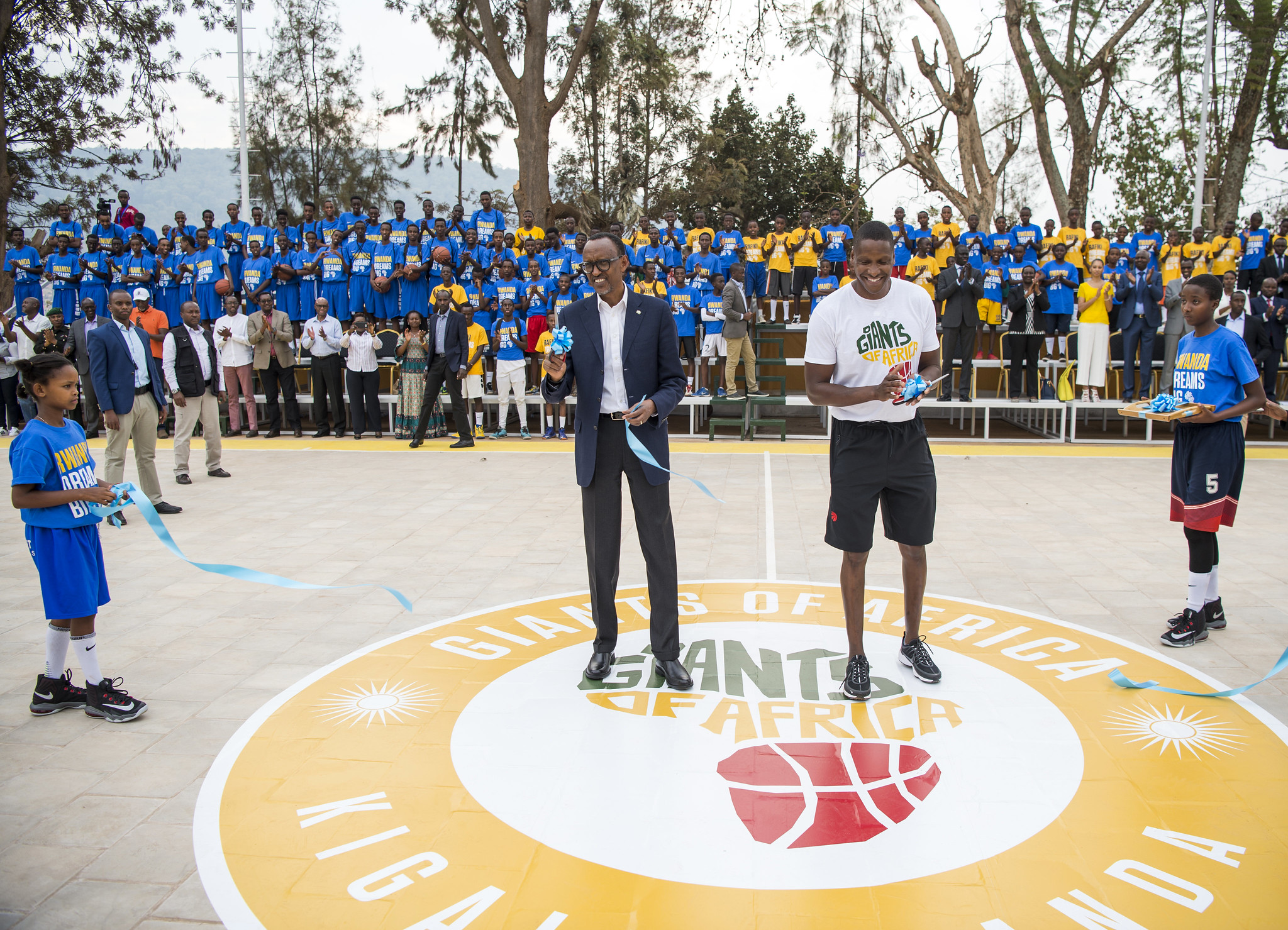
President-elect Paul Kagame attended the Launch of Giants of Africa Basketball Court at Rafiki Club | Kigali, 8 August 2017. Kagame also cut the ribbon to launch of the Basketball Court
A clear sign of this shift is the unprecedented level of investment in sports infrastructure. Kigali now boasts BK Arena, the largest indoor arena in East and Central Africa. It hosted the Basketball Africa League (BAL), which brought global attention to Rwandan basketball. Plans are in motion for similar high-end facilities in other parts of the country, signaling a deliberate move to decentralize access to international-level amenities.
Football stadiums are being refurbished or constructed entirely from scratch. The Amahoro Stadium in Kigali is monument in the entire region. The Ministry of Sports has also been pushing to equip schools with standard fields and courts, embedding sports within the education system.
Beyond buildings, Rwanda has been hosting an increasing number of international events: Ironman Triathlon, Giants of Africa, African Cycling Championships, and more. These aren’t just spectacles. Each one is a calculated move to brand Rwanda as a premium destination for sports tourism and investment.
Rwanda’s partnerships with global clubs like Paris Saint-Germain and Arsenal F.C. via the Visit Rwanda campaign are part of this grand vision. It’s about attracting not just tourists, but ideas, partnerships, and revenue streams.
Sports academies are also taking root. A private-public partnership model is being adopted to groom elite talent in disciplines like tennis, cycling, and basketball. These facilities are not only about identifying talent but also creating entire industries—from coaching to sports medicine to event management.
Sports as National Strategy
To understand this shift, it helps to look at President Kagame’s broader governance philosophy, well captured in the book Rwanda Inc.: How a Devastated Nation Became an Economic Model for the Developing World by Patricia Crisafulli and Andrea Redmond.
The book presents Kagame as a “CEO-President,” who rebuilt Rwanda not through aid or charity, but by applying corporate discipline. His methods are data-driven, rooted in long-term vision, and anchored in performance management. From the outset, Kagame emphasized private sector-led growth, zero tolerance for corruption, and strategic positioning on the global stage.
Rwanda Inc. outlines how Kagame focused on homegrown solutions, betting on technology, human capital, and efficiency. Under his leadership, Rwanda began to operate like a company—with KPIs, dashboards, and relentless execution. Ministries and agencies are expected to deliver like business units. And now, sports is being brought into this same mold.
When Kagame moves someone from Village Urugwiro or RDB into a new ministry, it is not a random shuffle. It is strategic resource allocation. These individuals are deeply immersed in the Kagame way—steeped in discipline, accustomed to urgency, and trained to think in terms of national competitiveness.
At a recent public event, Kagame gave a glimpse into his thinking when he pointed out that sports shouldn’t be viewed as “just games on a pitch.” He argued that sports, when done right, can be a source of national income, job creation, youth employment, and global attention. “We don’t play for the sake of playing,” he said. “We must get value out of it.”
The Ministry of Sports is not just being restructured. It’s being repositioned as a pillar of the national economy.
Beyond Play
Why this focus on sports?
Because sports is no longer just play—it is economics, diplomacy, and public health rolled into one.
First, employment. Rwanda has a growing youth population and an urgent need to create non-traditional jobs. Sports offers an ecosystem—from logistics to broadcasting, coaching to merchandising—that can absorb thousands.
Second, diplomacy. Sports gives Rwanda a soft-power edge. Hosting major events like BAL or the Ironman race brings global visibility, positions the country as stable and attractive, and builds bridges with global investors. Kigali isn’t just a diplomatic capital; it’s fast becoming a sporting capital.
Third, identity. Rwanda is using sports to cultivate pride and cohesion. By investing in national teams and giving them the tools to win, Rwanda is building a shared narrative of achievement. Just as Team Rwanda cycling once symbolized a nation’s rise from ashes, the next wave of champions could do the same.
And fourth, health and lifestyle. A sporting population is a healthier population. The government’s push for community fitness parks, car-free day activities, and school competitions reflects an effort to embed physical wellness in national culture.
A New Game Plan
This isn’t merely a pivot to sports. It is an execution of Vision 2050—Rwanda’s long-term development strategy—through a new vehicle.
It’s a playbook that echoes strategies seen in other countries. In Qatar, sports were used not just as entertainment but as economic diversification. The Gulf state invested over $220 billion in infrastructure for the FIFA World Cup 2022. While critics questioned the cost, the returns came in soft power, global brand value, and an explosion of tourism and new business ventures.
The United Arab Emirates used a similar model. Dubai and Abu Dhabi have become homes for F1 races, elite tennis tournaments, golf championships, and UFC fights — turning sports into a multi-billion-dollar pillar of the economy. And South Africa, after the 2010 FIFA World Cup, saw a jump in tourism, job creation, and infrastructure value that lasted years after the final whistle.
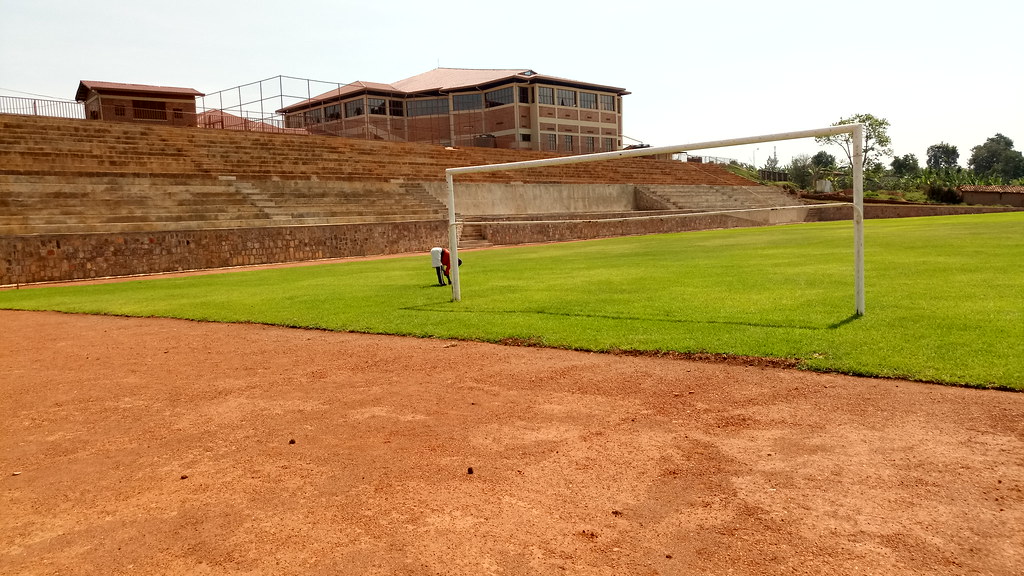
In rural Gisagara district, in southern Rwanda, the local youth population doesn’t have to worry about where to practice their talents. There is a multipurpose gymnasium for different sports. This scene is in different regions.
Kagame’s vision mirrors these examples — but with a Rwandan twist. And in sports, Kagame sees a golden opportunity. The goal is not just to host events but to build a sports economy — one that can develop homegrown talent, attract foreign investors, create jobs for youth, and export sporting services and products.
To do this, talent must be nurtured from the grassroots, which is why the government has made unprecedented commitments to community-level infrastructure. Every village must have a sports pitch, every sector a nationally accredited field, and every district an international-grade stadium. These aren’t symbolic gestures — they are designed to ensure that every child with a dream has somewhere to practice, grow, and be scouted.
Even global powerhouses are now building academies in Rwanda, feeding into this pipeline of opportunity. It’s a long-term play: develop the athlete locally, monetize their career globally, and reinvest profits back into the system. Rwanda is building not just teams, but talent ecosystems.
Kagame has always believed that Rwanda can punch above its weight if it is smart, efficient, and brave. Sports fits this model perfectly. It requires discipline, ambition, and teamwork. And done well, it pays off in visibility, revenue, and national pride.
That’s why these select officials are at the heart of this transformation. They’re not being asked to know how to dribble. They’re being asked to apply strategic execution to make money for the economy.
Rwanda is not trying to copy other countries. It’s building its own blueprint—one where sports is not just entertainment, but enterprise. Just like it once reimagined post-conflict governance, it’s now reimagining how a country plays—and wins—on the global field.
In the Kagame doctrine, every sector is a front for national development. And sports, once a sideline, is now very much in play.

2 comments
Good news, and also they should start to look for another sports like golf, ⛳
We love you daddy ❤️
Comments are closed.