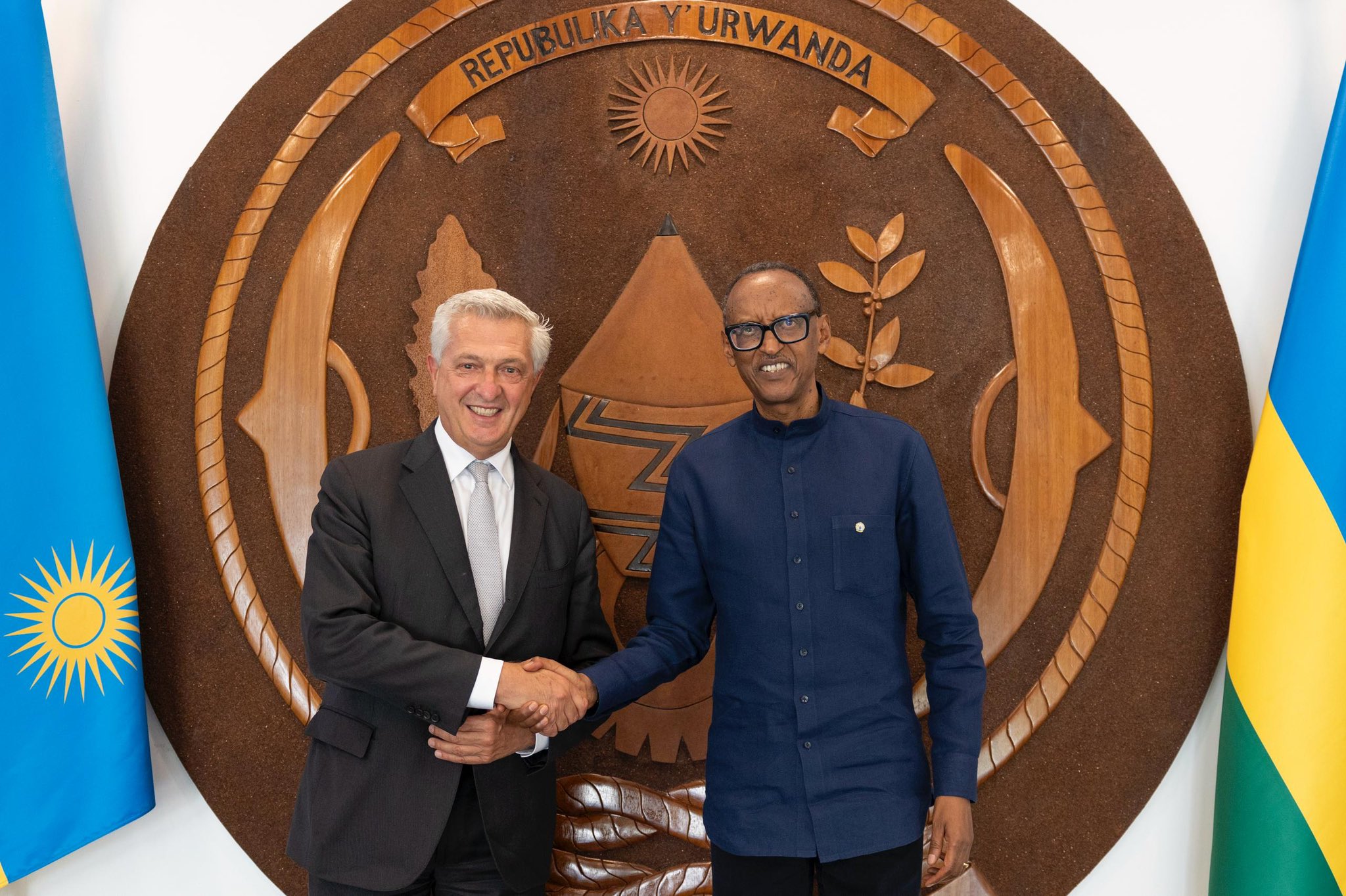
 KIGALI, RWANDA – United Nations High Commissioner for Refugees Filippo Grandi concluded a high-level meeting with President Paul Kagame on Thursday, highlighting Rwanda’s “leading role” as a country of refuge and a model for refugee protection, integration, and long-term solutions.
The afternoon meeting at Urugwiro Village focused on strengthening the existing collaboration between Rwanda and UNHCR as the nation continues to host a diverse refugee population from across Africa, the Middle East, and beyond, including those evacuated from precarious situations in Libya through the Emergency Transit Mechanism (ETM) and students and families from Afghanistan.
Grandi’s visit to Kigali follows his stop in Kinshasa, where he held discussions with President Félix Tshisekedi regarding the complex displacement crises affecting the country and the Great Lakes region. The tour gains significance as it comes on the heels of a trilateral agreement and a 2025-2026 roadmap signed in July by the DRC, Rwanda, and UNHCR, which aims to create a framework for the voluntary repatriation of Congolese refugees currently residing in Rwanda.
The protracted situation of these refugees is considered one of the root causes of the enduring instability in eastern DRC.
During his meetings in Kinshasa, Grandi emphasized that recent diplomatic breakthroughs, including peace agreements signed in Washington and Doha, must be accompanied by humanitarian gains.
“Political initiatives must now translate into concrete benefits for people trapped in conflict situations, including refugees and internally displaced persons,” he stated.
A Progressive and Inclusive Model:
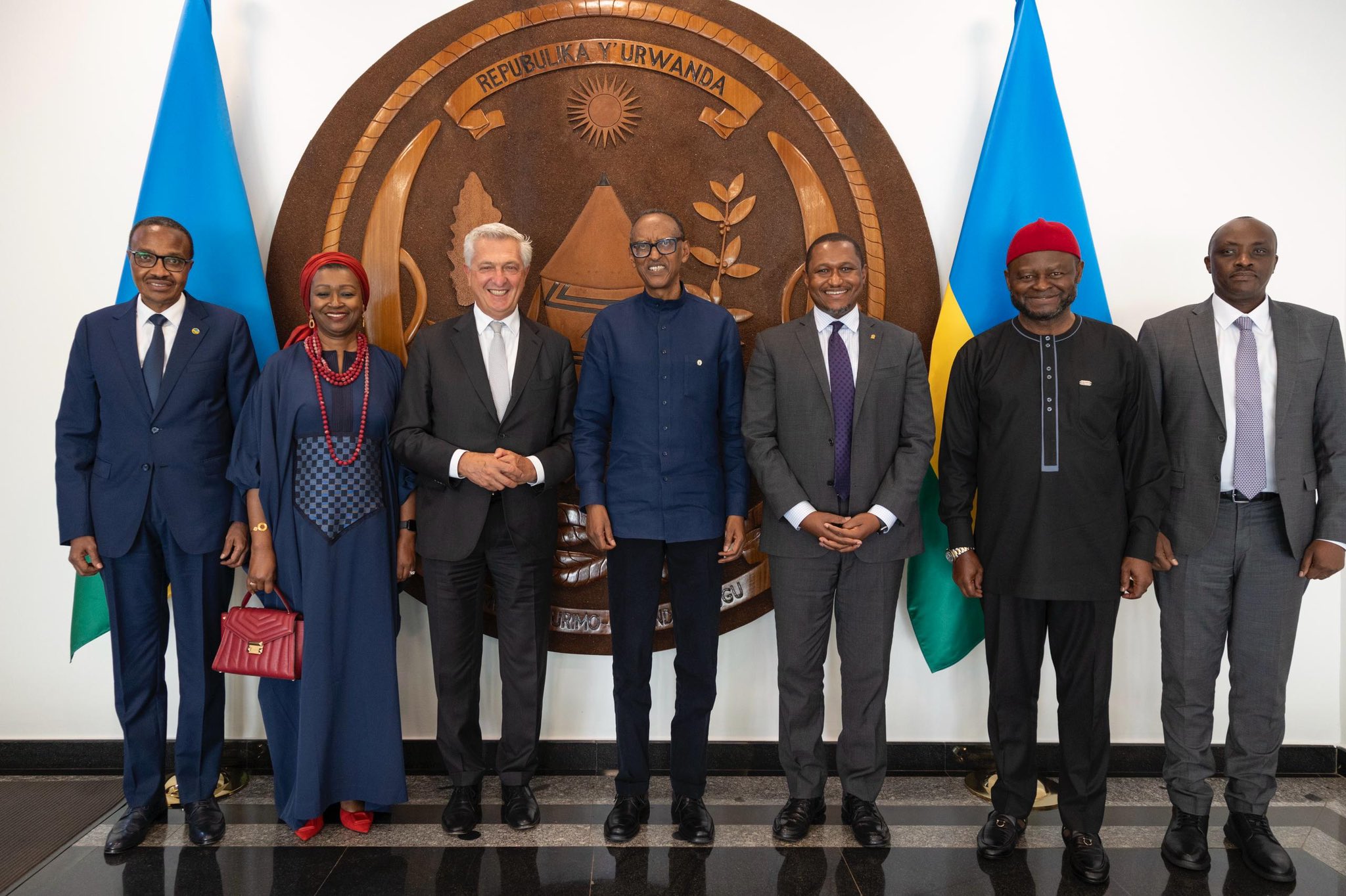
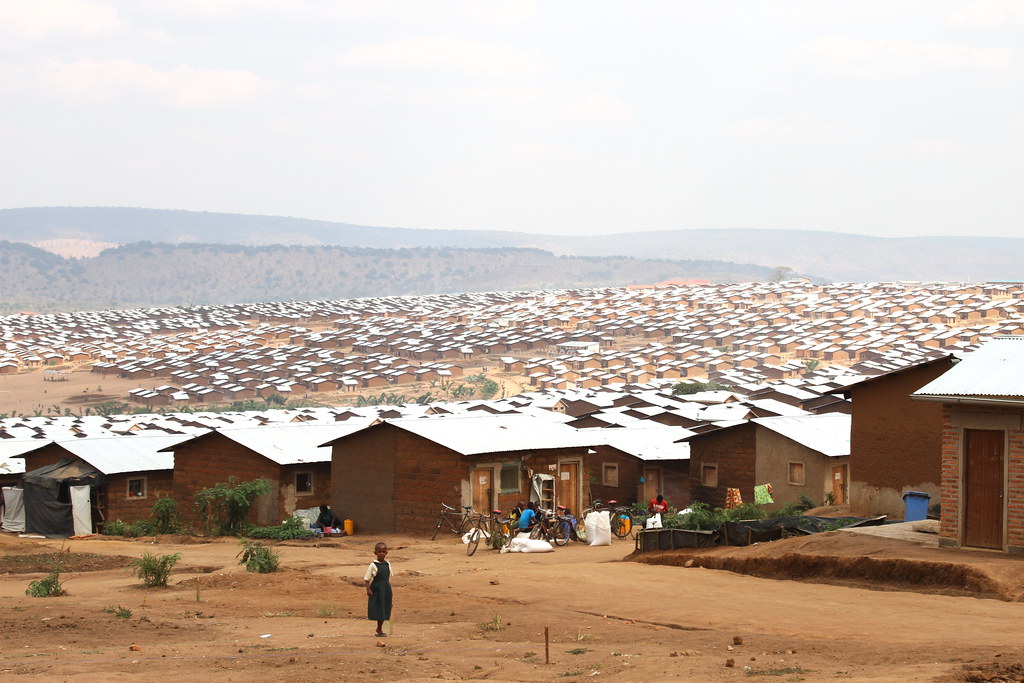
In Kigali, Grandi expressed his “sincere gratitude” to President Kagame and the Rwandan people for their commitment to providing a safe haven. Rwanda has moved away from a traditional encampment policy, instead implementing a progressive approach that focuses on the socio-economic inclusion of refugees.
Key policy and legal reforms, including the Law No. 042/2024 on refugees and asylum seekers, have paved the way for refugees to access national services and contribute to the local economy.
The goal is to sustainably graduate at least 50% of refugee households from humanitarian assistance by 2030, a key pillar of Rwanda’s Refugee Sustainable Graduation Strategy.
Grandi has previously emphasized that this approach, which transitions from humanitarian aid to development-focused solutions, is crucial for fostering self-reliance and dignity for displaced people.
“Rwanda’s inclusive policies…provide a blueprint for solidarity and practical action,” he said at a recent World Refugee Day event.
Throughout two-day visit in Rwanda, the UNHCR chief held a series of high-level meetings to reinforce this model.
He was received by Yusuf Murangwa, Minister of Finance and Economic Planning, for discussions on “Rwanda’s strong commitment to the socio-economic inclusion of refugees and host communities.”
Later, he met with Maj. Gen. (Rtd) Albert Murasira, Minister of Emergency Management, and ACP Lynder Nkuranga, Director General of Immigration and Emigration, to reaffirm the commitment to refugee protection with a focus on resilience, integration and safeguarding rights.
Long-Term Solutions and Funding Challenges:
The discussions between Grandi and President Kagame also touched upon the broader context of global refugee management and Rwanda’s role as a partner in global efforts to address irregular migration, including its ongoing discussions with other international partners.
These high-level talks occur against a backdrop of significant funding challenges.
According to a recent UNHCR financial update for Rwanda, the agency’s 2025 requirements of $84.8 million are only 25% met, leaving a substantial funding gap of over $63 million. This shortfall impacts programs for both the regular refugee program and the specific situation concerning Congolese refugees, threatening the very progressive models and durable solutions—including integration, voluntary repatriation, and resettlement—that were lauded during the visit.
The European Union and the United States are currently the largest direct contributors to UNHCR’s operations in Rwanda.
The discussions with President Kagame and his ministers underscored the critical need for sustained international financial support to match Rwanda’s political will and operational framework in hosting and integrating refugees.