



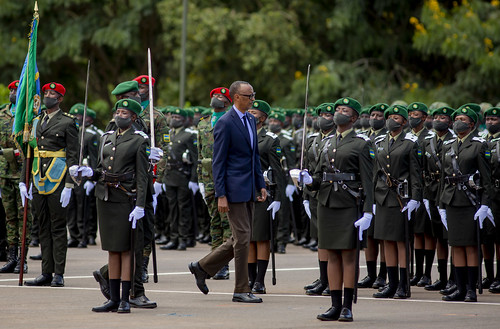
Commander-in-Chief and President Paul Kagame inspects a parade at a previous pass-out
In a sweeping reform of Rwanda’s military structure, President Paul Kagame has signed a set of new Presidential Orders that significantly modernize the Rwanda Defence Force (RDF).
The reforms, published in the Official Gazette on August 27, 2025, replace the framework that had been in place since 2012 and introduce new services, units, and oversight mechanisms.
The changes mark the most comprehensive reorganization of the RDF in more than a decade. They aim to align Rwanda’s military with the country’s evolving security needs, technological realities, and international obligations. In simple terms, the 2025 reforms expand what the RDF looks like, what it does, and how it makes decisions.
From 2012 to 2025: Why Reform Was Needed
Back in 2012, Rwanda issued Presidential Orders that defined the RDF in three main services: the Army, the Air Force, and the Reserve Force. The law also gave a list of assets that were considered secret military property, mostly limited to weapons, ammunition, and some installations. It created a basic framework that allowed the RDF to operate effectively as a national army.
But since then, Rwanda’s context has changed. The RDF has become more involved in international peacekeeping missions, it has had to respond to complex regional security threats, and the role of technology in modern warfare has grown rapidly. Issues like cyber threats, unmanned drones, and the need for specialized medical services in the field were not fully covered under the old 2012 law.
That is why, in 2025, President Kagame and the Cabinet approved three new Presidential Orders that overhaul the RDF’s organization:
- Order n°013/01: Expands the definition of military classified assets.
- Order n°014/01: Defines the services and units of the RDF.
- Order n°015/01: Establishes formal decision-making councils within the RDF.
Together, they replace the 2012 rules and introduce a much more modern structure.
Broader Definition of Military Assets
One of the most striking changes is how Rwanda now defines “military classified assets.”
In 2012, classified assets were narrowly defined, mostly covering weapons, ammunition, and a few installations. The focus was on guns, bullets, tanks, and depots.
The 2025 Order expands this definition dramatically. Classified assets now include:
- Weapons, systems, and ammunition
- Military vehicles: tanks, armored personnel carriers, and other heavy and light vehicles
- Military aircraft: fighter jets, helicopters, and drones plus their accessories
- Information and communication equipment: radars, radios, telephones, cameras, computer software, and related IT infrastructure
- Military installations: headquarters, barracks, depots, military industries, and even raw materials needed for defense production
- Military uniforms and accessories
- Imported and exported military equipment and related data
This means that even things like software programs, radars, or imported spare parts for tanks are now legally protected as state secrets.
The order also introduces audits of classified assets, to be conducted under instructions from the Commander-in-Chief (President Kagame). This ensures that Rwanda keeps strict control over how sensitive military equipment is managed.
New Services
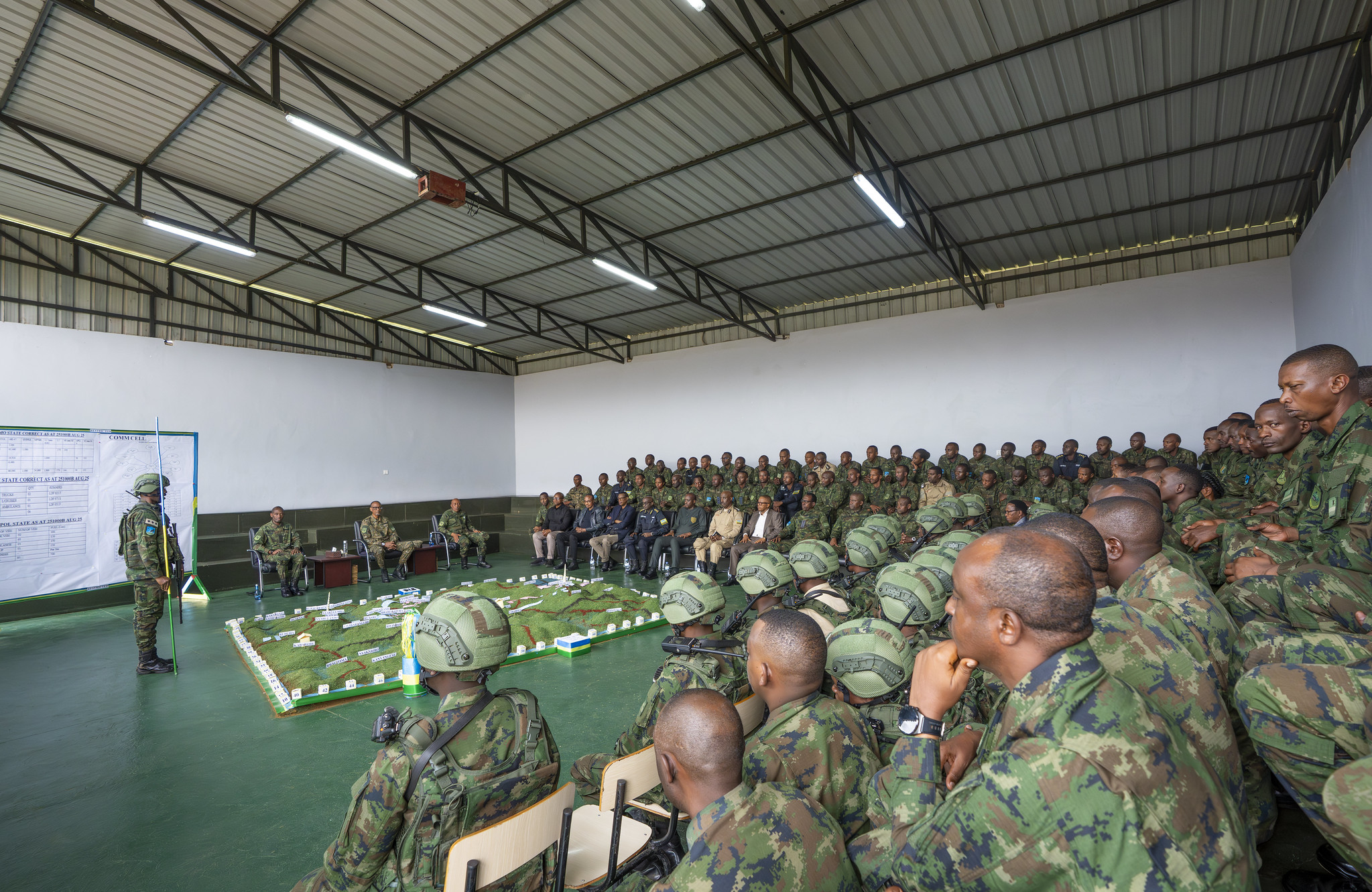 The 2012 framework recognized three services: Army, Air Force, and Reserve Force.
The 2025 Order adds a fourth service: the Military Health Service.
This is a major step, because it formalizes the role of military health as a core part of Rwanda’s defense system. While doctors and medics have always been part of the RDF, now the service has its own defined structure, command, and responsibilities.
This reflects lessons learned from Rwanda’s role in peacekeeping missions abroad, where health services are critical, as well as the global COVID-19 pandemic, which showed how closely health and security are linked.
Reserve Force: More Structured and Specialized
The Reserve Force also receives a major update.
In 2012, it was mainly divided into Infantry Reserve and Specialist Reserve, with basic rules about mobilization, training, and entitlements.
In 2025, the Reserve is divided into three distinct parts:
-
- Operational Reserve – those who can be called up for immediate reinforcement.
- Reinforcement Reserve – those who back up the operational force when needed.
- Strategic Reserve – those held for long-term or national-level contingencies.
This makes the Reserve more flexible and better able to respond to different situations. For example, if Rwanda needs soldiers quickly for peacekeeping, the operational reserve is available. If there is a prolonged regional crisis, reinforcement and strategic reserves can be activated.
Joint Staff and Specialized Departments
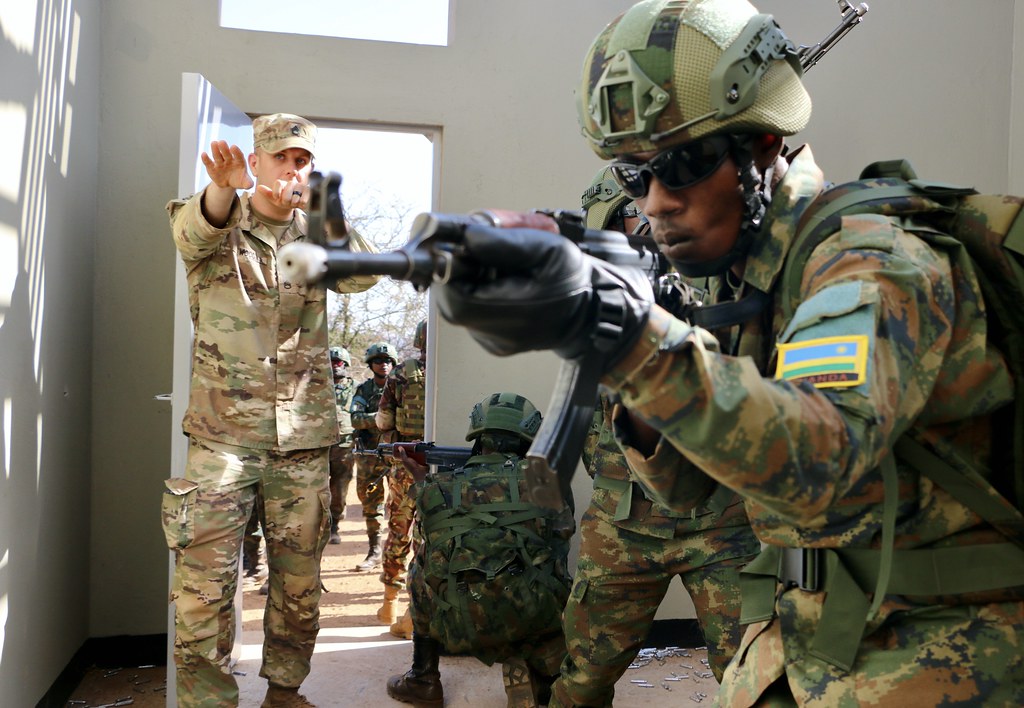 The 2025 reforms also modernize how the RDF is managed internally.
The RDF now has nine Joint Staff Offices, covering areas such as:
- Personnel
- Intelligence
- Operations
- Logistics
- Training
- Civil-Military Cooperation
- Communications
- Finance
- Legal
In addition, the RDF gains specialized departments for:
- Budget and Finance
- Peace Support Operations
- Defence Public Affairs
- Legal Affairs
This is important because it reflects how modern militaries operate. It is no longer just about soldiers and guns. Finance, law, communication, and peacekeeping operations have become essential elements of Rwanda’s defense system.
Specialized Units
Another major change is the formal recognition of specialized units within the RDF.
The 2025 Order lists these units explicitly:
- Republican Guard
- Special Operations Force
- Engineer Command
- Military Police Brigade
- Logistics Brigade
- Communication Brigade
- Military Band Regiment
Each of these units now has clearly defined responsibilities and command structures. For instance, the Engineer Command is tasked with construction, demining, and support for both military and civilian infrastructure.
The Military Police handles discipline within the RDF, while the Communication Brigade ensures secure communication across the force.
The Republican Guard (RG)
Among the specialized units, the Republican Guard stands out as the elite formation tasked with ensuring the security of Rwanda’s most senior leaders and institutions.
Under the 2012 framework, the Republican Guard was listed as a unit, but its responsibilities were only broadly implied. In practice, it provided security for the President and other top state leaders, but there was no detailed legal description of who exactly it protected, when, or under what conditions.
The 2025 Presidential Order has now corrected that gap. It formally spells out the mandate of the Republican Guard and gives it a structured role in the RDF.
Who the Republican Guard Protects — and For How Long
- President of the Republic — protected at all times during the term of office, together with the immediate family.
- President-elect — protection starts from the election until inauguration, covering both the President-elect and their immediate family.
- Former President of the Republic — protection continues after leaving office, together with the immediate family. Unlike other officials, there is no time limit stated for this category.
- Prime Minister — protection during the term of office and six (6) months after leaving office.
- President of the Senate — protection during the term of office and six (6) months after leaving office.
- Speaker of the Chamber of Deputies — protection during the term of office and six (6) months after leaving office.
- Chief Justice — protection during the term of office and six (6) months after leaving office.
- Foreign Heads of State and Heads of Government visiting Rwanda — protection for the entire duration of their official stay in the country.
- Other officials or individuals designated by the Chief of Defence Staff (CDS) — protection provided for the period and conditions set by the CDS.
The Guard is also responsible for the protection of strategic infrastructure and other sites designated by the CDS, which allows it to secure sensitive places during major national events, emergencies, or when Rwanda hosts high-level summits.
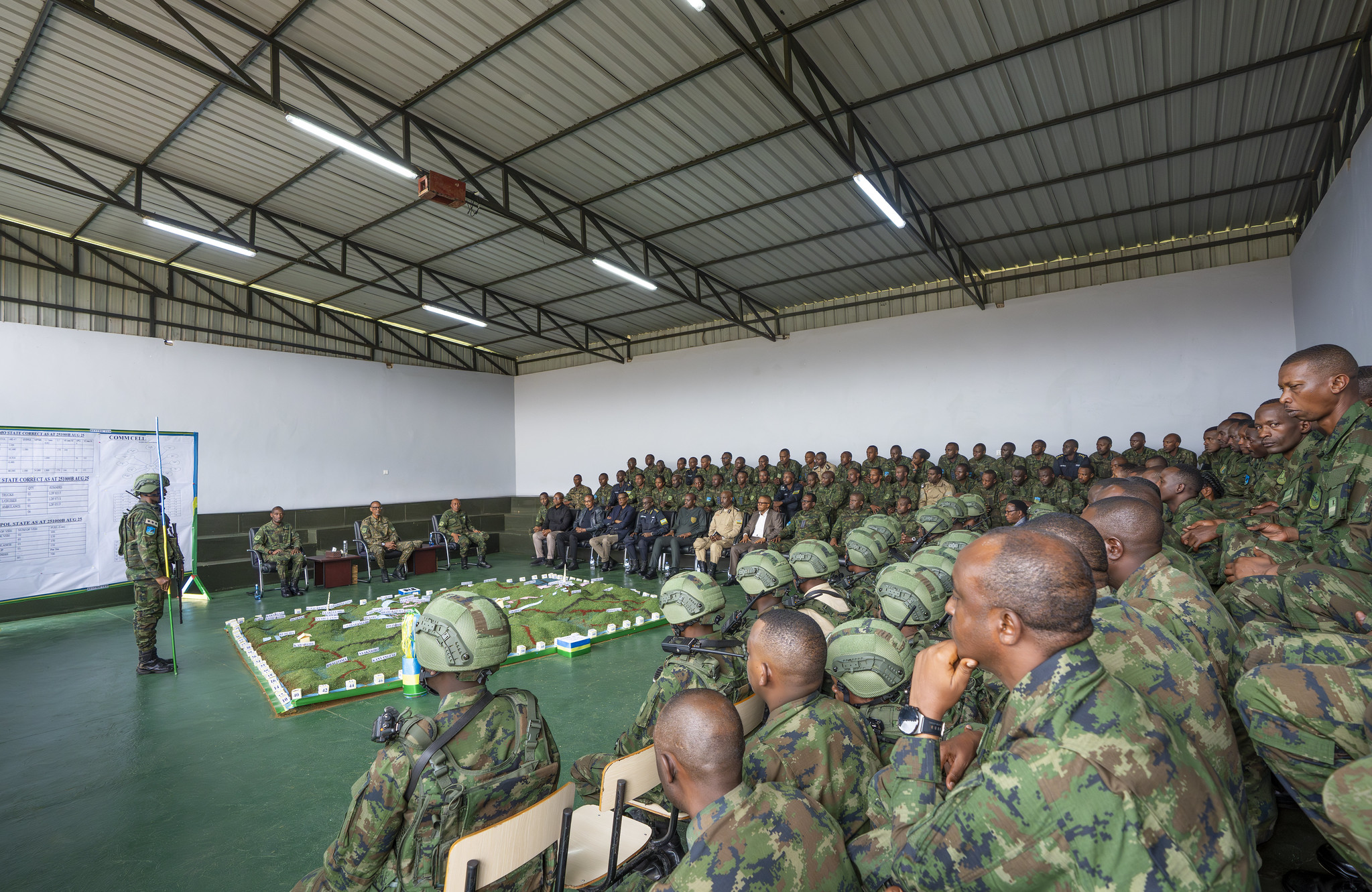
The Key Changes
- Post-office protection reduced: In 2012, former top officials such as the Prime Minister, Speaker of Parliament, Senate President, and Chief Justice received one year of protection after leaving office. The 2025 Order reduces this to six months.
- Former President: The rules remain more robust. Just like in 2012, a former President continues to receive state protection with no set end date, and this also applies to the immediate family.
- President-elect included: The 2025 Order explicitly adds the President-elect to the list, ensuring that there is no security vacuum between election day and the swearing-in ceremony.
- Expanded mandate: The Guard is now formally responsible for not just people, but also key institutions and strategic infrastructure, making it central to Rwanda’s political stability and state security.
Why It Matters
This explicit listing matters for two reasons:
- Clarity: Everyone now knows exactly who falls under the Guard’s responsibility, removing any uncertainty.
- Professionalization: It turns what was once a partly customary practice into a formal legal mandate, ensuring accountability.
The Republican Guard is not a ceremonial unit. It is a highly trained, specialized force that combines close protection duties with rapid response capacity. By securing the leadership and national institutions, the Guard plays a vital role in preserving political stability, continuity of government, and Rwanda’s international image.
Decision-Making Councils
Another innovation of the 2025 reforms is the introduction of formal decision-making councils within the RDF.
These councils cover areas such as:
- Strategy – high-level planning for national defense
- Operations – planning and execution of military missions
- Discipline – handling misconduct and internal discipline
- Welfare – ensuring the well-being of soldiers and their families
This is a new development, as the 2012 law did not explicitly provide such forums. By introducing them, Rwanda creates a culture of collective leadership within its military, reducing reliance on single-person decisions and improving accountability.
Why This Matters
These reforms may sound technical, but they are significant for several reasons:
- Adaptation to modern threats: Rwanda is acknowledging that security today is not only about guns and tanks but also about technology, information, health, and specialized forces.
- Professionalization: The RDF is being given clearer structures, responsibilities, and accountability mechanisms, which is key for a disciplined and modern army.
- International alignment: The changes bring Rwanda’s military structure closer to that of other professional armies, which is important as Rwanda continues to play a big role in UN and AU peacekeeping operations.
- Civil-military balance: By defining the role of councils, departments, and specialized services, the reforms create more checks and balances within the RDF.
President Kagame’s reorganization of the Rwanda Defence Force is not just a legal update. It is a modernization of Rwanda’s entire defense architecture.
The 2012 law laid the foundation for a unified national force. The 2025 Presidential Orders build on that foundation by introducing new services like the Military Health Service, expanding classified assets to cover technology and logistics, strengthening the Reserve Force, creating specialized units, and institutionalizing decision-making councils.
At the heart of this reform is the recognition that Rwanda’s security environment has changed. Protecting the country today means safeguarding leaders, infrastructure, and data just as much as defending borders.
The Republican Guard now has a stronger mandate to protect state officials and institutions, ensuring stability at the highest levels of government. The new departments and units give the RDF more flexibility and professionalism to respond to both domestic and international challenges.
In simple terms, the 2025 reforms move the RDF from being a traditional army to being a modern defense force, capable of addressing the full spectrum of 21st-century security needs.
