




The centre of gravity in East Africa’s minerals economy is shifting from extraction to compliance-driven industrialisation.
In Tanzania, mining has moved from 7.3% of GDP in 2021 to 9.1% in 2022 and 10.1%in 2024, with mineral exports rising to about $4.12 billion in 2024 and gold accounting for $3.419 billion, or 83 % of mineral exports.
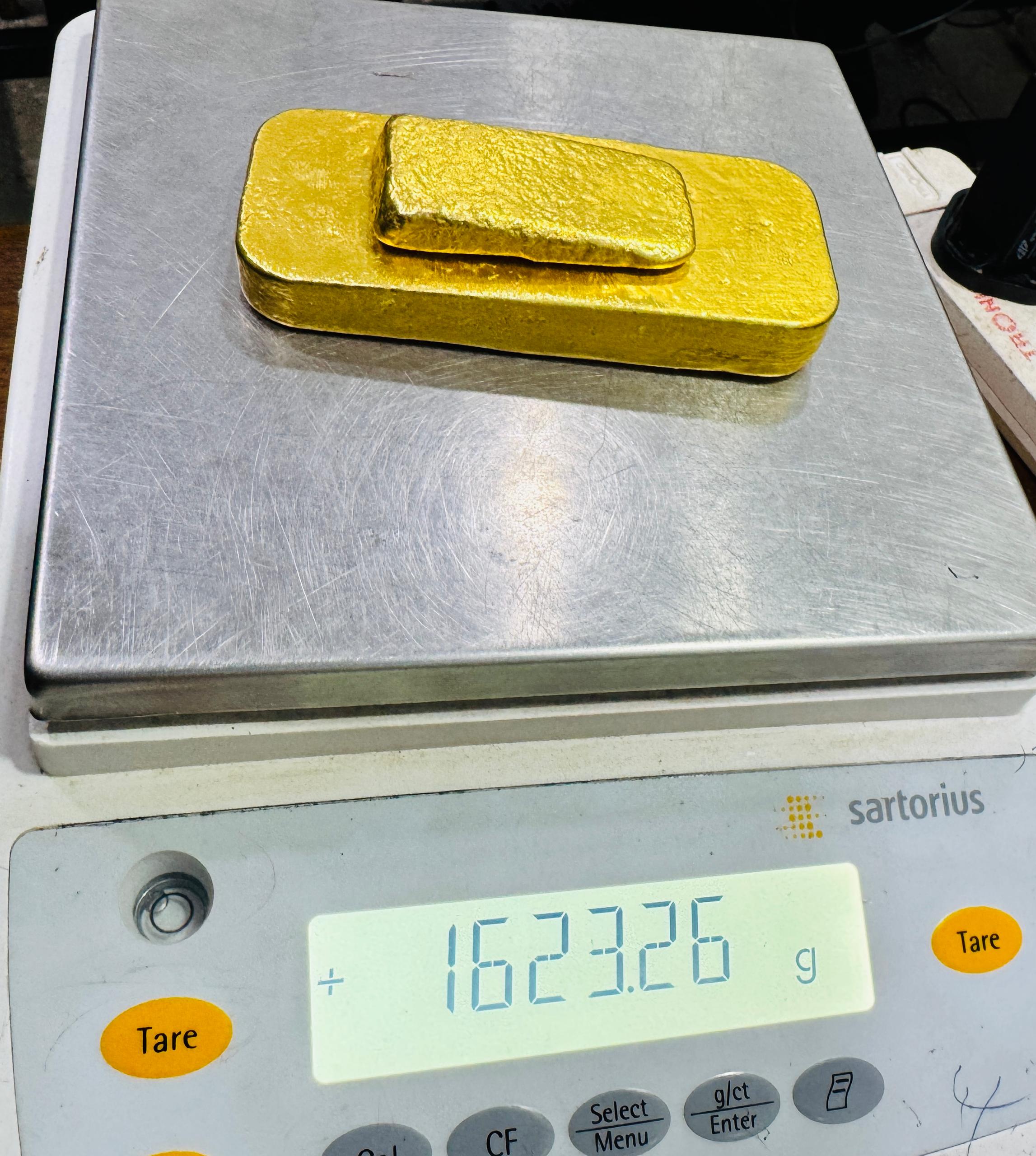
That expansion is tied to the way the sector now functions: a defined slice of large-producer gold must be refined domestically and sold first to the central bank, which by June 2025 had purchased 5,022.85 kilograms—roughly $550 million —rising above TZS 820 billion in book value by late August.
This is not headline theatre; it is the plumbing of a traceable economy in which gold moves through refineries, laboratories, banks, and audited ledgers before any surplus goes offshore.
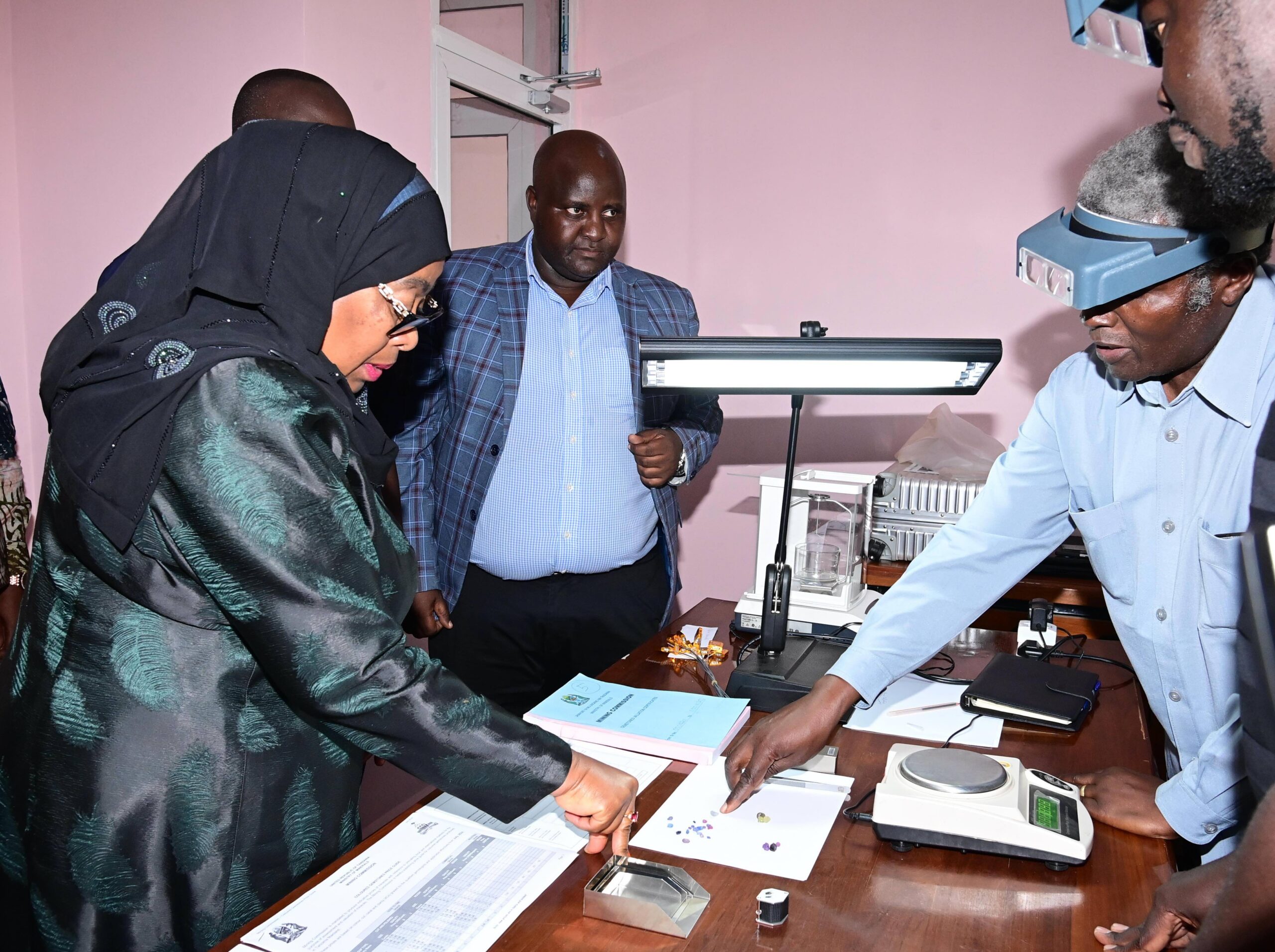
Traceability begins on the ground. 44 mineral markets and 114 trading centres are now the official route for artisanal and small-scale production, with recorded sales of about TZS 1.93 trillion between July 2023 and March 2024, up from TZS 1.68 trillion the year before, and royalties plus inspection fees of TZS 133.8 billion over that nine-month window.
Those numbers map directly onto governance outcomes: sales that used to spill into unrecorded channels now pass scales that are certified, prices that are posted, taxes that are collected, and payments that leave documentary trails.
Inspections have widened to eight large-scale mines, 56 medium-scale operations and more than 22,000 small-scale sites in the same period; 63 tailings facilities were reviewed ahead of heavy rains and only five mine-closure plans approved, signalling that environmental responsibility is an operating requirement, not a ceremonial filing.
Rwanda’s own trajectory makes this regional turn more consequential, because traceability is not an afterthought in Kigali’s policy architecture.
Official communications report that mineral export earnings climbed to roughly 1.75 billion dollars in 2024, up from just $373 million in 2017— a scale-shift that has been accompanied by formal procedures for tagging, weighing and chain-of-custody tracking aligned to ICGLR/OECD standards for 3T supply.
The Rwanda Mining Board’s traceability framework, and the country’s longstanding participation in schemes like ITSCI, create a governance language that already understands what it means for supply to be provably legitimate at each handoff.
That shared language matters because scrutiny is intense. Recent UN-linked reporting and international coverage have alleged illicit flows of Congolese minerals transiting Rwanda during renewed conflict dynamics in eastern DRC, with references to coltan-rich zones and rebel territorial changes.
Whether one agrees with that characterisation or not, the existence of the debate raises the bar for demonstrable, auditable supply chains across the Great Lakes.
A Tanzanian system that forces refining into domestic plants, routes proceeds through the banking system, and subjects mines—from industrial pits to artisanal shafts—to a wide inspection footprint is precisely the kind of counter-narrative that global buyers and standard-setters are demanding to see across the region.
The industrial turn inside Tanzania adds another layer to this regional alignment.
The former Buzwagi mine is being converted into a multi-metal Special Economic Zone; the state has cleared strategic processing projects whose commitments total roughly $760 million, including nickel and mineral-sands plants structured around in-country processing.
Critical-mineral projects push the same logic. Mahenge’s graphite is costed at about $300 million in phase one with power and road upgrades embedded in the plan; Kabanga’s nickel is designed for domestic hydrometallurgical processing to battery-grade product; Ngualla’s rare earths sit under a Special Mining Licence that ties off-take and processing to Tanzanian soil.
When refining moves home, ESG accountability moves with it, because emissions, waste, reagents and tailings are no longer externalised to distant smelters; they are regulated in the same jurisdiction that collects the royalties and holds the reserves.
Small-scale miners are part of the compliance equation rather than exceptions to it. State-run centres in Lwamgasa, Katente and Itumbi collected TZS 794 million in service fees between July 2023 and March 2024, a proxy for actual throughput of ore moving through safer, higher-recovery circuits.
Formal sales produce payment records, and payment records unlock finance: domestic lenders extended TZS 187 billion in credit to small-scale miners over those nine months, up from TZS 145 billionin 2022.
Finance does more than increase output; it changes behaviour. Banked miners have incentives to avoid smuggling and to meet environmental conditions that keep access to credit open.
None of this removes volatility.
Diamond prices fell sharply in early 2024 even as gold held up the export ledger; heavy rains disrupted drilling and coal transport.
Yet the revenue book still beat annual target by nearly six percent and the export ledger expanded year-on-year—because the model is built to capture value in reserves when global gold prices are high and to keep earnings circulating locally through procurement, wages and services when they are not.
For a region that wants credible participation in clean-tech supply chains, the result is a supply that is not just larger but legible: minerals whose origin, processing, payments and environmental controls can be demonstrated, not merely asserted.
In that sense, Tanzania’s direction does not compete with Rwanda’s traceability ambitions; it complements them, by turning compliance into the industrial logic of the entire corridor.