




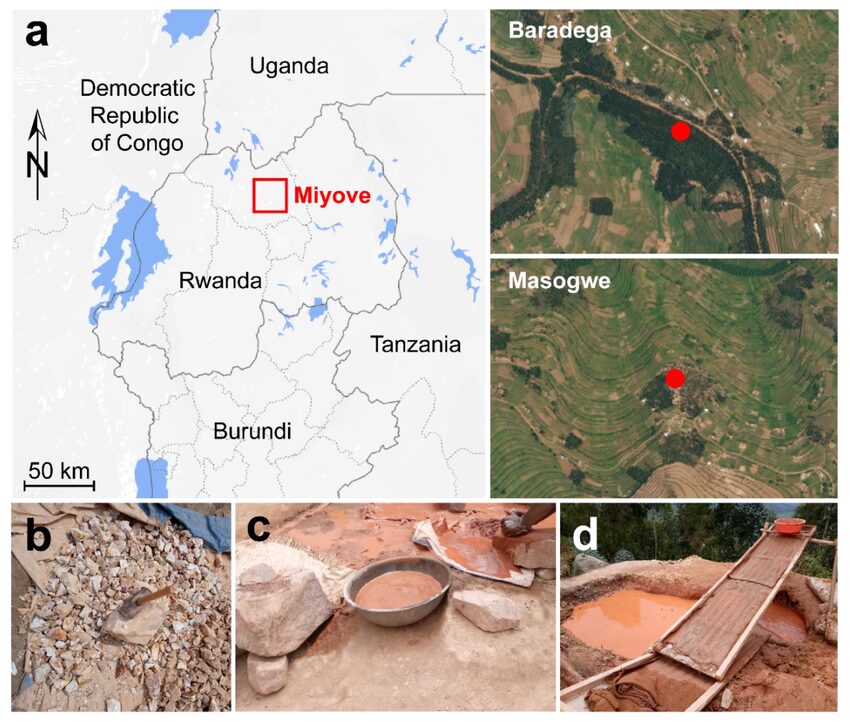
Artisanal gold mining – The location of the Miyove gold mine and landscape of two major sources
President Paul Kagame has offered a rare, detailed explanation of where Rwanda’s gold exports come from, clarifying long-standing questions about domestic deposits, regional trade and recent discoveries.
Speaking during a press conference on Thursday, November 27, 2025, Kagame said Rwanda’s gold production is both historical and actively expanding, even as some of the gold traded in the country continues to come from neighbouring DR Congo.
His remarks come as Rwanda’s gold sector continues to expand at unprecedented speed. In 2024, Rwanda earned $1.5 billion from gold, out of $1.7 billion in total mineral exports.
The growth is the result of government reforms aimed at increasing value addition, modernizing extraction and improving regulation, with a national target of pushing mineral export revenues to $2.2 billion by 2029.
“Nothing Is Frozen”
Asked about EU sanctions imposed on executives of Rwanda’s main gold refinery, Kagame clarified that they have had no impact on the country’s gold exports.
“Is anything frozen? Nothing is frozen,” he said. “They sanctioned the individuals who did that refinery… What does that have to do with gold?”
When the journalist pressed further, implying that some sales to Europe had been halted, Kagame responded: “I don’t know whether I’m getting your question properly, but it is definitely a joke. We are still selling its gold to the EU… gold to the market, whether EU, the Arab region or United States.”
He urged observers to differentiate between sanctions on individuals and the operations of Rwanda’s mineral sector.
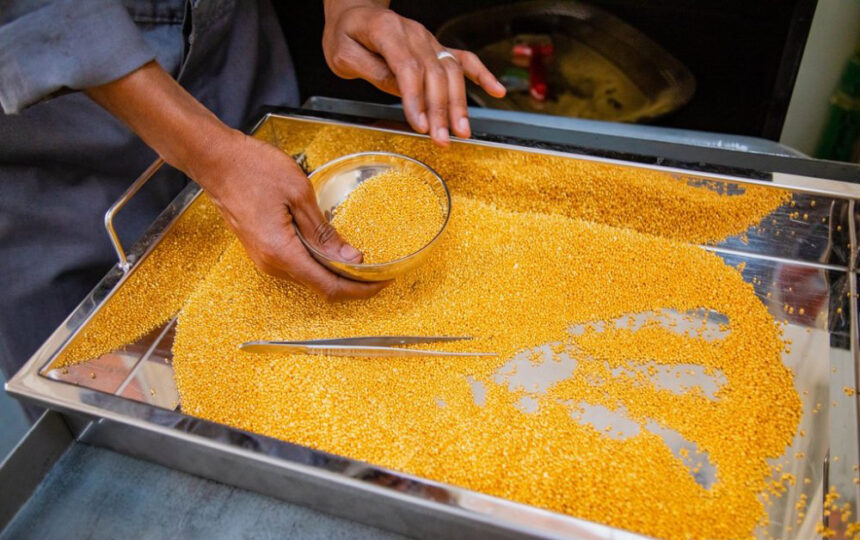
Inside the Gasabo gold refinery
First Exploited During the Liberation War
Kagame then turned to the question of where Rwanda gets its gold. He said Rwanda has its own gold deposits, first encountered during the 1990–1994 RPF/A liberation war, specifically in Miyove, a large valley region located in Gicumbi District in northern Rwanda.
“We have gold here, by the way,” he said. “You know, during the war, our soldiers who were operating in that region. Our fighters woke up and found some stones they didn’t know, flowing along the river, and they picked that stuff. And in fact, we sold it, sent it through Uganda, sold it. It bought us meals for a week.”
After the war, he said, artisanal mining continued in the area, but today “they are doing deep exploration,” for more extensive mining.
Beyond Miyove, Kagame also referenced ongoing exploration in Nyungwe National Park, the huge forest ecosystem stretching across Rwanda into Burundi. Exploratory geological work has been under way in multiple forest blocks to determine whether commercial gold deposits exist.
A New Gold Rush in Musanze
Kagame’s comments also come amid a new gold rush unfolding in Musanze District, where thousands of people have relocated in recent months after signs of gold were reported in several valleys. Aerial footage circulating locally shows hundreds of people digging — many illegally — in steep, densely populated hillsides.
Although Kagame did not mention Musanze in this particular answer, the context of his remarks aligns with what officials describe as unregulated artisanal frenzy in the area.
“More Gold Comes From Congo… It Has Been Passing Through Here for Years”
Kagame did not avoid the most sensitive question — whether some of Rwanda’s exported gold originates from eastern DR Congo. Instead, he stated plainly:
“More gold comes from, and has been coming through here or sold here, from Congo — as it goes through Burundi or goes through Uganda.”
He said this regional flow predates Rwanda’s current prominence in the global gold market and is simply part of historic Great Lakes trade routes.
“There is nothing particular about gold and Rwanda that people should find strange.”
“This Is Geopolitics… Some Nastiness That Goes On Every Day”
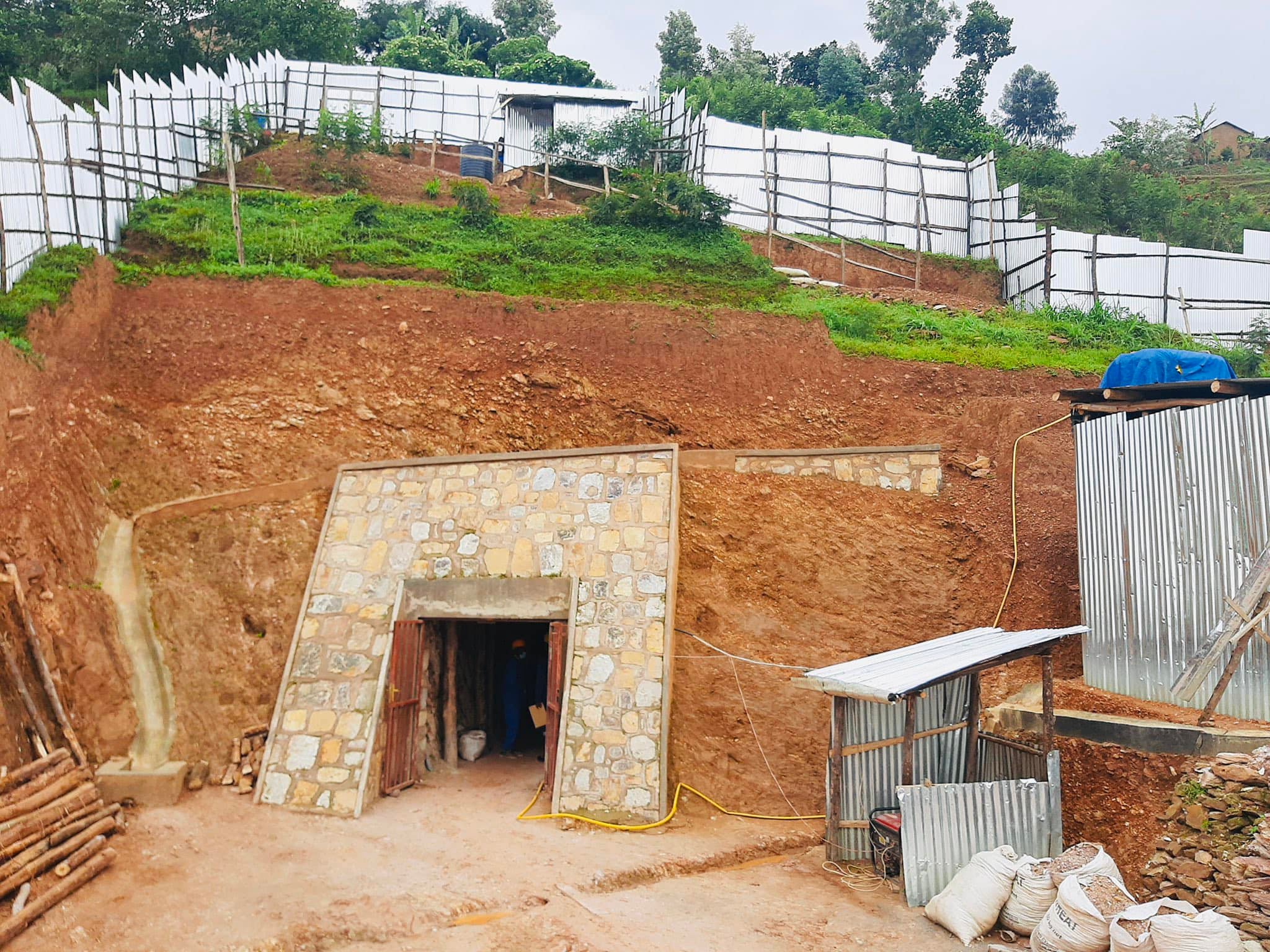
Entrance to one of the gold mine sites in Miyove, Gicumbi district
Kagame said the controversy surrounding Rwanda’s gold exports is driven more by international political dynamics than by facts.
“If you follow the sanctions… what does that have to do with gold?” he asked. “Can you imagine Rwanda being a point of reference to do with this global network of gold trade? You get it clearly — that is politics. It is geopolitics, some nastiness that goes on every day.”
He added that Rwanda is unfairly singled out as a convenient target in global discussions about gold, despite being a minor player compared to large producers whose influence shapes world markets.
Rwanda Cannot Influence World Gold Prices, Kagame Says
Responding to suggestions that Rwanda’s rising gold exports might be affecting the global price of gold — which recently climbed above $4,000 per ounce — Kagame dismissed the idea entirely.
“The impact must be there… I haven’t calculated it,” he said, adding ironically, “but you may end up having wars around gold, those who need it and those who produce it in the world. Those who have more will get more involved than those of us we are talking about.”
He continued: “Young or small people always carry the burden of the whole world by itself. People do everything, even in a worse form, but they prefer to point to one for everything.”
A Sector Still Growing
Rwanda continues to position itself as a regional mineral processing hub, supported by investment in refining, geological surveys and formalization of artisanal mining.
Exploration is expanding from Miyove to Nyungwe and other areas, while unregulated activity in Musanze highlights the challenges of balancing growth, environmental protection and community livelihoods.
Kagame’s message was consistent throughout: Rwanda has its own gold, it processes gold from long-established regional trade routes, and the controversy surrounding its exports is rooted not in wrongdoing, but in international politics.
His final tone was pointed and unambiguous: Rwanda will continue to mine, trade and refine gold — and will not shoulder blame for a global industry far larger than itself.
