




The ink was barely dry on the Washington Accord signatures between Rwanda and the Democratic Republic of Congo (DRC), before the DRC President Felix Tshisekedi, was rewriting the terms of the agreement in an apparent effort to distract from the fact that he never intended to honour them.
Shockingly, if not surprisingly, he is allowed to escape the international disapprobation that would be his just deserts, by indulging in his customary distraction of pointing accusing fingers at Rwanda.
In a speech to parliamentarians which many of them found soothing enough to sleep through, Felix Tshisekedi made several mentions of the Washington agreement but apparently forgot what he had agreed and signed in the American capital.
Suddenly, the Washington accords meant not restoration of amicable relations between Rwanda and the DRC, at the centre of which would be the eradication of the genocidal armed militia, the self-styled Democratic Forces for the Liberation of Rwanda (FDLR). Instead, the accords were conflated with the inter-Congolese conflict between the AFC/M23 (Congo River Alliance) and the government in Kinshasa.
Referencing the taking of the city of Uvira, now in the hands of the rebels, and the capture of which was underway even as he spoke, Tshisekedi claimed that it was Rwanda, which had already violated the Washington peace agreement.
This charge continues to be repeated by the Kinshasa government spokespeople, in particular, the Minister of Communications and Media, Patrick Muyaya, who went on twitter (X), to claim what he calls “Rwanda bombings and its hostile actions…” “Not only is Rwanda deliberately violating the Washington agreement” he asserted, “but it also seeks to regionalise the conflict, particularly by attacking Burundi…”
Despite these and other similar claims from individual Barundi politicians, there has been no verifiable attacks of any kind by Rwanda, against either Burundi or the DRC.
What there had been however, was escalation of attacks against AFC/M23 held areas, by the DRC government forces, supported by a large force of Burundi’s military. According to intelligence from Rwanda, which is not disputed by either Burundi or the DRC, Burundi has up to 20,000 troops in the DRC.
For several weeks before the two Heads of State set off for Washington D.C., to sign the much heralded peace agreement, the DRC with their Burundi allies, assorted armed groups now under the umbrella name of “Wazalendo,” mercenaries from Europe, South America, Columbia in particular, and reportedly American Eric Prince’s Black Water group, were launching attacks against AFC/M23 positions around Uvira.
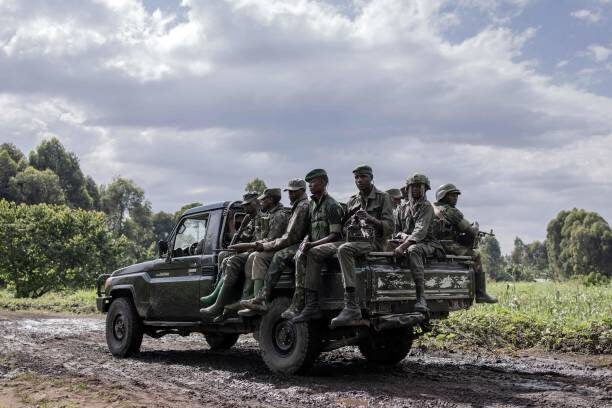
The attacks were intense and sustained. From the air, government fighter jets and Unmanned Aerial Vehicles (UAVs) or drones dropped bombs. People were caught between the DRC armed forces on one side and bombs from Burundi on the other.
The Banyamulenge inhabitants of Minembwe and neighbouring areas, were especially targeted by the Burundi forces. Villages were subjected to an almost medieval siege, under near continuous bombardment, unable to move even to access essential supplies.
As has become almost customary now, AFC/M23 raised the alarm about the escalation of the fighting, which it said was in violation of an existing ceasefire agreement, warning, as is also customary, that it would be obliged to respond to protect civilians, if the attacks continued.
This has now become a pattern. Government forces and its coalition of mercenaries, armed groups, including the FDLR, attack areas under the control of AFC/M23, the rebel group raises the alarm to the international community, accompanied by a warning that they would launch a response, should the attacks continue.
The warnings are met with a deafening silence from international actors, the rebels duly launch a counter offensive, capture yet more territory, to loud howls from the DRC and condemnation from the international community.
This same ritual was replayed on this occasion. Even though government attacks had begun days and weeks before the heads of state’s arrival in Washington, a discreet silence about them was maintained.
A charitable explanation would be that it had perhaps been decided that the inter-Congolese conflict would be left to the Doha process, the mediation by the state of Qatar.
That, however, would be immediately contradicted by the international community’s reaction the moment the rebels took Uvira, bearing in mind that by international community, we mean Western powers, NGOs, and the multilateral organisations and institutions, that are under their influence.
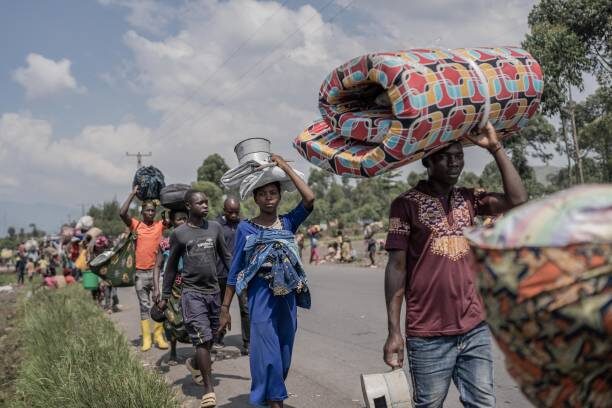
Almost simultaneously as people begun to flee towards the small Rwandan frontier town of Bugarama, the DRC’s accusations against Rwanda started. Burundi, whose soldiers had been bombarding the Banyamulenge population joined its DRC ally in the farfetched claim that Rwanda had attacked both countries.
According to Burundi and the DRC, the claimed attacks, which Rwanda dismissed as absurd, were launched from Bugarama.
For such an offensive to have taken place however, it would have had to have been invisible not only to the local population of Bugarama, who were going about their normal lives, or the refugees pouring into the town from the DRC, received by Rwandan authorities, with the United Nations High Commissioner for Refugees (UNHCR) in attendance.
But there was method in the implausible claim. It has become an established tactic for the DRC to call every AFC/M23 action Rwandan. From past experience, both Burundi and DRC knew AFC/M23 would respond to their offensives.
Now as well as the accusing Rwanda of attacking them, they could also claim that in doing so, Rwanda had violated the Washington peace agreement.
In one fell swoop the combined attacks by the DRC and Burundi, in the case of the DRC against their own people, were framed as Rwanda violating the Washington agreements. And that was only the first phase, the second resonated all the way into the United Nations Security Council meeting a couple of days or so ago.
In many ways, the DRC head of state could congratulate himself on something of an achievement, or perhaps more accurately, on a close escape. He had managed to tie himself in knots which the loss of Uvira, could now help him to cut or at the very least loosen.
He had earlier conceived the scheme of inviting the Americans to help themselves to Congo’s vast seemingly inexhaustible mineral wealth, in exchange for them fighting his war against AFC/M23. It was a eureka moment, an act of desperation, or perhaps a little of both.
He had first invited an East African force, hoping that it would move against M23. But the force, which he had demanded must exempt Rwanda, nonetheless insisted on addressing the underlying causes of the conflict, and called for a negotiated settlement of the conflict. And with the East African force as observer, it became increasingly difficult for the DRC to claim that Rwanda was behind what is an inter-Congolese war.
Unhappy that the East African force would not after all fight his wars for him, he sulkily told the East African block to pull them out. He then placed his faith in a SADC (The Southern African Development Community) force, led by South Africa. For a time, this went as he had wished. South Africa even begun to make bellicose noises against Rwanda, which will have pleased the DRC President no end.
But this avenue would also be closed to him. The South African President, Cyrial Ramaphosa, would find it increasingly difficult to justify dragging his country’s forces in what seemed an endless, needless war. The South African troops were eventually withdrawn and given safe conduct through Rwanda, on their way home.
In expelling the East African force, Tshisekedi made a bilateral arrangement with Burundi, and only the Burundi contingent of the East African force remained. Unlike South Africa, Burundi has stayed the course. Even when their troops begun to sustain heavy losses leading to many of them mutinying, the Burundi head of state, Evariste Ndayishimiye, simply imprisoned the mutineers, and sent in more reinforcements. For whatever reason Burundi would stand with Tshisekedi to the bitterest end, that end seems to have been the taking of Uvira.
None of these setbacks have convinced Tshisekedi that he might be better off negotiating with AFC/M23 rebels. However many battles are lost by his coalition of mercenaries, foreign troops, genocidal FDLR, a demoralised army and armed groups that distinguish themselves only in preying on the civilian population, he still dreams of a military solution, and never seems to lose the hope that he can get others to fight his war, by dangling Congo’s mineral wealth.
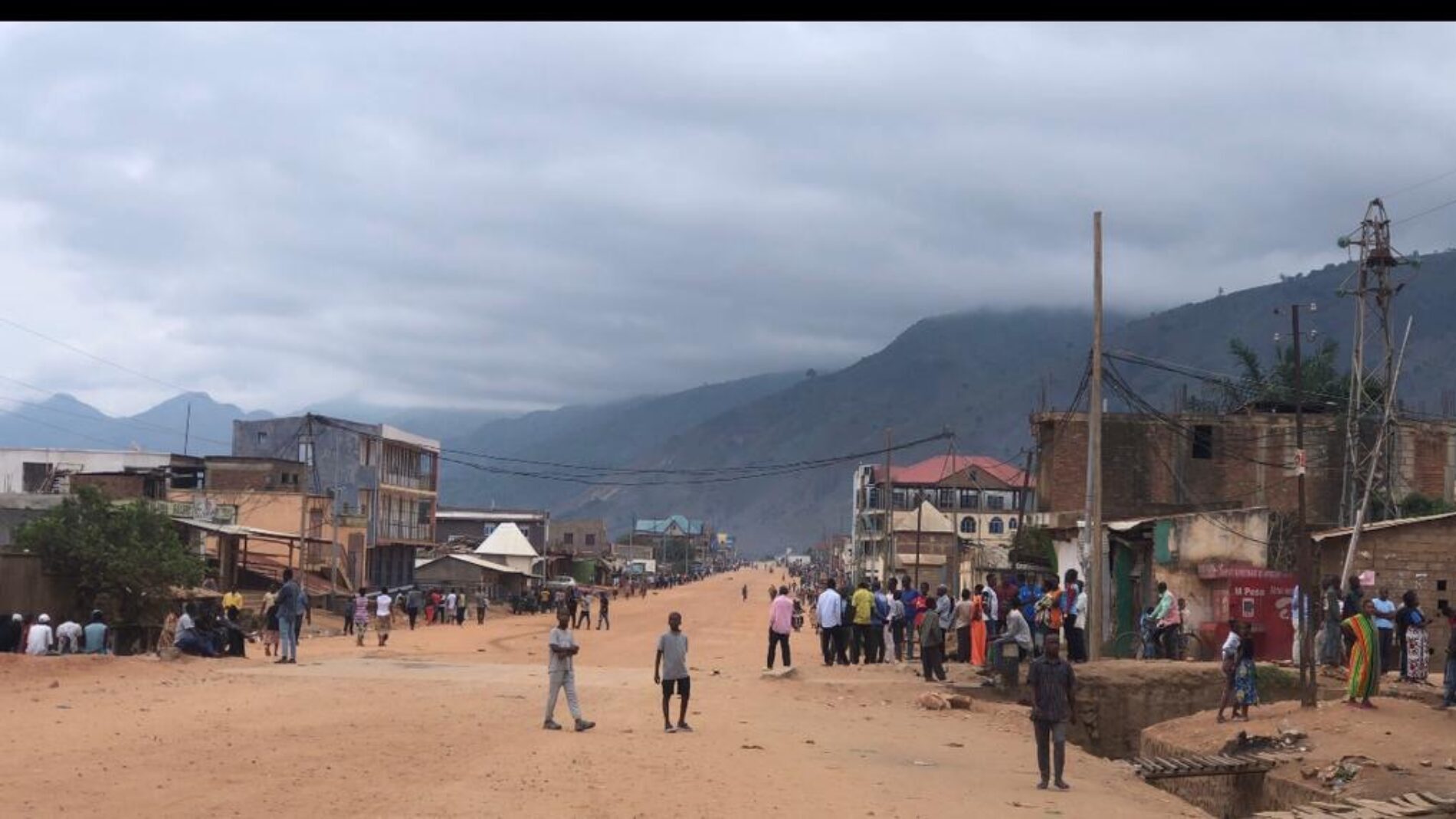
Long before his Burundi allies were sent scurrying away from Uvira, Tshisekedi had been casting about for who else might rid him of the determined rebels. Whether under advice or his own idea, he fell upon the notion of America’s might in exchange for Congo’s riches.
It did not go as well as he had hoped. America was certainly interested in Congo’s riches, but Tshisekedi did not have the leverage he thought he had. America could exploit Congo’s riches, without entering into some quid pro quo proposed by Tshisekedi. The American President, Donald Trump, seems to have seen an opportunity to hit two targets with a single arrow. He would seek to burnish his credentials as a peacemaker, and bag as much of Congo’s minerals as he wished.
Tshisekedi was in a bind. He had approached the Americans in the hope they would make war on his behalf, and now they were insisting on making peace. Like some delinquent child called to the headmaster’s office, he went to Washington unwillingly, dragging his feet. Once there he mouthed fine words that had been written for him about peace and returned home to look for an excuse that would get him out of the agreement.
Reneging on agreements he signs comes naturally to Tshisekedi, he has after all had more than enough practice. The problem he now faced however, is that unlike with earlier agreements, he was wary of unforeseen consequences of irritating the Americans by simply shrugging off undertakings he had made under their mediation.
Losing the city of Uvira to AFC/M23 was the key to letting himself out of a dilemma of his own making. He could now ignore the Washington agreement, blame Rwanda for everything as he has always done, all while being seemingly shielded by the UNSC.
Because given two options, to acknowledge the underlying causes of the crisis in the DRC or keep a firm grip on the country by continuing to appease Tshisekedi, the world’s most powerful nations, which hold sway over the UNSC, opted for the latter.
The Western world and Tshisekedi get their way, but Congo continues to suffer, and peace is once again, a distant dream.
