




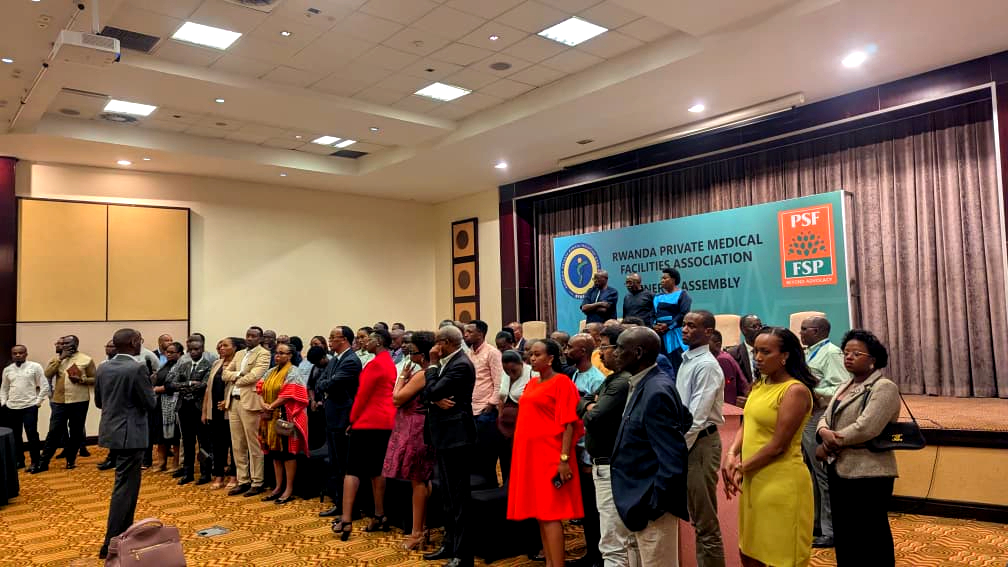
KIGALI – Operators of private medical facilities in Rwanda have called on the government to urgently review outdated medical tariffs of laboratory services and ensure timely reimbursement by insurance companies, warning that current conditions threaten the sustainability of private healthcare delivery.
The concerns were raised during the General Assembly of the Rwanda Private Medical Facilities Association (RPMFA) held on Friday, where members said they are increasingly caught between providing quality healthcare services and operating at a financial loss .
RPMFA members warned that prolonged financial strain could lead to fragmented healthcare services.
Outdated tariffs strain service delivery
According to the association, many medical services are still being reimbursed under tariffs last reviewed in 2017, despite annual increases in the cost of healthcare delivery .
Dr. Peace Mukabalisa, Secretary of the RPMFA Executive Committee, acknowledged recent efforts by the Ministry of Health to revise some tariffs in July this year but noted that laboratory services remain excluded from the update.
“Laboratory tariffs are as old as eight years, yet the cost of machines, reagents, and technologies has increased significantly,” Mukabalisa said, adding that the mismatch between investment and revenue makes it difficult for facilities to sustain these services .
She called on the Ministry of Health to urgently review laboratory service tariffs to reflect current market realities.
Insurance reimbursement delays:
RPMFA also raised concerns over delayed insurance reimbursements, with some payments reportedly taking between three and seven months to be settled. The delays, Mukabalisa said, affect facilities’ ability to pay staff, procure medicines, and maintain operations, leading in some cases to closure of health facilities .
A market research paper presented at the assembly showed that human resources account for over 70 percent of operating costs in private medical facilities, making timely cash flow critical for sustainability.
Calls for efficiency and collaboration:
To remain viable, the association advised members to review their business models, conduct proper costing of services, and adopt bulk procurement strategies to reduce the cost of medical supplies and equipment.
RPMFA Chairman Dr. Dominique Savio Mugenzi said that while collaboration with the Ministry of Health has led to some progress, tariffs still fall short of reflecting current market prices.
“If private investors can make reasonable profits, it will enable us to contribute more effectively to national goals, including ensuring affordable and quality healthcare for all Rwandans,” Mugenzi said .
He added that delayed insurance payments are undermining service delivery and staff welfare.
Government response:
Responding to the concerns, Dr. Athanase Rukundo, Acting Head of Clinical and Public Health at the Ministry of Health, said the current tariffs were established following extensive consultations and are legally binding.
He cautioned that tariff challenges should not justify poor service delivery but noted that the government is exploring measures to ease financial pressure on providers, including increasing the number of medical personnel and granting tax exemptions on medical equipment .
On laboratory services, Rukundo acknowledged that tariffs have not been updated due to challenges in standardizing costing models for laboratory procedures and consumables, adding that further clarifications are being developed to address disputes between providers and insurers.
Looking ahead:
The RPMFA General Assembly unanimously elected the current executive committee, tasking it with advancing reforms aimed at improving healthcare services and financial sustainability.
Members also agreed to establish a savings cooperative to help finance the acquisition of modern medical equipment, citing high bank interest rates and costly guarantees as barriers to accessing credit .