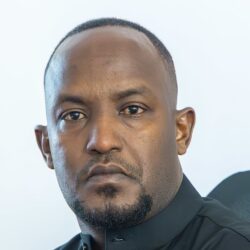



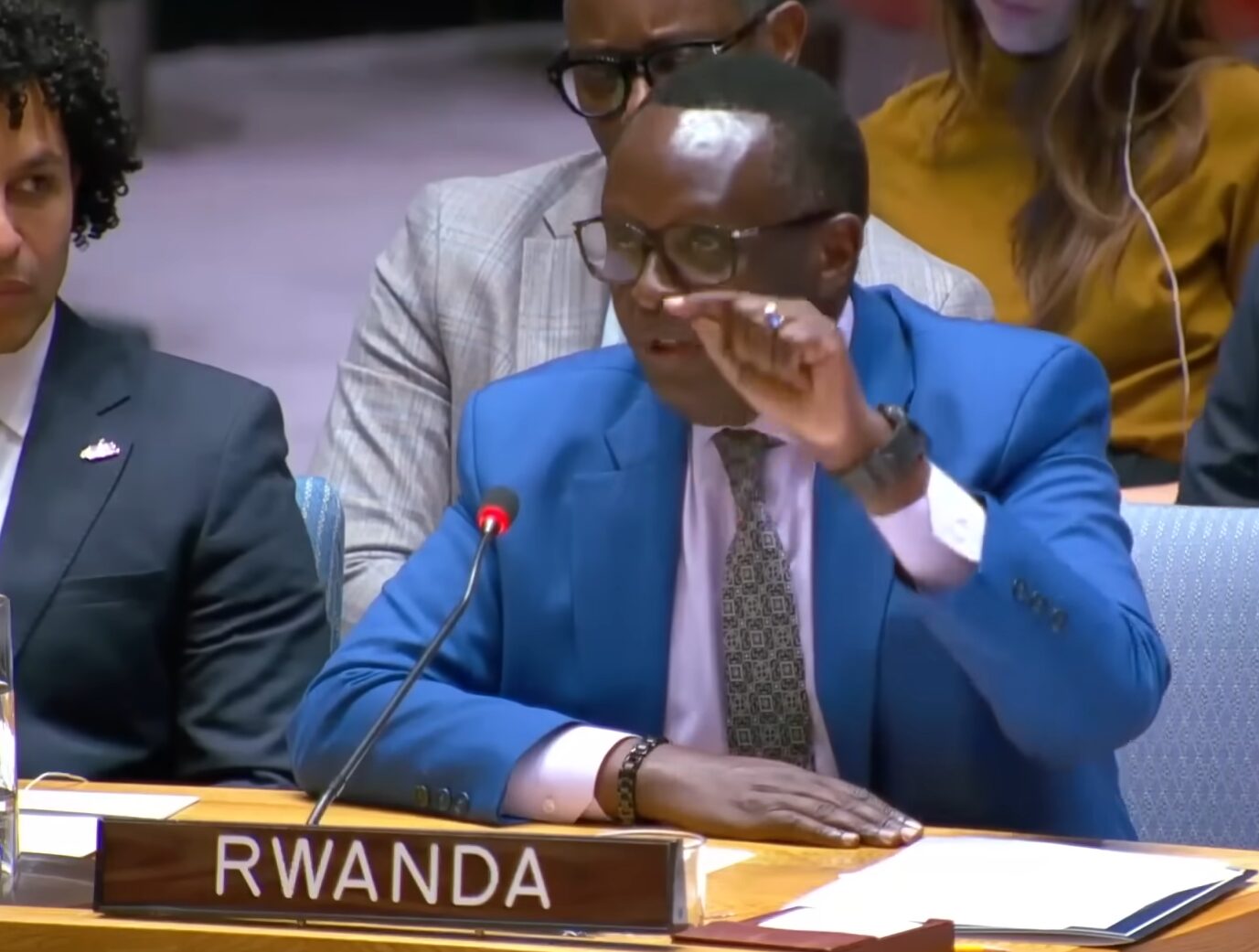
Ambassador Martin Ngoga, Rwanda’s Permanent UN Representative during the UN Security Council session
In a world preoccupied with political maneuvering, the truth sometimes needs a shock to break through.
That shock came from Ambassador Martin Ngoga, Rwanda’s Permanent Representative to the United Nations, during a Security Council briefing on the Democratic Republic of Congo (DRC).
He did not just speak from a briefing note; he spoke from a deep, personal scar that connects the 1994 Genocide against the Tutsi in Rwanda to the systematic killings happening in Eastern DRC today.
Ambassador Ngoga’s voice, though firm, carried the weight of an unbelievable family tragedy: “One of my uncles paid money in 1994 so he could be killed by a bullet, because there was that situation, you either choose to be shot or you die by a machete.”
This single, horrific account lays bare the terror of genocide—a situation so desperate that a man had to bargain for a quicker death. It is the ultimate expression of human cruelty and the failure of the world to intervene.
It reminds us that 31 years ago, in the very same chamber, the pleas of countries like New Zealand, Nigeria, the Czech Republic, and Spain to condemn the genocide and reinforce the UN mission were ignored. The result was the loss of over one million Tutsi lives.
The present horror: Banyamulenge under siege
Today, that horrifying choice—bullet or machete—is being silently offered to the Banyamulenge, a Kinyarwanda-speaking Tutsi community in Minembwe, South Kivu, DRC.
Ambassador Ngoga highlighted that the systematic killing of the Banyamulenge by the DRC government and its allies, including militias, mirrors the prelude to the 1994 genocide against Tutsi.
Since 2017, reports indicate over 85% of Banyamulenge villages have been destroyed. They are being persecuted solely because of their identity.
The Ambassador’s clear warning to the Council was: the refusal to acknowledge this targeted extermination campaign is the same reluctant ignorance that failed Rwanda in 1994.
The question he poses to the world is both a demand and a heartbreaking accusation: “Do you also ask them to be participants in their own situation? To be part of a plan for their extermination?”
The consistent silence in the UN, both in 1994 and today regarding the plight of the Congolese Tutsi, leaves an agonizing question: Is it a crime to be a Tutsi in this region? The simple answer, written in blood, remains tragically “Yes.”
Diplomacy’s indifference: When silence is a message
In the high-stakes arena of the UN Security Council, the principle that “In diplomacy, every move counts” means nothing a diplomat does is insignificant. Every action, gesture, or moment of silence is a message.
During Ambassador Ngoga’s emotional appeal, the non-verbal responses of the representatives of the DRC and Burundi spoke volumes about the state of diplomacy and accountability.
DRC Foreign Minister Therese Kaikwamba Wegna was seen tapping her smartphone and wore a gloomy expression. In this context, as a student of diplomacy, the distraction of a phone can be interpreted as a calculated dismissal of the severity of the accusations.
Burundi’s diplomat had headphones on and looked “exhausted,” a posture of visible disengagement from the proceedings, if he was not struggling with interpreter’s accent.
When one is accused of complicity in mass killings, a public show of indifference or distraction is not neutral; it is a profound message of disregard for the victims and the gravity of the crisis.
The call to self-Reliance
The clear message derived from both the historical and the current inaction of the UN is a bleak, existential directive for Rwanda and the Kinyarwanda-speaking Tutsi in the DRC: Stand and fight for yourselves and your territorial integrity.
While the Banyamulenge are, as Ngoga’s uncle was, potentially facing the ultimate choice—bargaining with their killers to be taken by a drone strike rather than a machete by militias—the international community continues to sleep on its job.
The tragic echo of 1994 is not just a reminder; it is a real-time humanitarian catastrophe that demands immediate, unequivocal action, lest the world stands by again as another group is exterminated.
The Writer is the Managing Director of Kigali Today Ltd, the parent company of KT Radio 96.7FM, KT Press, KigaliToday.com and Kigali Today TV (YouTube Channel)