



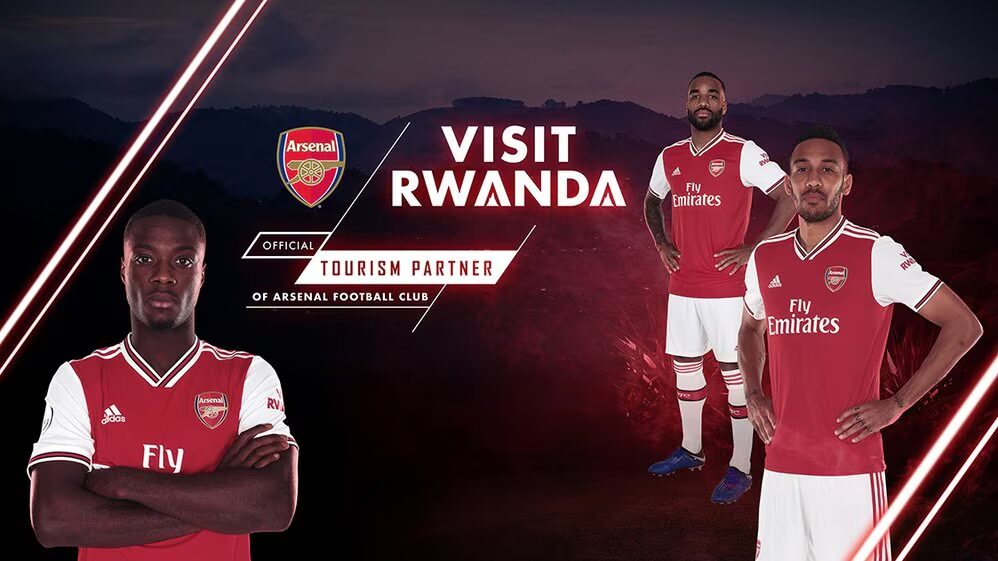
The Rwanda Development Board (RDB)’s Visit Rwanda and Arsenal football club, decide that the love and affection they share will endure, but agree that as of June 2026, they should both free to see other people.
After an eight year partnership that has contributed to transformational change in Rwanda, the RDB agreed with the North London club, that this would be their last season living in the same house, as it were. They will continue to share custody of the children, more commonly known as fans.
For Rwanda, and the RDB, whose responsibilities include not just tourism, but attracting investment into the country, strategy and policy, the decision to change what has been a demonstrably successful relationship, is informed by the ambition for further growth. In a statement announcing the decision, the RDB explained that “the move reflects Visit Rwanda’s broader strategy to diversify its global sports partnerships and expand into new markets that support the next phase of its tourism and investment ambitions.”
The decision will be a wrench for many Rwandans, for whom Arsenal had become part of the Rwandan family. They accept however, albeit reluctantly, that the affection for the club has to be taken with a hardheaded look at what is best for national development.
Perhaps recalling the excitement that verged on wonder, with which they received the announcement of the partnership, eight years ago, most are comforted by the expectation of a next step they are certain will be just as exciting. Speaking for many, lifelong Arsenal fan, Richard Kwizera tweeted, “the shirt-sleeve is getting a new tenant! Now, all I need is Arsenal to win the Premier League before the Visit Rwanda deal clocks out!”
It was a bittersweet feeling for journalist, Edmund Kagire, who twitted to anyone who cared to know that “as an Arsenal fan, I will be happy and sad at the same time. I don’t know if I will get used to not seeing ‘Visit Rwanda’ on game day. It brought a certain feeling which I can’t explain. I was used to walking around like I owned shares in Arsenal. All good things come to an end.”
Rwanda has a sizable Arsenal football club fanbase, and it is well nigh impossible to overstate the joy with which they first greeted the partnership. Football fans the world over justifiably complain about inflated prices of replica football shirts, and it is no different in Rwanda. Despite that however, Rwanda fans of the club were among the first to be seen in the club’s colours, with VisitRwanda emblazoned on the sleeve.
Their near delirious happiness was matched by observers’ wonder at the news. It is almost impossible to overstate the boldness of the initiative. Many seemed discomposed by it. A small African country, emerging from the ashes of a genocide that had claimed over a million men, women and children, was confidently reminding the world that there was more, much more to it than its tragic history.
Come and see for yourselves, Visit Rwanda, they confidently beckoned to the world. And they would ask one of the world’s most glamorous football clubs, to help them spread the winsome message far and wide.
The first ever African country to sponsor an international team, sponsor a global brand to become one. The first time ever that a football team’s shirt sleeve had a “tenant” to borrow from Kwizera. It was a pioneering step, a trail blazer. Even the Democratic Republic of Congo, which has chosen to see Rwanda as an enemy, desperately cast around the world, looking to follow into Rwanda’s footsteps. Congo’s tragedy however is that it copies rather than learn from Rwanda. It is not just Congo, Rwanda has led the way for all African countries.
The initial resistance faced by Rwanda, was almost a questioning of an African country’s right to take such a step. Interviewing then RDB CEO, Claire Akamanzi, on the BBC flagship current affairs show, the Today Programme, veteran journalist John Humpries, dismissively called the decision “eccentric.” An incensed Akamanzi demanded to know whether he was ill intentioned or just ill informed. It was almost certainly the latter. And contrary to Akamanzi’s first impression, it was not because Humphries was “unintelligent.” On the contrary, he is a distinguished, much decorated journalist, who fell victim to poor research and lazy stereotypes, on a programme that prides itself on its impartiality and well researched output. Not it seemed, however, on that occasion.
In fairness to Humphries, it would have taken all of the Today Programme’s celebrated brilliance and much more besides, for its producers and researchers, to have asked themselves what lay behind what seemed to them a startling gambit. Instead, they floated on a tide of Western assumptions about the other, and from a position of assumed superiority, in their infinite wisdom suggested it an “eccentric” decision for a poor country to spend so much money on a rich, glamorous football club.
Unhappily for the programme, they missed what was an extraordinary story. The small, poor country had conceived an audacious plan to take a giant step out of poverty and present the best of itself to the world. And it was not just the Today Programme that would be blinded by lack of humility and due regard for the subject of the story they were telling.
Few, if any of the Western world’s commentators, journalists, or would be Rwanda “experts” were able to summon the humility to try and understand Rwanda’s plan. There was widespread skepticism at best, or outright derision, scorn. As the plan succeeded, and it became clear that there would be no chance to gloat at Rwanda’s failure, something more pernicious replaced the scorn and derision. There were now attempts to undermine, derail the success.
A country that conceived innovative ways to lift its people out of poverty, to provide education, healthcare and food security, was said to be “sportswashing.” Partners were encouraged to end the partnerships. There was clear ill intention after all.
But once again, Rwanda had been misjudged and underestimated. The country stood by its truth and did not waver. The odd partner was swayed by the incessant noise, but most, Arsenal football club chief among them, stood firm, assured by the gulf between the shrill rhetoric and the truth of their Rwandan partners.
The partnership exceeded all expectations and met almost every hope. “Together, Arsenal and the Rwanda Development Board have exceeded the original goals of the partnership – promoting conservation and sustainable tourism, inspiring millions of supporters to discover the country and creating a lasting found for tourism growth” the RDB said in a measured, businesslike tone.
Last year alone, visitor numbers grew to over a million, raising revenues of $650 million, a 47% increase since the beginning of the partnership. Impressive as they are, however, the figures do not tell the whole story. The initiative attracted the world’s eyes onto Rwanda, the feet followed and many hearts and minds.
And the relationship with Arsenal continues in a different form. “We look forward to continuing our relationship with the wider Kroenke Sports C Entertainment Group through our recent partnerships with the LA Raams and so S-Fi Stadium in Los Angels…” said RDB CEO, Jean-Guy Africa.
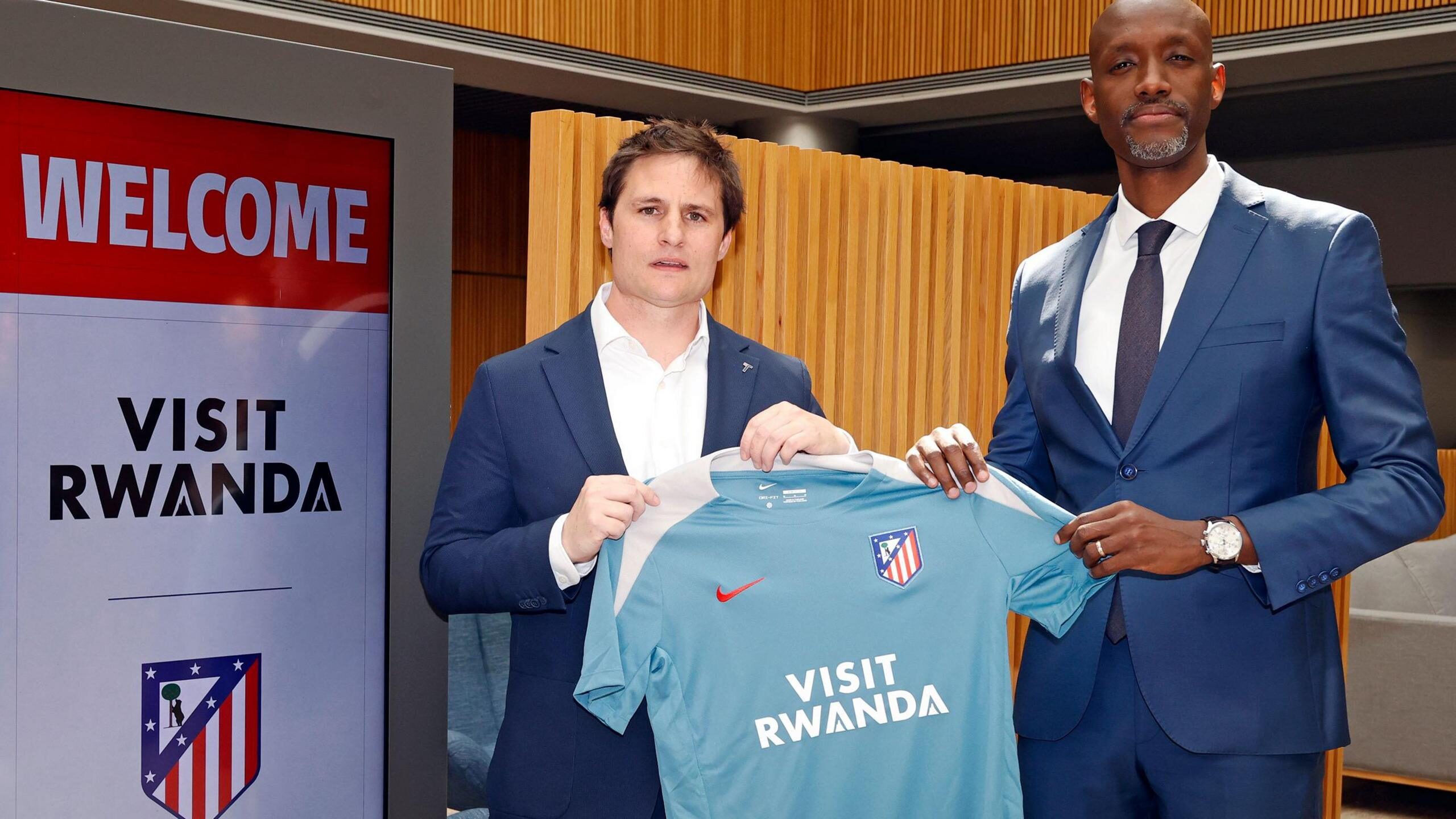
Lessons learnt over the over the eight years as Arsenal’s sponsor, will inevitably serve the RDB well, as it turns to America and the Spanish speaking world. As new sponsors of one of Spain biggest teams, Atletico Madrid de Madrid, all eyes will be on Visit Rwanda.
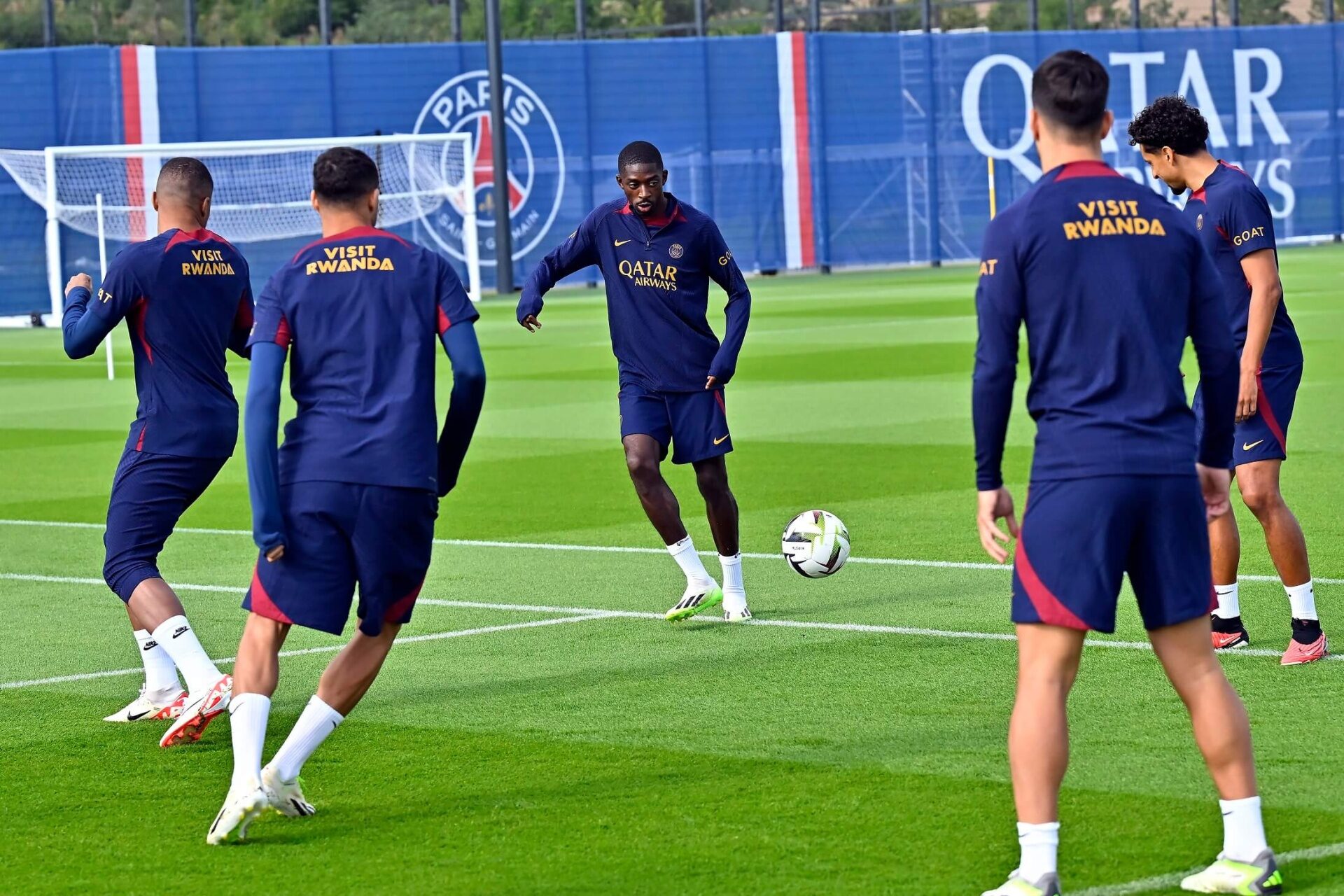
In the United States of America, the brand has planted its flag in the richest and most recognised city, in the richest country in the world. More Americans, Canadians, South Americans, will now ponder if they should visit Rwanda, prompted to learn about the country as they will be, every time they watch the Los Angelos Rams, and the LA Clippers play. The ambition and expectation are higher than ever they were.
Imitators will miss what informs the ambition, national development, improving the chances of ordinary Rwandans. Rwandans have universal primary and secondary school education, almost 100% of the population have healthcare coverage, access to electricity has gone from 2% in 2000 to 85% today.
Access to clean water for all, housing, that is why Arsenal fans sitting in the Emirates stadium in North London, see Visit Rwanda, on their players’ shirt sleeves. The me too imitators see only the glamour, but look beyond that, and you see a major contribution to Rwanda’s NST1 and NST11 (National Strategy for Transformation), achieved through the joy of sport.
Arsenal football club too will have much reason to celebrate the brand name with which their club has been associated over the last eight years.
“Our first ever sleeve partnership with Visit Rwanda has been a significant journey. Over many years, we’ve worked together to raise global awareness of Rwanda’s tourism and conservation efforts and built many new connections with our supporters across Africa. The commitment and support of Visit Rwanda throughout our partnership have played an important role in driving forward our ambitions – helping us invest in our long-term vision to win major trophies, in a financially sustainable way. We thank the Rwanda Development Board for their partnership and what we’ve delivered together,” said Arsenal CEO, Richard Garlick.
No wonder both sides are keen to remain more than just friends.
