



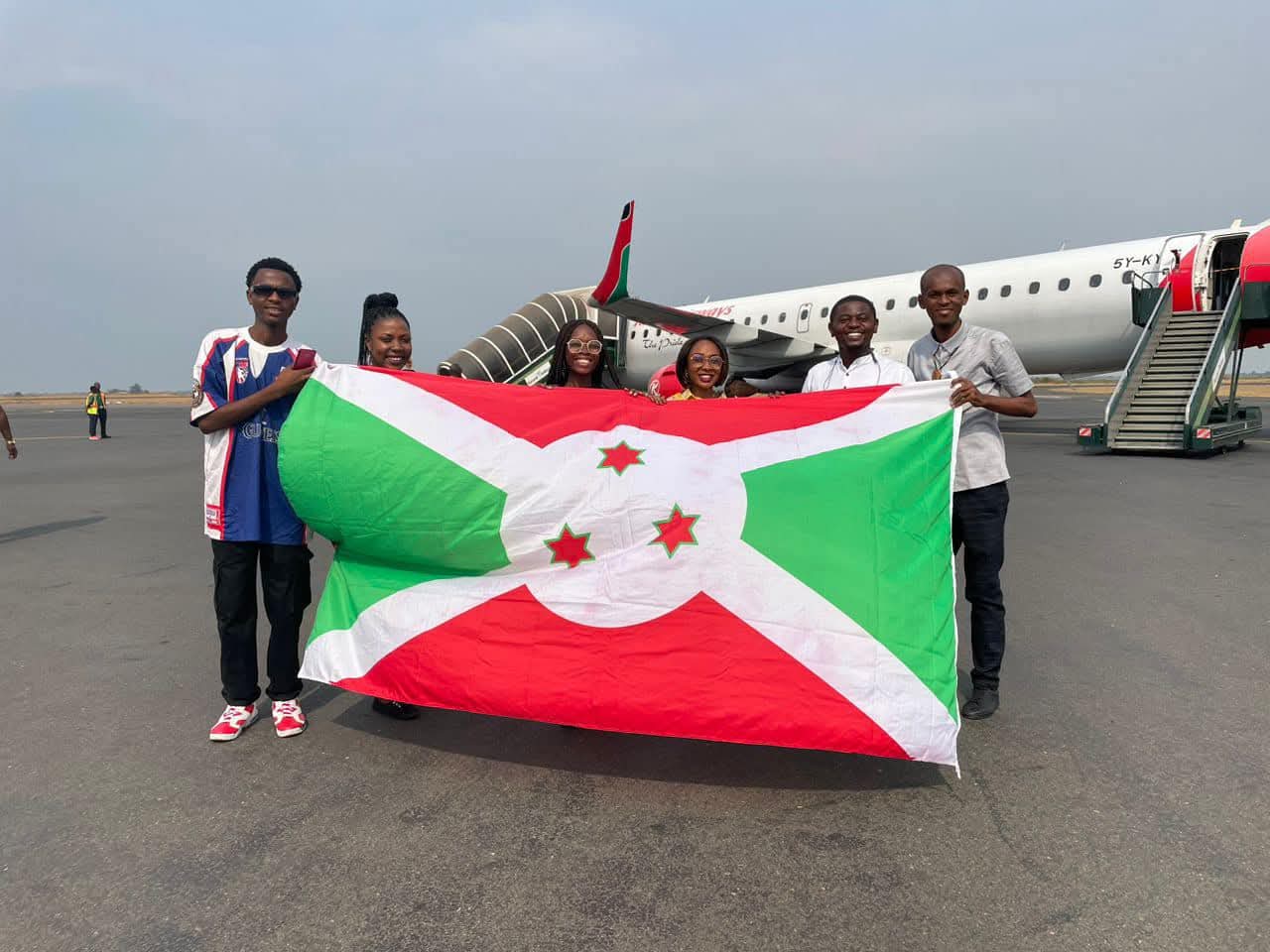
Burundian students traveling to U.S. back in 2024.
Burundian citizens applying for a U.S. visitor visa will now be required to pay a visa bond, a new measure introduced by the United States government to reduce visa overstays.
Under the new regulation, nationals from Burundi must post a visa bond of 5,000, 10,000, or 15,000 U.S. dollars, depending on the outcome of their visa interview.
For context, the U.S. visa bond amounts are substantial when converted into local currencies.
A $5,000 bond equals approximately 14.8 million Burundian francs (BIF) or 7.25 million Rwandan francs (RWF), while a $10,000 bond is around 29.7 million BIF or 14.5 million RWF. The highest bond of $15,000 translates to about 44.5 million BIF or 21.75 million RWF.
While the amounts are set in U.S. dollars initially, applicants will pay the equivalent in Burundian francs (BIF) through the official U.S. government payment system once instructed by a consular officer. This new rule will take effect on January 21, 2026.
The bond applies to applicants seeking B1/B2 visas, issued for business and tourism purposes. Its purpose is to ensure that visa holders depart the United States on time and comply with the conditions of their visa. It is important to note that paying the bond does not guarantee visa approval.
Other East African Countries Affected
Burundi is not the only East African country affected by this measure. The visa bond requirement also applies to Tanzania, effective October 23, 2025, and Uganda, effective January 21, 2026.
However, Rwanda, Kenya, and South Sudan, are not currently affected by this requirement.
The bond is collected only after a U.S. consular officer instructs the applicant during the visa process.
Payments must be made through the official U.S. Treasury platform, Pay.gov, using Form I-352. Payments made through third-party websites will not be recognized, and the U.S. government will not be responsible for any losses incurred through unofficial channels.
The bond is fully refundable if the visa holder leaves the U.S. on or before the authorized date, if the visa expires without the holder traveling to the United States, or if the traveler is denied entry at the U.S. border.
However, the bond may be forfeited if the visa holder overstays, remains illegally in the U.S., or applies to change status, including seeking asylum.
Designated Entry Points
To comply with bond conditions, affected travelers must enter and exit the United States through three designated airports only: Boston Logan International Airport, John F. Kennedy International Airport in New York, and Washington Dulles International Airport. Failure to use these airports may result in denied entry or complications in recording departures.
The U.S. government says the decision is based on high visa overstay rates, using data from the Department of Homeland Security. The visa bond program is being implemented as a pilot measure under U.S. immigration law.
For Burundians and other affected East Africans, the new requirement adds a significant financial step to the visa process, but officials stress that the bond is refundable as long as applicants comply with visa rules.
