



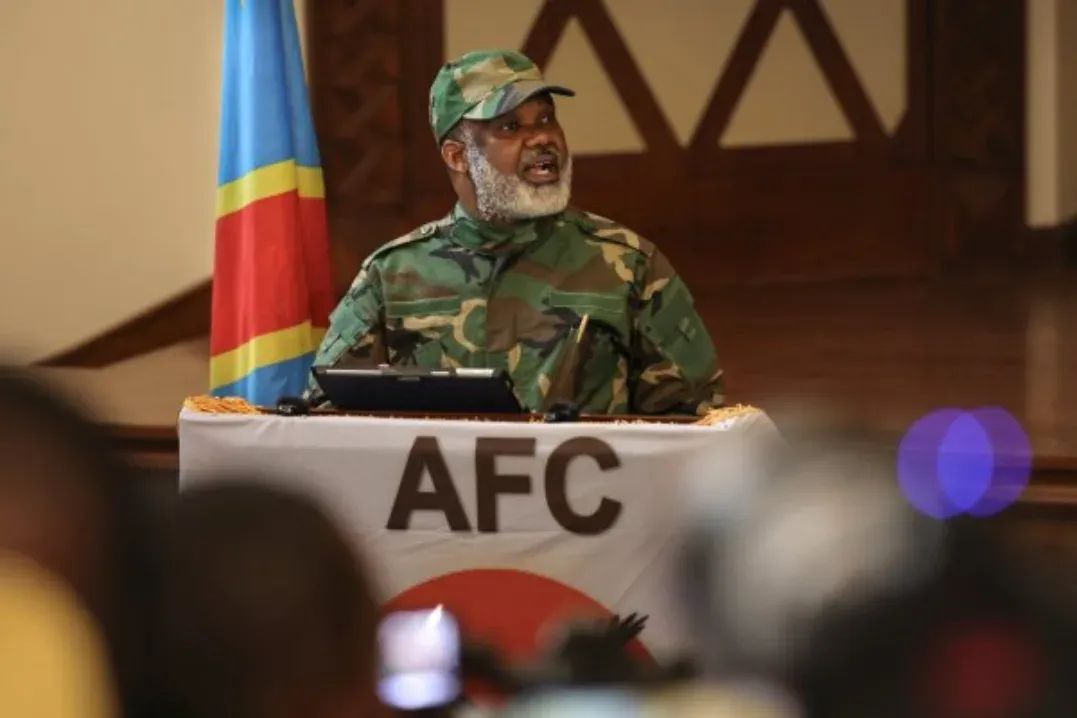
Goma — The Alliance Fleuve Congo (AFC)/M23 rebel movement has asked Angola to clarify reports of a possible new peace dialogue initiative expected to be hosted in Luanda, warning that multiple mediation tracks could weaken ongoing efforts to end the conflict in eastern Democratic Republic of the Congo.
In a letter dated January 9, 2026, and addressed to Angolan President João Lourenço, AFC/M23 political coordinator Corneille Nangaa welcomed Angola’s long-standing role in mediating regional conflicts but urged caution to avoid duplicating or undermining existing peace processes—particularly the Doha talks, which remain the primary negotiation framework.
Writing from Goma, Nangaa reaffirmed the group’s commitment to a peaceful resolution of the conflict but accused the Congolese government of misusing mediation channels and failing to honor previous agreements.
He recalled AFC/M23’s unilateral ceasefire declared on March 7, 2023, stating that the group has since maintained what it describes as a defensive posture in response to alleged attacks by the Armed Forces of the Democratic Republic of the Congo (FARDC).
Copies of the letter were sent to key international mediators, including representatives in Qatar, Togo, and the United States, signaling AFC/M23’s push for a coordinated and unified international approach to the peace process.
At the center of the group’s concern is uncertainty surrounding the nature of the proposed Luanda initiative.
Nangaa questioned whether the talks would operate alongside, reinforce, or replace the Doha process. He warned that the proliferation of parallel forums—ranging from Nairobi and Luanda to Doha—risks creating confusion, eroding trust among stakeholders, and delaying a sustainable political settlement.
Nangaa called on President Lourenço, who also serves as Chairperson of the African Union (AU), to ensure coherence and alignment among all mediation efforts, arguing that fragmented diplomacy could further destabilize the Great Lakes region.
The letter comes as violence persists in eastern DRC, particularly in North and South Kivu provinces, where clashes between M23 fighters and government forces have continued despite several ceasefire agreements signed in 2025.
Although millions have returned home since the rebels took over large sways of eastern Congo, millions other remain displaced across the region as a result of fighting.
Despite 2025 seeing several diplomatic breakthroughs—including a U.S.-brokered agreement between the governments of the DRC and Rwanda—implementation on the ground has remained fragile.
Reports of renewed fighting near Uvira and Masisi territories in early January 2026 have raised fresh concerns about the durability of the agreements.
The latest initiative referenced by AFC/M23 appears to relate to a possible revival or expansion of Angola’s Luanda-based mediation track.
The process, which was active between 2022 and early 2025, had stalled after repeated setbacks but is now reportedly showing signs of renewed engagement under Angola’s leadership.
Diplomatic sources suggest Angola, acting in its capacity as chair of the International Conference on the Great Lakes Region (ICGLR), may be seeking to convene fresh consultations in Luanda to address unresolved issues such as the neutralization of the Democratic Forces for the Liberation of Rwanda (FDLR) and Rwanda’s stated security concerns in eastern DRC.
This push comes amid broader calls to consolidate African-led peace efforts. There are also reports that DRC President Tshisekedi is preparing to launch inter-Congolese dialogue in Kinshasa, and is seeking Angola’s help to have the rebels join.
A high-level meeting is scheduled for January 17, 2026, in Lomé, Togo, hosted by President Faure Gnassingbé in his role as the AU’s designated mediator.
The meeting is expected to focus on harmonizing existing initiatives and preventing overlap, potentially incorporating Angola’s historical mediation role.
As of January 11, Angolan officials had not publicly outlined the details of any new Luanda talks. However, diplomatic circles indicate that discussions could include addressing M23’s political grievances alongside broader state-building measures such as detainee releases and security sector reform.
Critics—including AFC/M23—have cautioned that launching a new mediation process without clear links to the Doha framework, where five key agreements were signed in 2025, could deepen divisions rather than resolve them.
President Lourenço has previously condemned recent M23 territorial advances, including in Masisi, describing them as violations of agreed ceasefires.
Meanwhile, fighting has reportedly intensified near strategic areas such as Uvira, raising doubts about the immediate viability of any new initiative without strong international backing, particularly from Rwanda and the United States.
The eastern DRC conflict, rooted in ethnic tensions, competition over mineral resources, and complex cross-border dynamics, has been the subject of multiple mediation efforts since M23’s resurgence in late 2021.
While recent initiatives reflect a shift toward broader international involvement, analysts warn that without effective enforcement mechanisms and inclusive dialogue, even coordinated peace efforts may struggle to deliver lasting stability.
