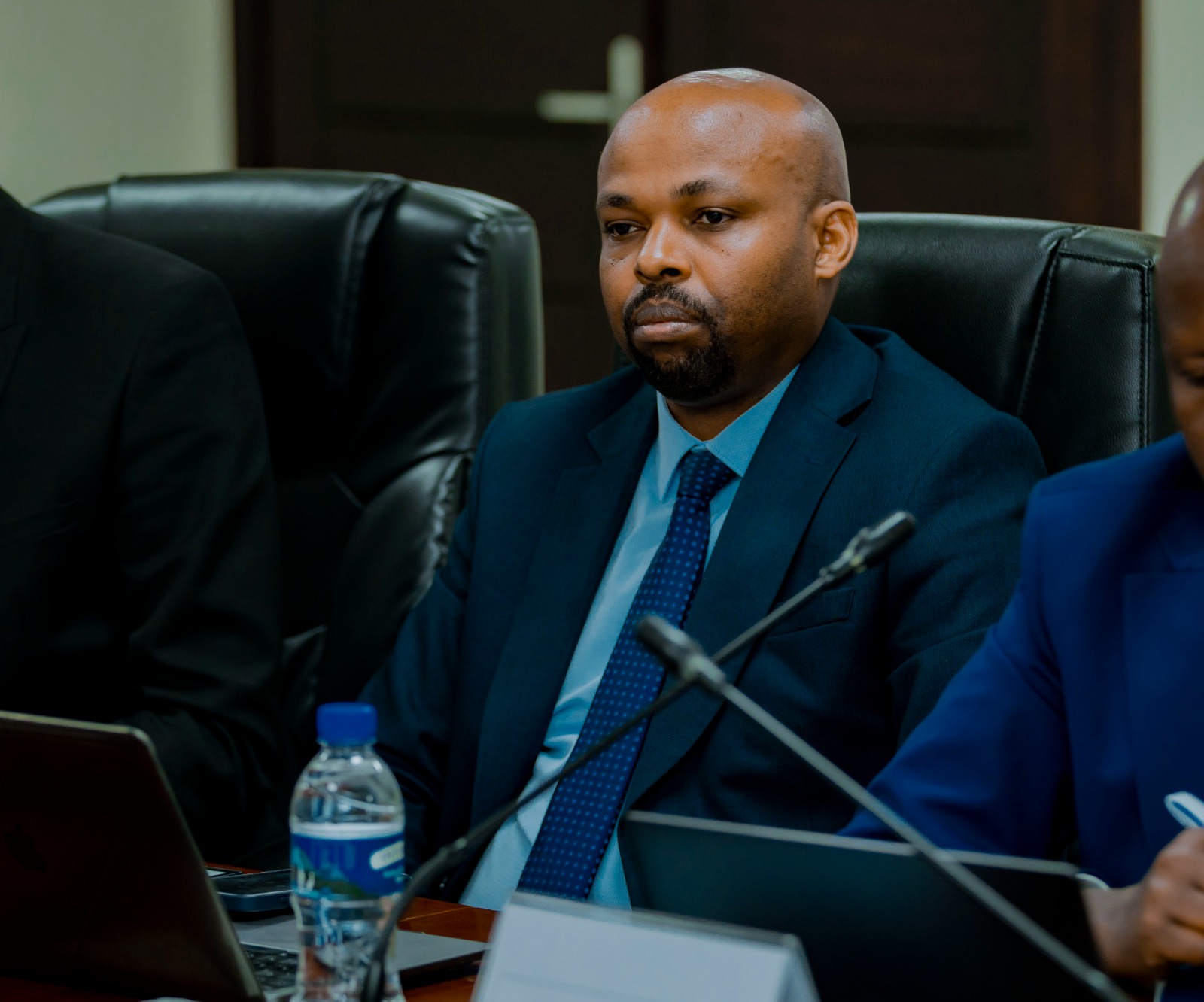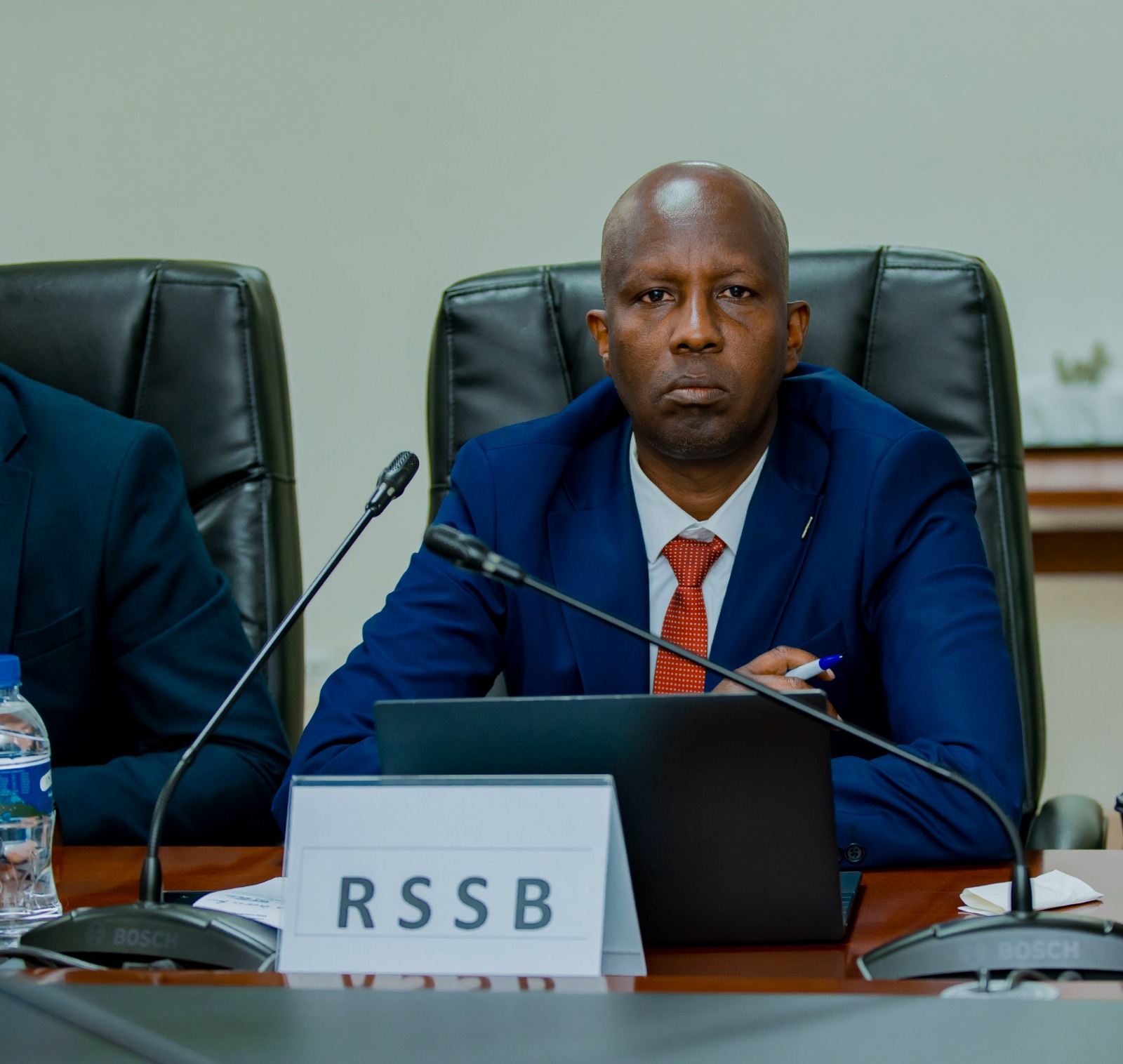





RSSB Chief Executive Officer Regis Rugemanshuro during the parliamentary engagement
Employers who fail to remit social security contributions for their workers now face the possibility of having their assets seized, as the Rwanda Social Security Board (RSSB) moves to tighten enforcement of pension compliance amid mounting arrears.
The position was laid out by RSSB Chief Executive Officer Regis Rugemanshuro during a parliamentary engagement on the state of the national pension scheme, prompted by findings from a special audit conducted by the Office of the Auditor General.
The audit flagged persistent non-compliance by both public and private employers, despite legal obligations to declare and remit pension contributions.
Members of Parliament sitting on the Parliamentary Committee on Social Affairs pressed RSSB on why some employers continue to declare payroll taxes while failing to declare or pay pension contributions for the same employees.
The Chairperson of the Committee, Uwamariya Veneranda, had asked what RSSB is doing about employers who fail to declare and pay pension contributions despite having declared payroll taxes.

Uwamariya Veneranda, Chairperson, Parliamentary Committee on Social Affairs
The practice, lawmakers noted, directly undermines workers’ social protection rights.
Rugemanshuro made it clear that RSSB already has the legal mandate to pursue defaulters through enforced recovery mechanisms, including the seizure of assets and the imposition of administrative penalties.
The issue, he suggested, is not a lack of legal authority, but the complexity of applying enforcement measures—particularly against public institutions.
While the law permits asset seizure, Rugemanshuro cautioned that applying such measures to public entities such as hospitals and schools requires careful handling.
Freezing bank accounts or attaching assets, he noted, could disrupt essential services and create consequences more damaging than the arrears themselves, especially for patients and students who depend on those institutions.
Despite these constraints, RSSB says it has intensified efforts to recover outstanding pension contributions using both legal and operational tools.
A significant number of employers, according to the institution, opt to clear their arrears through structured installment plans rather than lump-sum payments.
These repayment arrangements can extend for up to two years, a factor that limits the visibility of short-term recovery results even as arrears collection continues.
RSSB argues that while the process may appear slow, it reflects a balance between enforcement and maintaining institutional stability.
Going forward, Rugemanshuro said RSSB will increasingly rely on digital reminder systems and data-driven recovery strategies to identify high-risk defaulters and prioritize enforcement.
Where voluntary compliance fails, forced recovery measures will be applied, in line with the law.
RSSB has also begun working with the Ministry of Finance and Economic Planning (MINECOFIN) to develop tailored mechanisms for recovering pension arrears from public institutions.
The aim, according to Rugemanshuro, is to ensure compliance without compromising the delivery of essential public services.
The failure of public institutions to remit pension contributions, he warned, ultimately harms employees and weakens the sustainability of the pension system itself.
RSSB has therefore urged Members of Parliament to push for the inclusion of pension arrears clearance in national budget allocations, arguing that unpaid contributions continue to strain the institution’s operations.
The scale of the problem is significant. Audit findings show that between 2020 and 2024, unpaid pension contributions owed by public and private employers amounted to approximately Rwf 4.5 billion, underscoring the systemic nature of non-compliance and the growing pressure on RSSB to act decisively.