


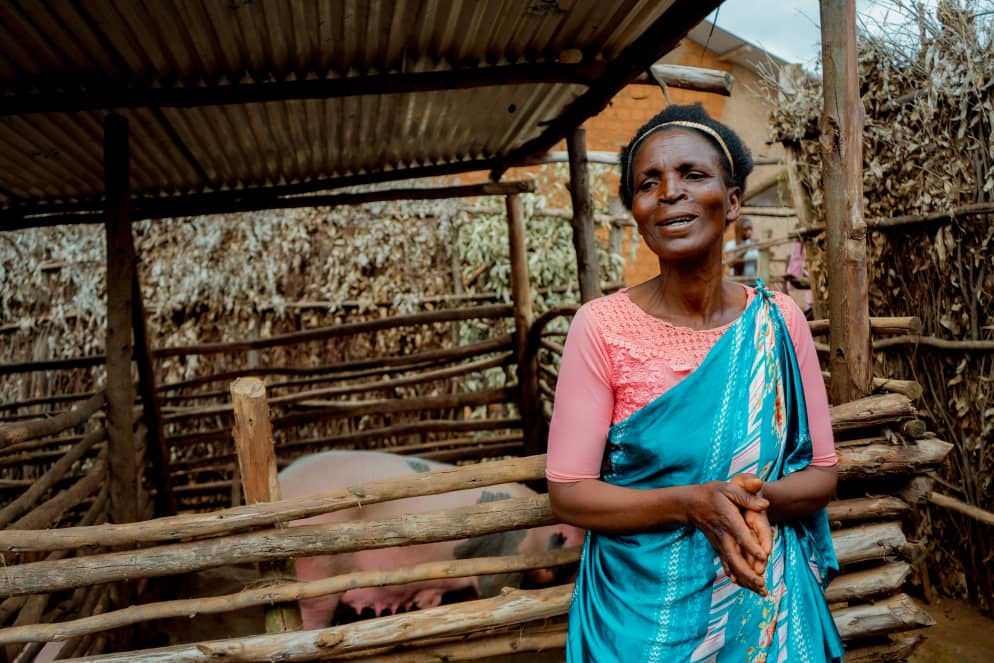
Nikuze Didacienne is a proud pig farmer thanking President Paul Kagame for the donated animals under the PRISM project
Nikuze Didacienne, 58, was a nobody two years ago; she could barely afford health insurance and was considered a community desperado.
This didn’t stop her from being an exemplary citizen in Mataba village, Burega Sector, and hoped for a better life until the day she was hospitalized with a chronic disease.
Nikuze says that everything totally fell apart for her and her family, compelled to sell the majority of the family land to afford medical bills at Kigali University Teaching Hospital (CHUK).
This attitude resulted in being selected among the beneficiaries of the Partnership for Resilient and Inclusive Small Livestock Markets (PRISM) project aimed at transforming small-scale livestock farming for vulnerable communities in Rwanda.
“I was on a hospital bed when I received a call in which the local leaders delivered this good news, saying that I was chosen because of being an exemplary citizen,” Nikuze said.
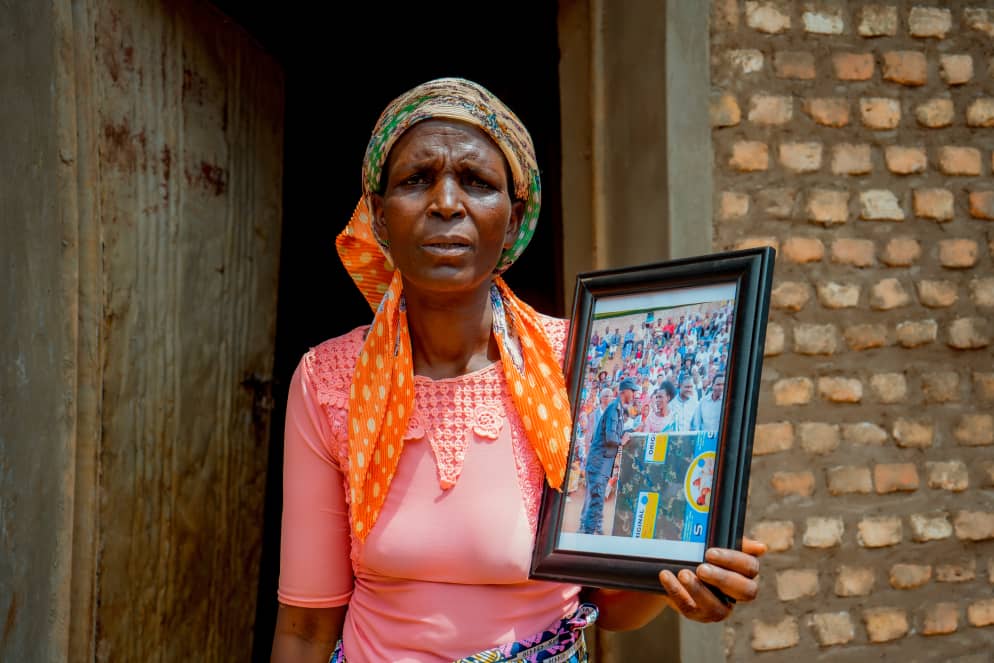
Nikuze shows off her model citizen award where she received a new mattress
This recognition earned Nikuze two PRISM pigs, which multiplied with 15 piglets to make her first market sell worth Rwf290,000 and the second sell-off of adult pigs worth Rwf1.4 million, expecting the same in the third sale.
Today, Nikuze is a model farmer who raises 20 pigs, owns a cow, and lives in a decent house, and her life has turned around, in her opinion.
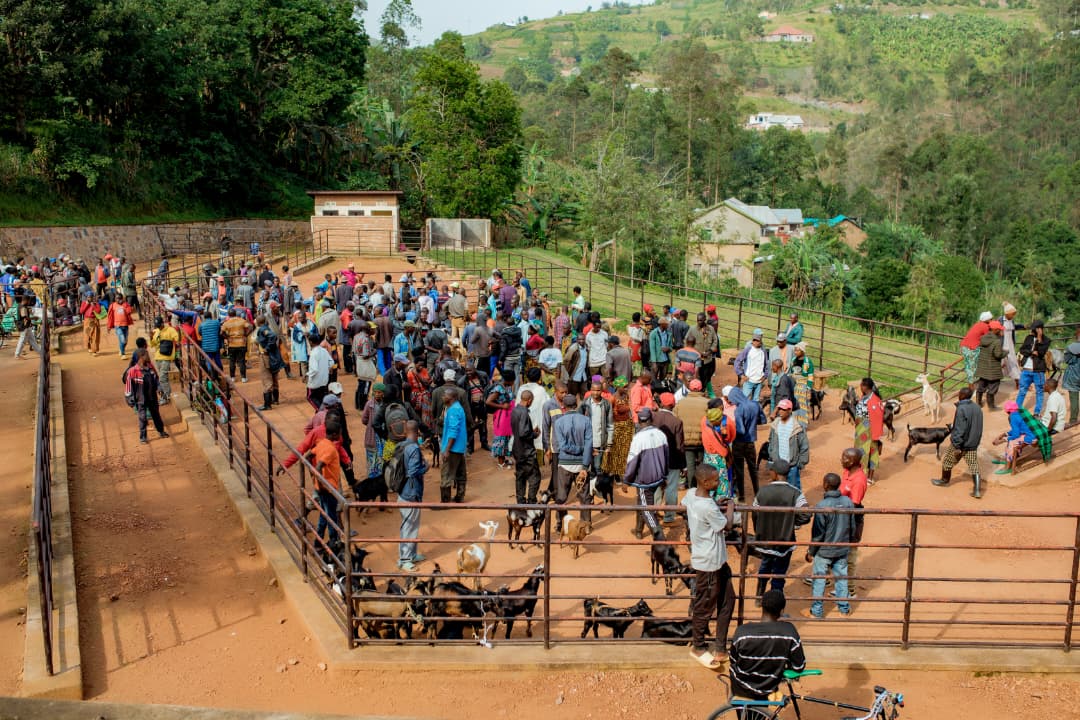
However, she is one of the many project beneficiaries who remain challenged with access to animal feeds, potentially setting back achievements gained as a result of limited profitability.
For instance, Nikuze has resorted to using 400 kgs instead of 1 ton of feeds per month, reducing costs from Rwf1 million to Rwf400,000 and using available post-harvest foods (Irish potatoes) to feed her pigs.
Pig rearing in Rwanda has grown rapidly, with the national herd doubling over the last decade. However, as of January 2026, farmers continue to face several structural and biological challenges that limit the profitability of the sector.
The challenge of a lack of sustainable animal feed is one that has been noted among PRISM project beneficiaries despite exceeding its initial goals of improving access for vulnerable smallholder livestock farmers in 15 districts.
According to data from recent livestock audits and the PRISM project, the high cost and low quality of feed, yet this component accounts for 60–70% of production costs, making it the biggest hurdle for Rwandan farmers.
Joseph Nshokeyinka, Prism Project Manager, says the high cost of livestock animal feeds remains a challenge that will be addressed with a planned 3-year project extension, which will have a central feed processing plant in Kayonza district.
District Sustainable Solutions:
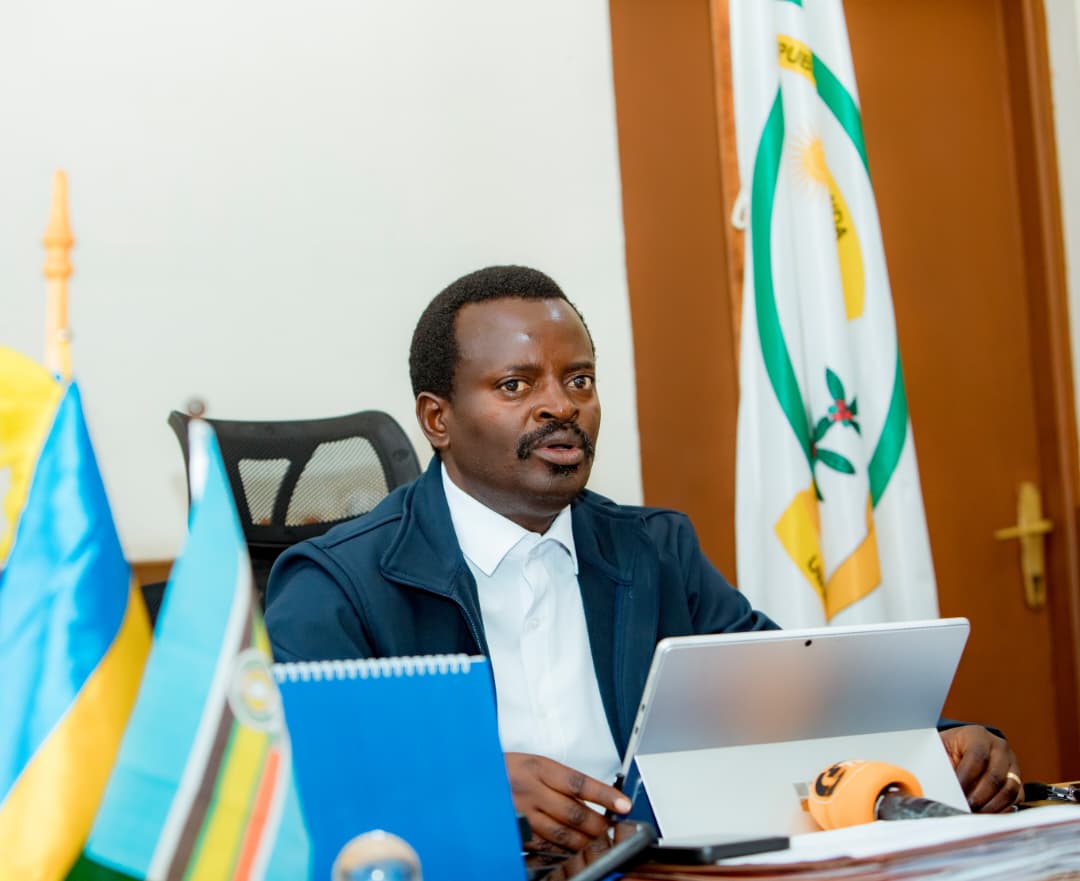
Musanze District Mayor, Claudien Nsengimana
Aware of this concern, District officials have also committed to sustaining the project benefits (stunting and poverty reduction) by laying plans to establish animal feed plants as part of the sustainable response in further implementing the project activities, which close this September.
Musanze District Mayor, Claudien Nsengimana said that the challenge of feeds and water can be addressed but asked that the project is extended as they plan on constructing a feed plant and increase water sources, especially increasing supply at Mutoobo water project (12,500 to 55,000 metric cubes).
“We need continued support as we plan on establishing a feed plant, even if it’s small-scale because we have lots of seed produce, especially maize produced here, and the residues can be used in animal feeds processing,” …said.
He stated that this plant, even if in small-scale, will use the massive feed produced in the area, especially maize, of which the residues can be used in processing animal feeds.

Gakenke District Mayor Vestine Mukandayisenga
Similarly, Rulindo, Gicumbi, and Gakenke District Mayors and Vice Mayors Economic Affairs revealed that they plan on working with their respective private sector federations to attract investment in animal feed plants.
In Gicumbi, the officials said that there is already an existing plant but operating at low capacity, and this will be revamped to effectively supply the district.
Farmer Solutions in the Meantime:
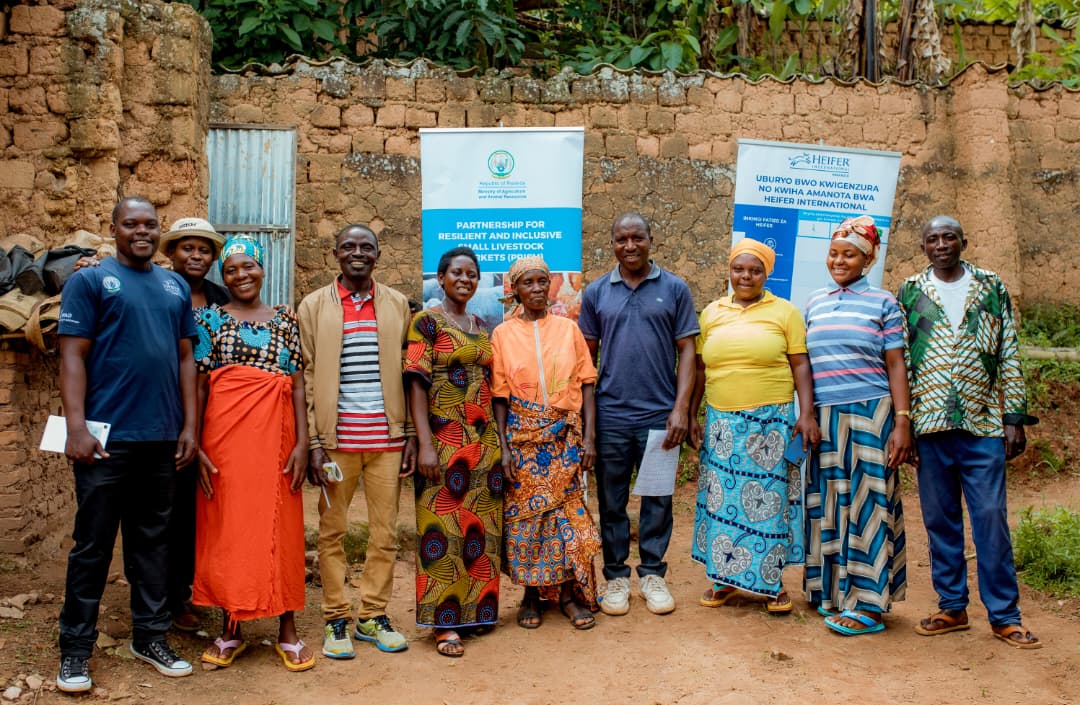
At Tworere Kijyambere association in Gashaki sector, they are brooding and have established an animal feed shop to reduce additional transport costs of buying from dealers in Musanze city (Voice of Africa).
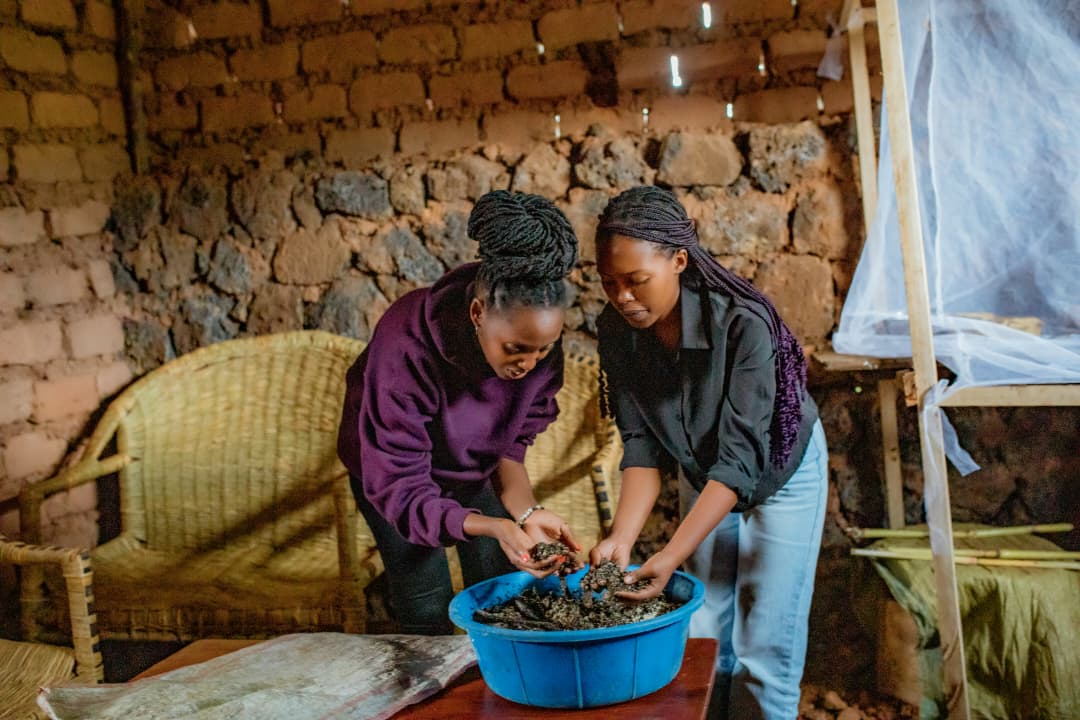
This community, which started as project beneficiaries, decided to form a Self-Help Group and later an association to boost their poultry activities but also found a permanent solution to the feeds challenge by using Azolla plants as feeds for grown-up chicks.
“The chicks below two months cannot feed on Azolla. So, we decided to focus on adult chicks to bypass the chicken feed challenge,” the group’s mentor said.
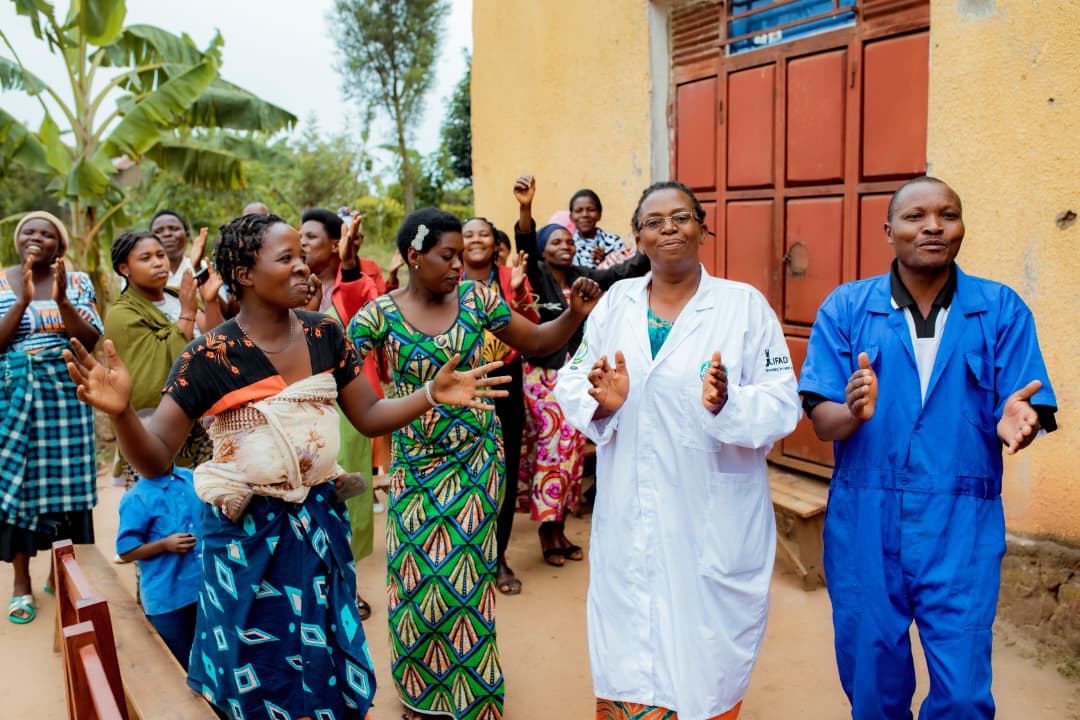
In Gahunga sector, Burera District, a farmers’ group – Dufatanye Twiyubake cooperation, which started with 10 to over 1,000 chickens, is using Black Soldier Flies (BSF) and Azolla feeds to produce feeds using readily available raw materials to remain the sole suppliers of eggs in Rwasa cell.
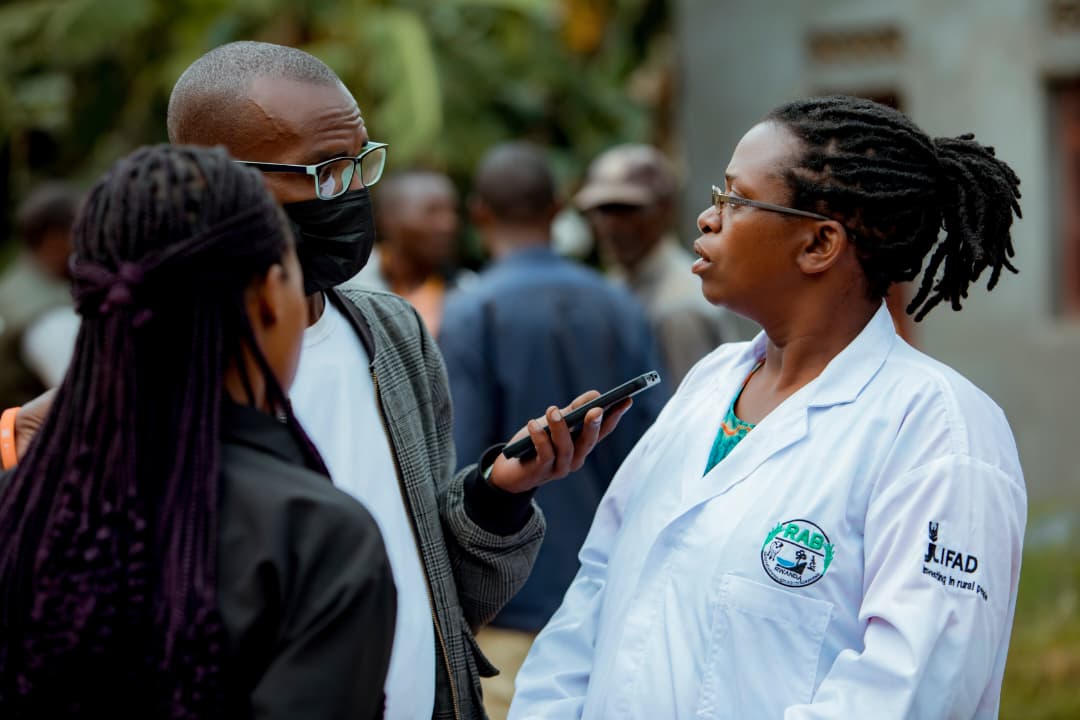
Immaculee Niyonsenga (right) speaking to local media
Dufatanye Twiyubake cooperative chairperson, Immaculee Niyonsenga, says that focusing on using locally produced feeds and training one of their members (Jean Bosco Ntirenganya) in Azolla-based feed preparation skills has enabled them to address the challenge.
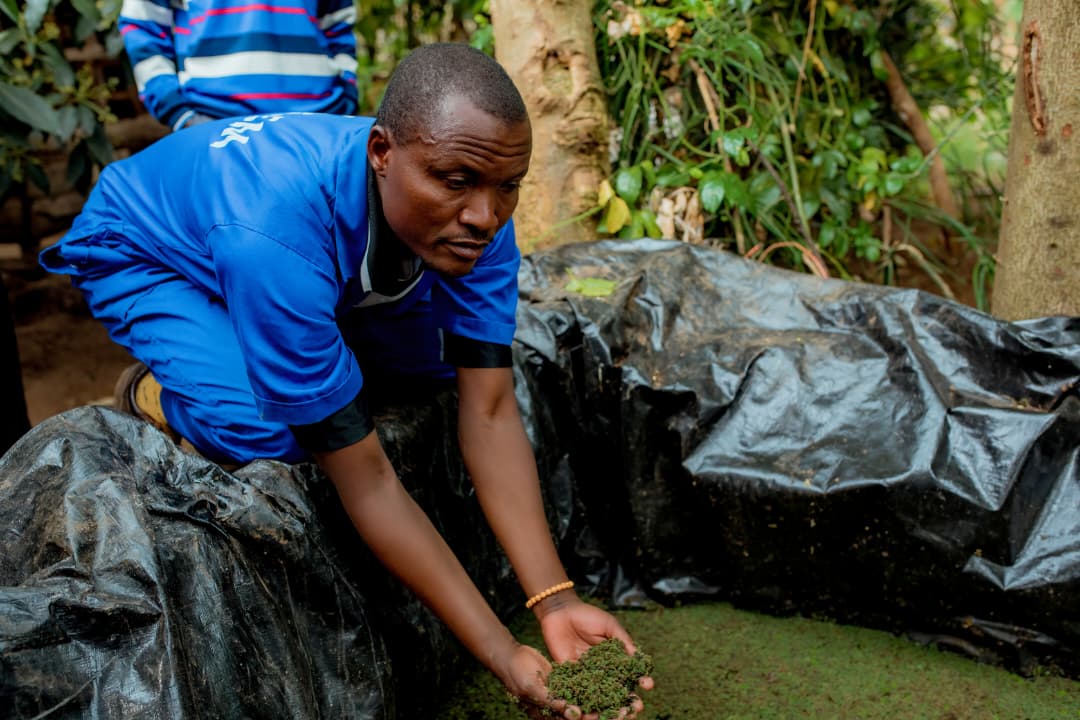
Jean Bosco Ntirenganya shows off an Azolla feed demo pond
Taking on one member at a time, Ntirenganya says he has trained all 28 members to build Azolla ponds – where they mix grass with Azolla flowers that multiply feeds for chickens and pigs.
This only takes three days to build one pond if the farmer has a good mindset, a pond, and plastic sheets.
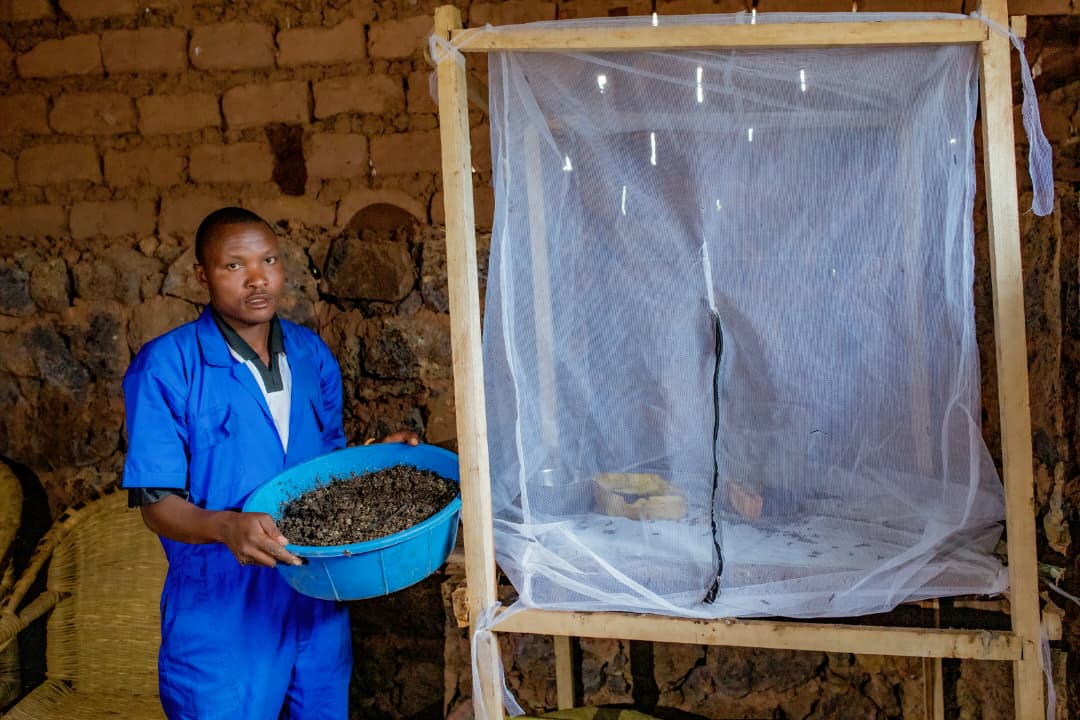
Jean Bosco Ntirenganya shows off the Black Soldier Flies net
“I plan on expanding this training to all 150 families in the village by the end of this year and reach more communities if possible,” Ntirenganya said.
Niyonsenga stated that with these feeds, cooperative members can feed their small livestock for ages and reduce, by half, the expenses on imported feeds from Rwf800 to Rwf400 per kilo.