



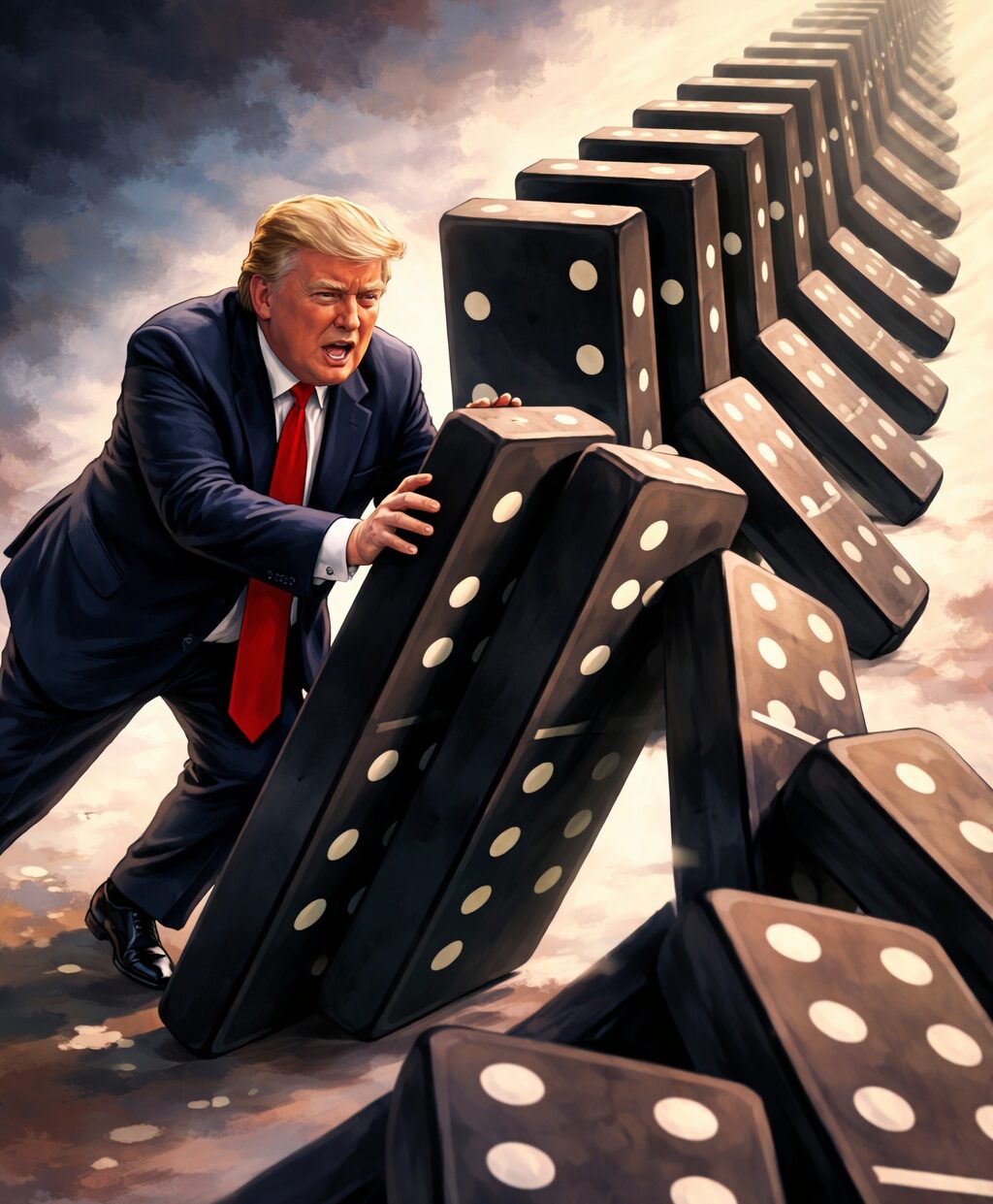
When the first domino fell in Washington, it made barely a sound in Africa. A speech here, an executive order there, strong borders, transactional diplomacy, “America First” revived with sharper edges. Yet, as with all dominoes, the fall was never meant to end where it began.
In the corridors of African ministries, the ripples were felt quietly at first. A delayed aid package. A postponed climate fund meeting. A trade delegation that never arrived.
Donald Trump’s “domino agenda” was not written with Africa in mind. But history has taught the continent a hard truth: global power shifts rarely ask permission before reshaping African futures.
The First Domino: Retreat from Multilateralism
Trump’s worldview treats alliances like business contracts—useful only if they deliver immediate returns. In this logic, institutions such as the United Nations, the World Health Organization, and global climate frameworks become liabilities rather than safeguards.
For Africa, this retreat carries weight. Many African states rely on multilateral platforms to amplify their voices, secure development financing, and manage cross-border crises. As U.S. funding and diplomatic energy pull back, the domino tips:
- Peacekeeping missions face budget strain
- Health surveillance weakens
- Climate adaptation projects slow or collapse
Africa does not fall into chaos; but it must stretch already-thin systems even further.
The Second Domino: Aid Becomes Leverage
Under Trump’s approach, aid is no longer a moral instrument; it is a bargaining chip. Countries are asked, implicitly or explicitly: What do you offer in return?
For African governments, this creates a fork in the road.
Some comply—supporting U.S. positions in international forums, tightening migration controls, or opening markets on unfavourable terms. Others resist, choosing sovereignty over short-term funding, even if it means painful budget gaps.
The domino effect is subtle but profound: development priorities begin to shift away from local needs toward foreign approval.
The Third Domino: Trade Without Protection
Trump’s scepticism toward trade preferences and development-based market access threatens long-standing arrangements that favour African exports. Programs designed to give African producers a foothold in global markets become renegotiated—or abandoned.
Factories feel it first. Then farmers. Then workers.
The promise that trade would replace aid begins to ring hollow, as Africa discovers that “free markets” are rarely free when power is unequal.
The Fourth Domino: Climate Silence
Perhaps the heaviest domino is the quietest one.
As the U.S. steps back from climate leadership, Africa—responsible for a tiny fraction of global emissions—finds itself paying the highest price. Floods intensify. Droughts deepen. Food systems strain.
Without strong U.S. backing for climate finance and technology transfer, Africa must look elsewhere or go it alone. The cost is counted not just in dollars, but in lives and lost decades of progress.
The Final Domino: A New African Awakening
Yet dominoes do not only fall—they rearrange.
As the U.S. turns inward, Africa looks outward and inward at once. Regional trade strengthens. South–South partnerships deepen. Countries like Rwanda, Senegal, Kenya, and Ghana invest more deliberately in self-reliance, technology, and regional integration.
China, the EU, the Gulf states, and emerging powers step into the vacuum—but Africa negotiates with sharper awareness this time. The lesson is learned: dependency is fragile.
Trump’s domino agenda may never mention Africa by name, but its impact travels far through institutions, markets, and climate systems. It challenges Africa, strains it, and at times sets it back.
But it also forces a reckoning. And in that reckoning, Africa may find something powerful: the resolve to stop waiting for foreign dominoes to fall, and to begin setting its own in motion.
