




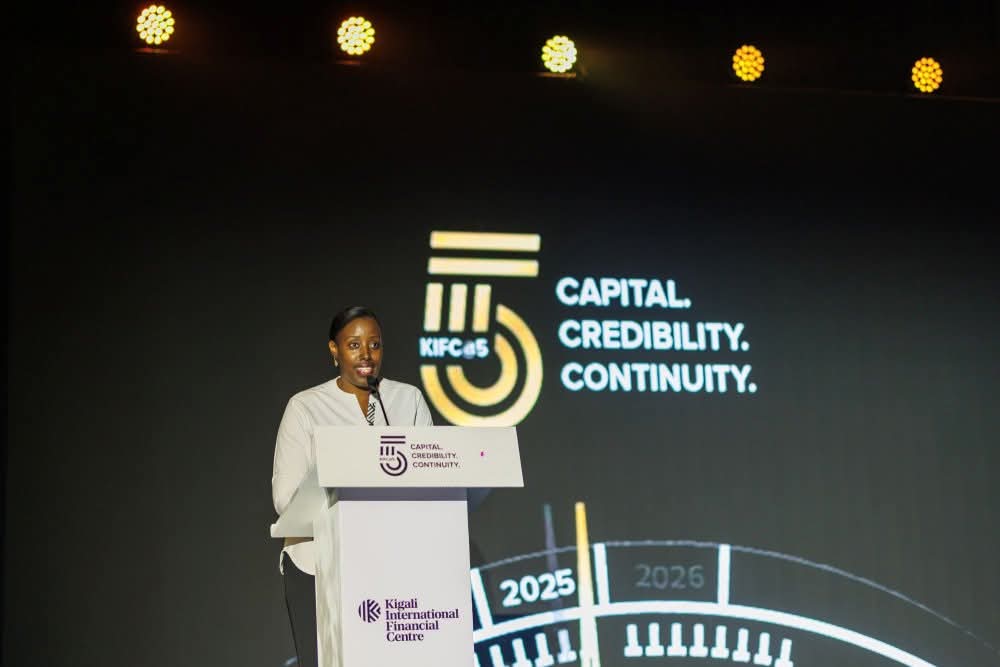
This past December, the Kigali International Financial Centre (KIFC) celebrated its fifth anniversary by unveiling of an ambitious strategy designed to strengthen Rwanda’s leadership in asset management, climate finance, and fintech.
At first glance, the new tax agreement between Rwanda and Hong Kong may seem puzzling. Hong Kong does not currently feature among Rwanda’s top source countries for foreign direct investment, foreign portfolio investment, or other private capital inflows.
Rwanda’s own records show that total private capital inflows reached USD 886.9 million in 2023, with foreign direct investment accounting for USD 716.5 million.
The largest shares came from Mauritius, India, Kenya, the United States, France, Germany, the Netherlands, and China—while Hong Kong was largely absent from the list.
Yet this apparent absence is precisely what makes the agreement strategic rather than redundant. Rwanda is not responding to existing flows; it is positioning itself for future capital.
Why Sign a Deal With a Capital Giant That Hardly Invests Here—Yet
Hong Kong may not be a major investor in Rwanda today, but globally it is one of the world’s most important financial hubs.
In 2023 and 2024, Hong Kong attracted between USD 112 and 122 billion in foreign direct investment, placing it among the top global destinations for capital.
Its outward investments to Africa remain limited, not because of a lack of capital, but because of risk perceptions, regulatory uncertainty, and unfamiliarity with African markets.
By eliminating double taxation, Rwanda is addressing one of the core barriers that keeps large pools of Asian capital on the sidelines.
The message is subtle but deliberate: Rwanda is building the legal and fiscal infrastructure before the money arrives.
Early Signals of a Shift
The Comprehensive Double Taxation Avoidance Agreement was signed in October 2025 in Hong Kong, and enacted into law by Presidential Decree published this week with President Kagame’s signature.
The agreement clarifies taxing rights between Rwanda and Hong Kong, and reduces withholding taxes on dividends, interest, and royalties.
For investors, this means predictability. For governments, it means transparency and cooperation in preventing tax evasion.
Such agreements are standard practice among countries that aspire to host international finance and regional headquarters. They do not generate immediate investment spikes, but they quietly shape investor decisions years in advance.
Although large-scale Hong Kong capital has yet to flow into Rwanda, there are early signs of growing engagement.
One of the most visible examples is Billy Cheung, a Hong Kong–based investor who has operated in Rwanda since 2000 and is a co-owner of the Kigali Marriott Hotel, a flagship project in the hospitality sector.
More recently, in late 2025, the Rwanda Development Board held discussions with Chuangzhi Group (Hong Kong) Co. Ltd. on potential investments in manufacturing.
While such talks do not guarantee immediate deals, they reflect increasing interest and exploratory movement.
At a broader level, institutions such as Hong Kong’s Financial Services Development Council have begun identifying Rwanda as a stable entry point for Asian investors seeking access to African markets.
These conversations increasingly frame Rwanda not as an end destination, but as a gateway.
Becoming a Capital Connector
This context explains why the agreement matters even without strong current investment flows.
Rwanda is not simply chasing individual investors; it is building a financial corridor. By aligning its tax regime with international standards and linking itself to one of the world’s most sophisticated financial centres, Rwanda strengthens its case as a neutral, rules-based platform for capital entering Africa.
This approach mirrors strategies used by countries such as Mauritius and Singapore, which became investment hubs not by size, but by predictability, governance, and global connectivity.
For ordinary citizens, the effects will not be immediate, but they are real.
Over time, easier capital movement can support investment in manufacturing, real estate, services, and infrastructure. That, in turn, can translate into jobs, business opportunities, and stronger economic resilience.
For local firms, especially those seeking partnerships or financing, Rwanda’s growing network of international agreements improves access to global capital markets.
For government, the agreement balances openness with safeguards, ensuring cooperation against tax evasion while expanding the long-term tax base.
Opening Rwanda to the World’s Top Capital
Ultimately, the Rwanda–Hong Kong tax agreement is not about current rankings or past investment flows.
It is about where Rwanda wants to be. By connecting itself to global financial circuits and removing technical barriers ahead of time, Rwanda is signaling ambition: to be more than a recipient of aid or opportunistic investment, and instead to become a trusted node in international finance.
The capital may not be flowing yet—but the doors are now open, and deliberately so.
