



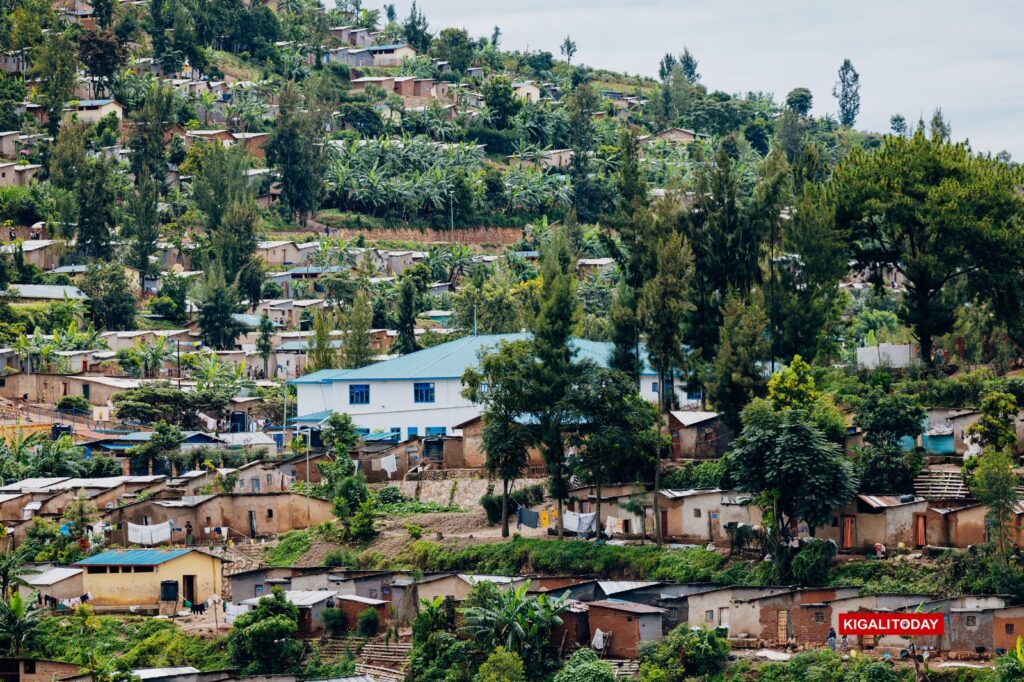
Residents of such settlement express relief and satisfaction following the completion of critical infrastructure works designed to prevent landslides and soil erosion.
The Government of Rwanda has invested at least RWF 5.2 billion (approximately $3.85 million) over the last three years to implement large-scale environmental protection across its refugee settlements. According to the Ministry in Charge of Emergency Management (MINEMA), these strategic funds have been directed toward mitigating the deadly risks of natural disasters while stabilizing the delicate ecosystems that host displaced populations.
To ensure the safety of residents across the country’s hilly landscapes, MINEMA has partnered with international development agencies to “disaster-proof” refugee settlements through the “Jya mbere” project. This initiative focuses on high-altitude areas where modern infrastructure is essential to managing the natural flow of water and maintaining the integrity of the land during heavy rainfall.
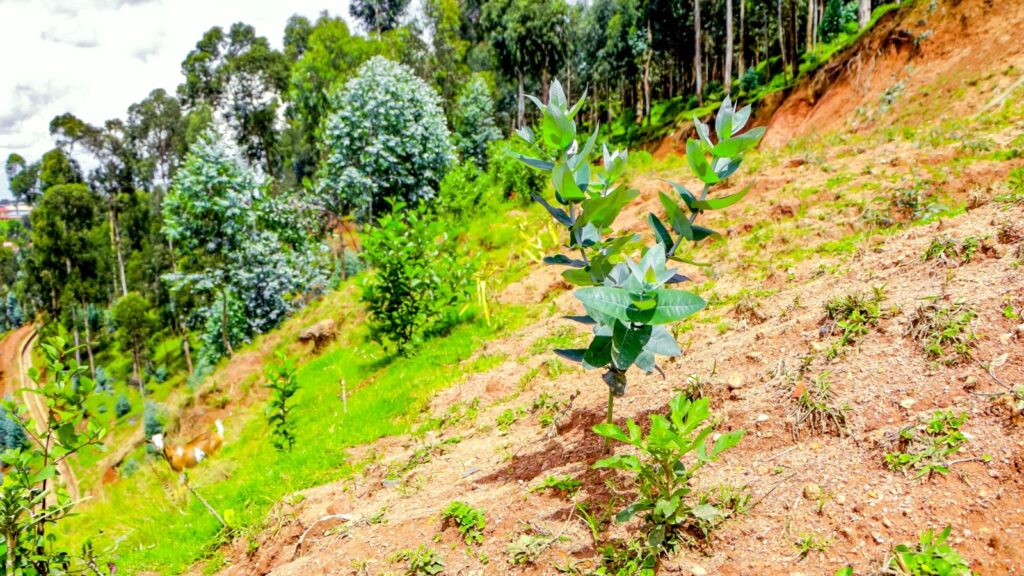
Thousands of native trees and shrubs have been planted across the hillsides to serve as a natural anchor, preventing future soil erosion and restoring the local ecosystem.
The technical interventions focus on repairing deep ravines and “scars” in the earth caused by unchecked soil erosion, while also constructing robust concrete drainage systems to safely divert tropical runoff. To further anchor the soil and prevent landslides, the project has overseen the planting of thousands of native trees across affected areas, providing a natural barrier that strengthens the region’s long-term environmental resilience and protects both the camps and host communities.
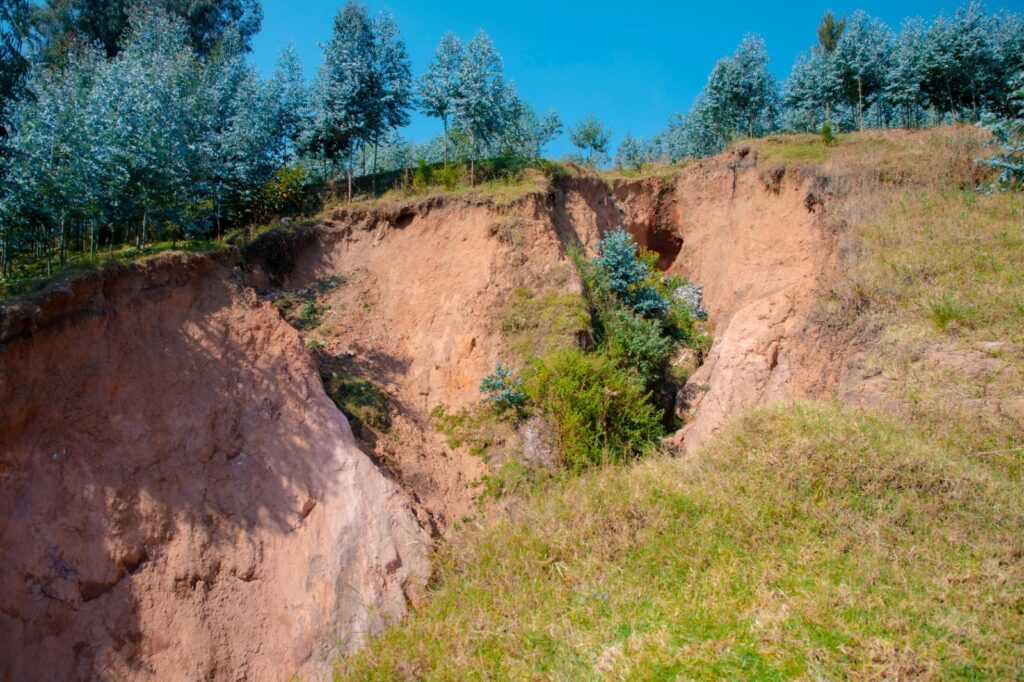
Before the interventions, seasonal rains frequently triggered devastating landslides and created massive gullies, leaving residents in a constant state of peril.
The measures are critical during Rwanda’s intense rainy seasons, where uncontrolled runoff previously triggered landslides that threatened the lives of both refugees and the local host communities living downstream. Before the interventions, the rainy season was a period of constant anxiety, with residents recalling a time when the landscape itself felt like a threat.
Tuyisenge Zagira, a resident of Kigeme Camp, remembers the sheer physical danger of the terrain. “It used to be incredibly hazardous. Massive gullies made navigating the camp nearly impossible, and there was a constant fear of falling into them. Today, the ground is stable, and we can move safely,” Zagira said.
The danger extended beyond the camp borders into neighboring villages. Anastase Hakizimana, a resident of the Kibirizi Sector, noted that the landslides were once a terrifying reality for families, particularly for children. He explained that with the new drainage channels and stabilized soil, the threat of being buried by a landslide has been neutralized.
The severity of past environmental degradation even forced the government to relocate populations for their own safety. Edison Munyakarambi Sebutoza, Chairperson of the Kigeme Camp Management Committee, noted that some refugees previously had to be moved to Mahama Camp in the Eastern Province because the hillsides at Kigeme had become too unstable to inhabit.
In Gisagara District, which hosts Mugombwa Camp, District Mayor Jérôme Rutaburingoga highlighted how high population density can exacerbate these issues. He explained that concentrated living areas naturally lead to faster erosion because water collects and gains momentum, but by installing controlled drainage, the government is protecting both the camp and the surrounding farmlands from being washed away by floods.
Frank Ngoga, the project manager for the “Jya Mbere” initiative—which translates to “Moving Forward”—emphasized that the project provided more than just physical security. Under his supervision, gullies have been repaired and water has been guided safely into wetlands across six districts and six camps. Crucially, the initiative employed both refugees and local residents to carry out this work, supporting local livelihoods while restoring the land.
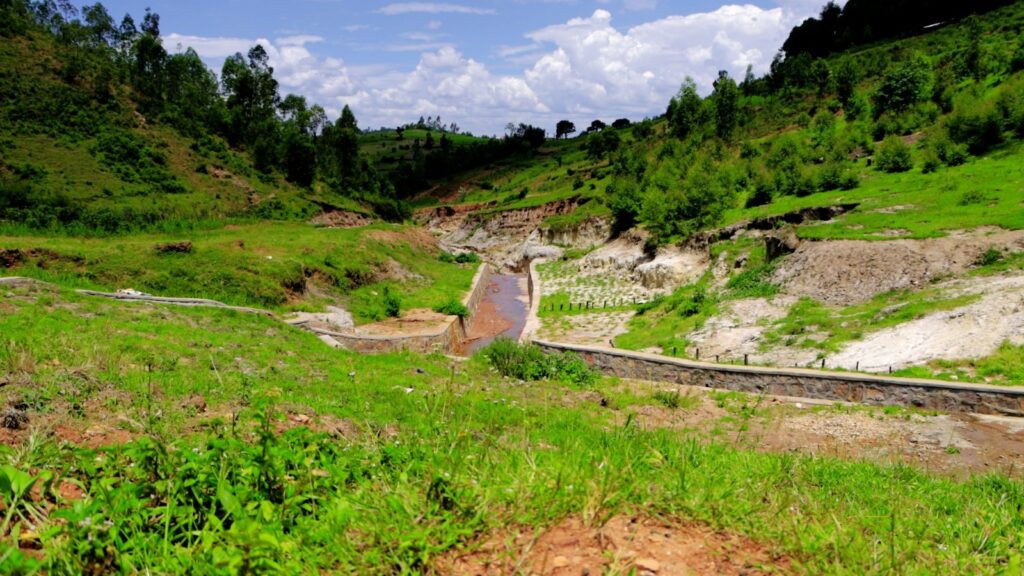
By pairing modern water management with afforestation, the Jya Mbere project has created a dual barrier against erosion, ensuring the long-term safety and environmental health of the region.
Through these targeted investments, Rwanda is moving toward a model of “sustainable sanctuary,” ensuring that refugee settlements are not just temporary shelters, but safe, resilient communities that protect both the people and the land they inhabit.
A Global Model for Refugee Integration
Rwanda’s environmental protection efforts are part of a broader, globally recognized policy that prioritizes the dignity and self-reliance of displaced populations. The country currently hosts approximately 138,000 refugees, primarily from the Democratic Republic of the Congo and Burundi, as well as evacuees from Libya through the Emergency Transit Mechanism. By ensuring these settlements are environmentally stable, Rwanda creates a foundation where displaced people can live without the constant threat of natural disasters.
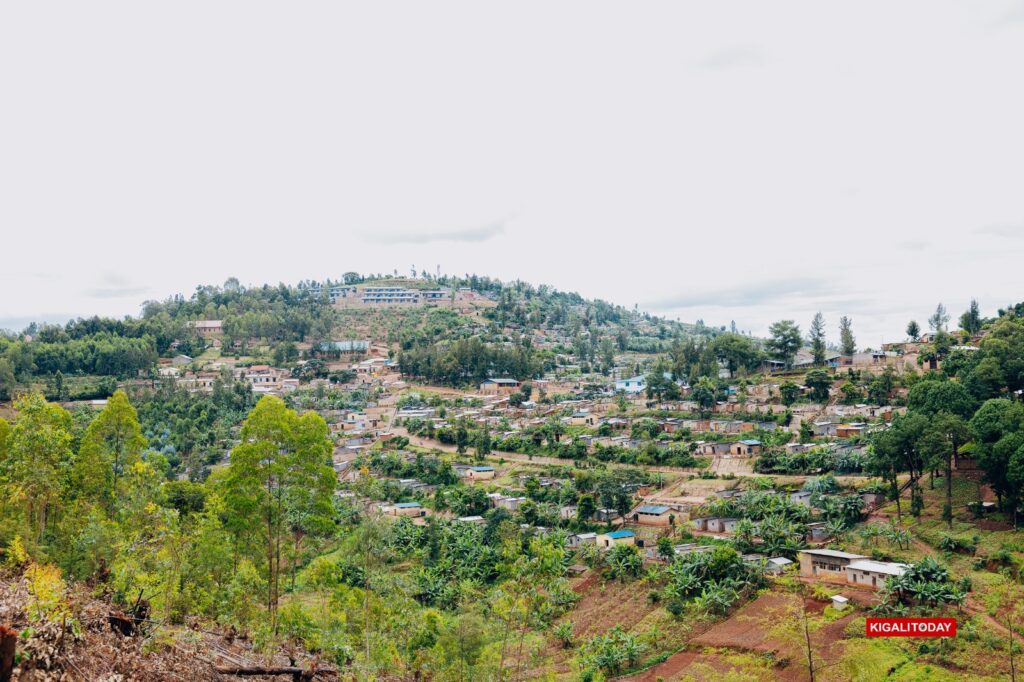
For many in the camp, the completion of the drainage and erosion control projects means they no longer have to fear the rainy season, allowing life and business to continue uninterrupted.
Rather than maintaining isolated or temporary camps, Rwanda has pioneered a progressive model that integrates refugees directly into national systems. This approach provides refugees with access to the same healthcare and education services as Rwandan citizens, fostering a sense of community and long-term stability. The government also issues national refugee IDs, which facilitate freedom of movement and allow individuals to open bank accounts and access formal financial services.
This inclusive strategy focuses on economic empowerment by granting refugees the right to work and start businesses. By combining physical safety through infrastructure projects like Jya Mbere with economic opportunity, Rwanda ensures that displaced persons can contribute to the local economy. This holistic approach transforms refugee settlements into resilient, productive communities that benefit both the residents and the nation at large.
