



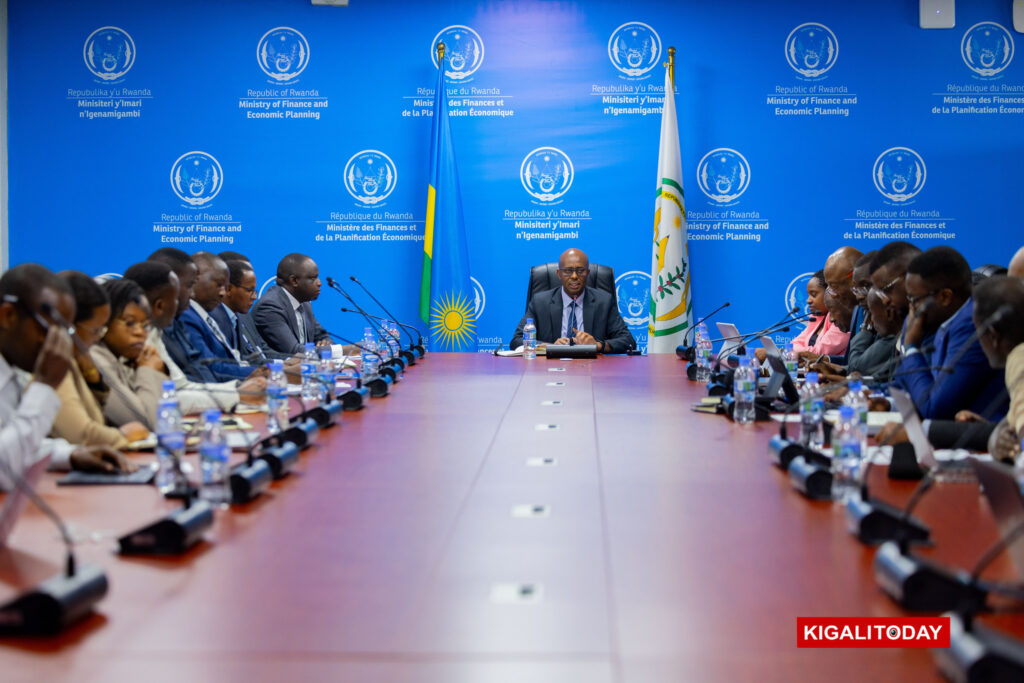
Yusuf Murangwa, the Minister in charge of Finance and Economic Planning addressing the press.
KIGALI — Rwanda’s economy expanded by 9.4 percent in 2025, marking one of its strongest growth cycles in recent years, fueled by a surge in industrial output, services, and export crops.
Official data released by the National Institute of Statistics of Rwanda (NISR) on Monday shows the country’s Gross Domestic Product (GDP) reached Frw 23,387 billion in 2025, up from Frw 19,918 billion the previous year.
In a statement, Ivan Murenzi, Director General of NISR, noted that economic activity accelerated throughout the year. Growth started at 6.5 percent in the first quarter before surging to 11.8 percent and 11.2 percent in the third and fourth quarters, respectively.
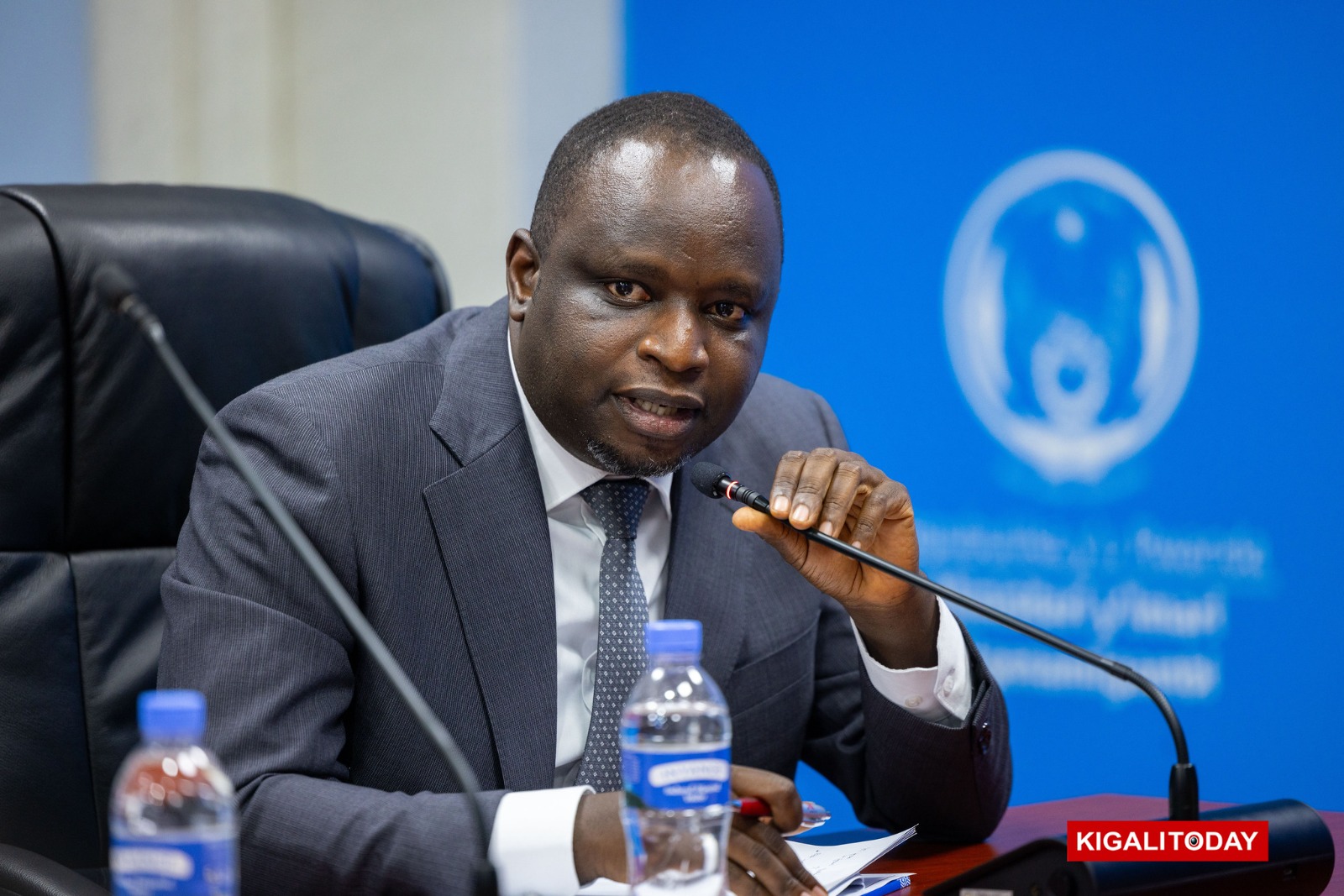
Data-Driven Growth: Jean Claude Mwizerwa, Deputy Director General of the National Institute of Statistics of Rwanda (NISR), presents the 2025 GDP report in Kigali.
The services sector remained the primary economic driver, accounting for 52 percent of total GDP. Industry followed at 22 percent, while agriculture contributed 20 percent. Net direct taxes made up the remaining 5 percent.
Yusuf Murangwa, Minister of Finance and Economic Planning, described the performance as evidence that the National Strategy for Transformation (NST) targets are within reach.
“Normally, six percent growth is considered good. When you see seven or eight percent, performance is very strong. At 9.4 percent, it shows that government reforms and private sector investments are yielding results,” Murangwa said. He added that sustaining this momentum—near the 9.3 percent NST target—would “automatically” trigger stronger development outcomes and improved living standards.
Industrial and Export Surge
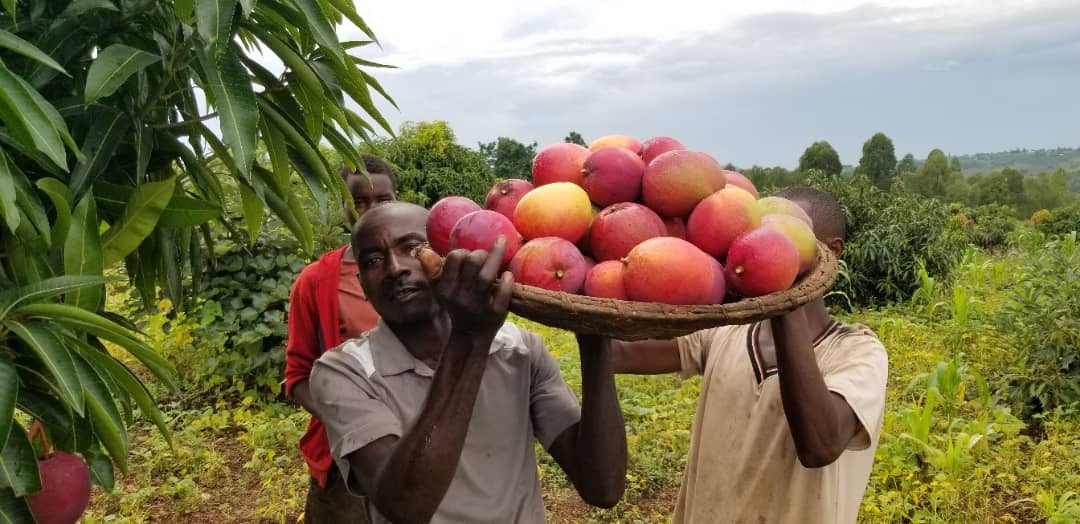
Diversifying the basket. The steady rise in fruit exports is a testament to Rwanda’s strategic shift toward high-value agricultural processing and global trade.
The industrial sector led growth at 11 percent, followed by services at 9 percent and agriculture at 7 percent. Within industry, mining and quarrying grew by 17 percent, while construction and manufacturing expanded by 11 and 10 percent, respectively.
Manufacturing gains were particularly sharp in construction materials; cement production jumped 35 percent, while metal products and machinery rose 21 percent. Food processing expanded by 9 percent, though textile production saw a marginal 1 percent decline.
In agriculture, while food crops grew by a modest 3 percent, export crops surged 32 percent. This was driven by a 60 percent spike in coffee production and an 8 percent rise in tea output.
The services sector saw double-digit gains in wholesale and retail trade (15 percent) and information and communication (15 percent). Transport services grew 7 percent, bolstered by land transport, despite a 4 percent contraction in air transport.
Global Headwinds and Geopolitical Risks
Despite the domestic boom, officials warned of external shocks. Murangwa highlighted that geopolitical tensions—specifically conflicts involving the United States, Israel, and Iran—could disrupt international supply chains and energy prices.
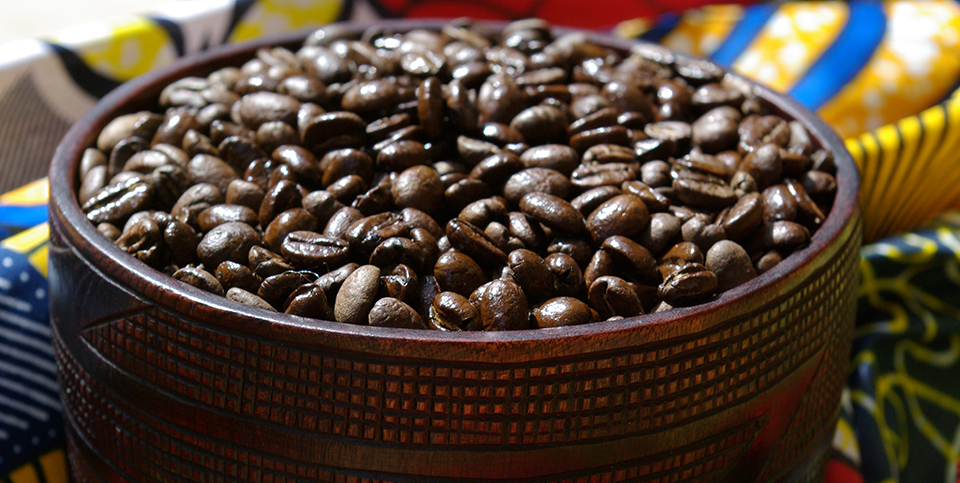
From the volcanic soil of the hills to global markets: Rwandan specialty coffee continues to be a major driver of the 9.4% GDP surge in the services and trade sectors.
“Many products transit through or are destined for the Middle East. We are working with other agencies to find alternative markets,” Murangwa said.
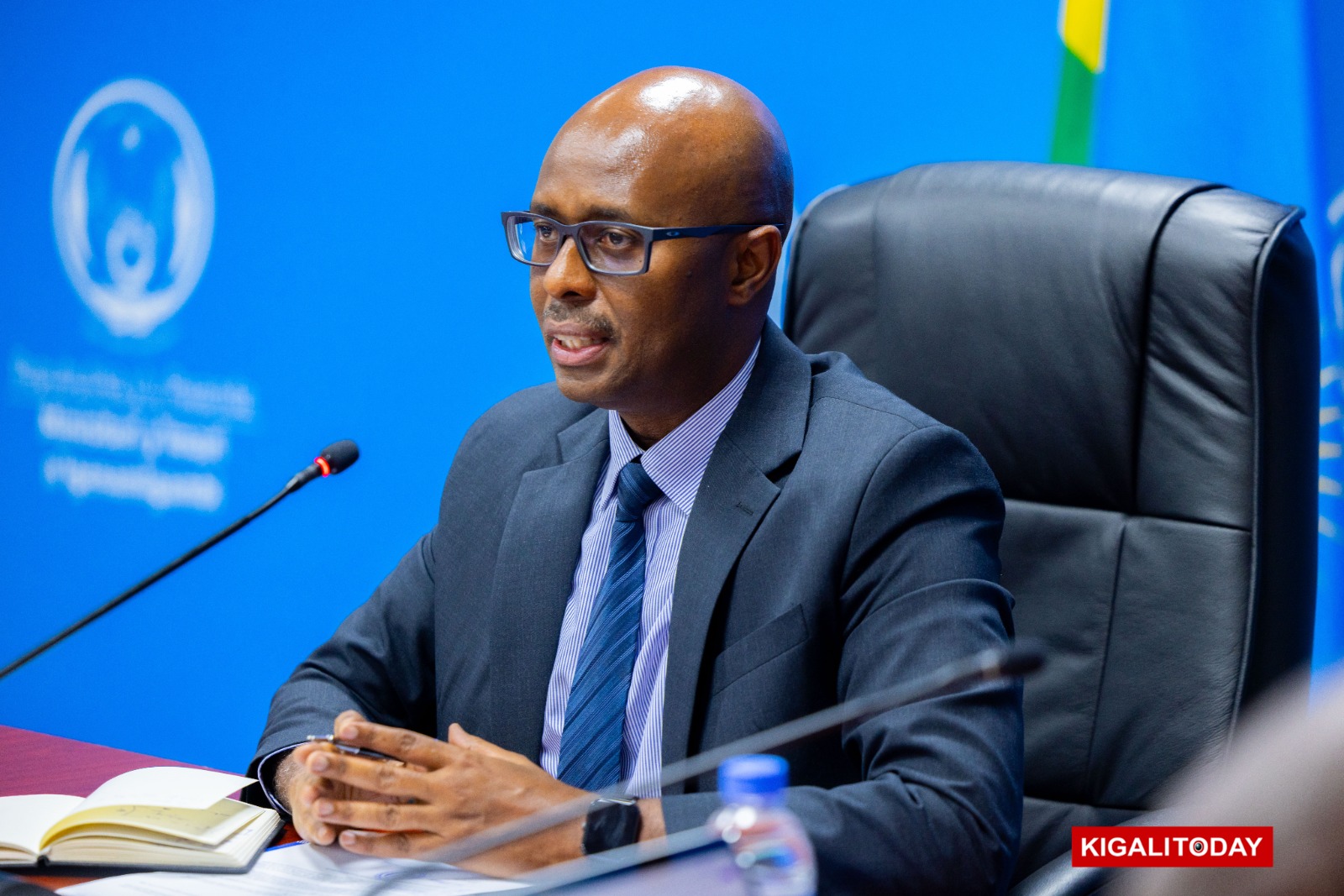
Minister of Finance Hon. Yusuf Murangwa attributed Rwanda’s 9.4% GDP growth in 2025 to a surge in the Industry and Services sectors, marking a significant step toward the nation’s long-term economic goals.
While the domestic outlook remains bullish, the government is closely monitoring how rising geopolitical tensions—specifically in the Middle East—might spill over into fuel prices, fertilizer imports, and global logistics.
The impact is already being felt in the horticulture sector, where shipments of fresh produce to Middle Eastern markets have stalled due to disrupted trade routes.
Minister Murangwa noted that a comprehensive assessment of these external pressures is expected within the next three months. However, he maintained that Rwanda’s diversified economic base provides a critical buffer against such shocks.
“There is no indication that the situation will hit the economy hard,” he said, signaling confidence in the country’s underlying resilience.