



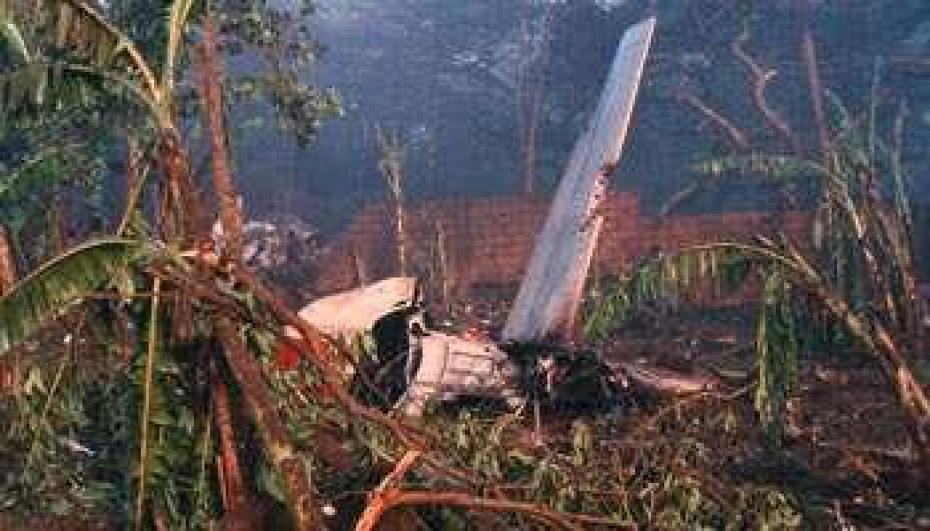
In the immediate aftermath of plane crash that killed then-president Juvenal Habyarimana and other leaders
Within hours of the April 6, 1994 downing of President Juvénal Habyarimana’s plane, multiple Western intelligence services including those of the United States, the United Kingdom, and Belgium converged on a stark, unmistakable conclusion: the attack had originated from within the Hutu extremist power structure itself from Kanombe Military Barracks- under control of the genocidal regime’s forces to be specific.
Belgian military intelligence (SGR), deeply embedded in Rwanda through its UN peacekeeping role, produced a damning analysis as early as April 22, 1994.
It stated unequivocally that “everything now suggests” the perpetrators belonged to the “hardline faction of the Ba-Hutu within the Rwandan army.” The speed and organization of the ensuing killings, the analysis stressed, proved premeditation.
The note went further, identifying a ruthless network tied to the presidential inner circle as the definitive locus of responsibility.
“This group operated within the orbit of the President’s wife, whose brothers and cousins had become high-ranking dignitaries of the regime. They had been involved in acts of terror and financial dealings, and it was unthinkable for them to surrender their privileges. They were the ones directing the ‘Interahamwe’- the youth wing of the MRND, which formed the sinister death squads. This lobby also included high-ranking military officers, and it is among them that the perpetrators of the attack on the presidential plane must be sought.”
Across the Atlantic, U.S. intelligence reached the same conclusion. A declassified State Department document (released under the Freedom of Information Act) confirms that Washington quickly anticipated mass violence and understood the assassination not as an external strike, but as the signal for a planned purge and genocide. The U.S. established a crisis cell on April 7, fully aware of the regime’s murderous intent.
British intelligence assessments, though less publicly cited, fully aligned with this early Western consensus: extremists within the regime had both the motive and the capability to eliminate Habyarimana and derail the Arusha peace process.
As a staunch accomplice of the genocidal government, France, however, took a radically different and shameful path. French judicial, military, and political establishments spent the late 1990s and 2000s trying to frame the Rwandan Patriotic Front (RPF-Inkotanyi) for the attack. Acknowledging that regime insiders orchestrated the assassination would have exposed France’s own complicity and alliances.
Only the technical findings of the Trévidic investigation (2010–2012) which placed the missile launch site firmly inside the Kanombe military camp, controlled by government forces finally forced France’s position to shift.
The record is now clear; Hutu extremist responsibility was not a late reinterpretation. It was an early, evidence-based conclusion one that some governments accepted immediately, and others, like France, resisted for years until the facts became undeniable.
