



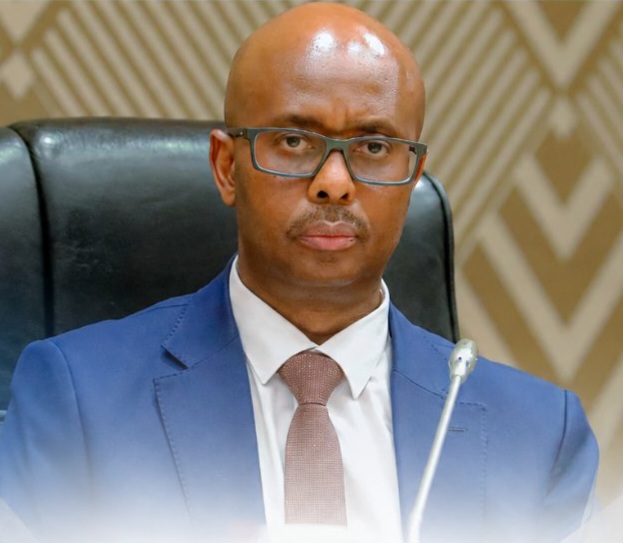
Finance Minister Yusuf Murangwa
KIGALI — Government has committed fresh funding toward the continued expansion of the New Kigali International Airport and expanded operational support for RwandAir, signaling that aviation remains at the center of the country’s long-term economic strategy despite growing fiscal pressure.
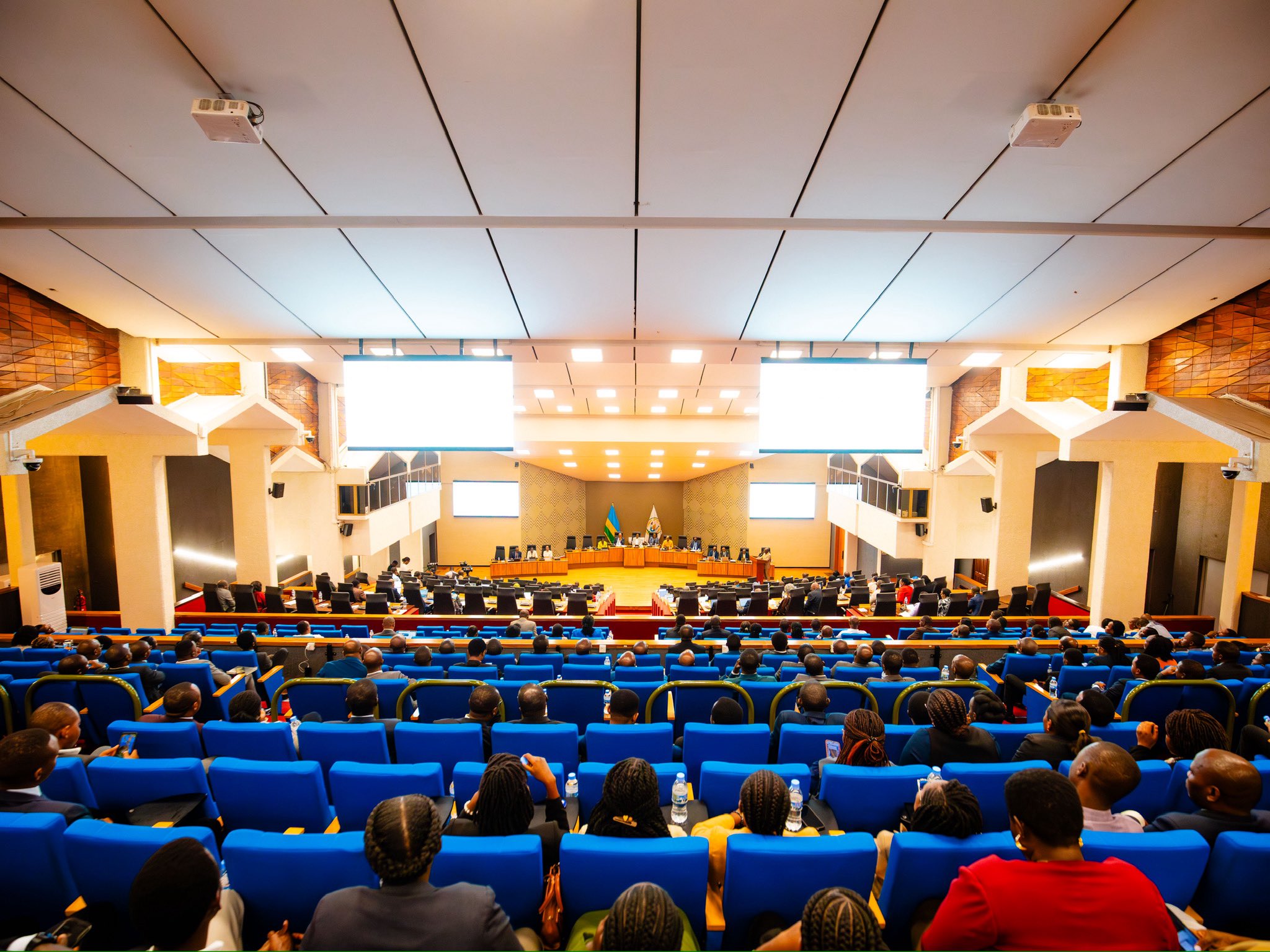
The allocations, outlined by Finance and Economic Planning Minister Yusuf Murangwa in the draft 2026/27 Budget Framework presented to a joint session of Parliament on Monday, show that the government is willing to tolerate higher borrowing and slower fiscal consolidation in order to protect what it views as strategic national assets: the country’s future airport hub and its national carrier.
The draft framework serves as the government’s spending direction ahead of the formal national budget presentation next month, when Rwanda will read its final budget alongside other East African Community member states, in keeping with the regional budget tradition.
Murangwa said the ongoing construction of the New Kigali International Airport phase II — the country’s most ambitious infrastructure project — will account for spending equivalent to 1.5 percent of gross domestic product during the fiscal year.
The project is included within a broader capital expenditure plan of Rwf 2.5 trillion, up from Rwf 2.1 trillion the previous year, an increase of Rwf 384.3 billion that the government says is tied to the implementation of priority projects under the Second National Strategy for Transformation, known as NST2.
To help finance the airport, Rwanda will rely heavily on external borrowing.
Total external loans are projected at Rwf 1.97 trillion, including Rwf 1.147 trillion in budgetary loans.
The budget document explicitly states that these loans include financing related to the ongoing airport construction.
Murangwa argued that the airport is not simply a transport project, but an economic engine expected to stimulate construction, tourism, logistics, trade and investment.
Budget planners describe private consumption and investment as the main drivers of growth, with additional momentum expected from the airport’s continued development.
At the same time, the government is increasing support for RwandAir, whose expansion is also listed among the country’s key strategic projects.
Although recurrent expenditure is expected to decline slightly as a share of GDP, Murangwa noted that spending plans were adjusted specifically to accommodate higher subsidies for the airline, alongside fertilizer support for agriculture.
“The recurrent expenditures… were adjusted to accommodate increase in RwandAir and fertilizer subsidies,” the budget states.
The additional support comes as the airline faces rising operational costs linked to instability in global oil markets and the continuing conflict in the Middle East, which has pushed up aviation fuel prices.
Murangwa noted that intervention is necessary to minimize the effects of “the current war in the Middle East,” a recognition of how global shocks continue to affect Rwanda’s domestic budget choices.
The minister increasingly described the airport and the airline as one connected national aviation strategy.
The logic is straightforward: an international airport without a strong national airline limits competitiveness, while airline expansion without airport capacity creates long-term constraints. Together, the two projects are intended to strengthen Rwanda’s role as a regional aviation, tourism and conference hub.
That strategy, however, comes at a cost.
Murangwa acknowledged that debt sustainability indicators will “moderate” in order to accommodate financing for both the second phase of the airport and the expansion of RwandAir.
As a result, Rwanda now expects to reach its long-term debt target of 65 percent of GDP by 2033 rather than earlier projections.
Even so, the minister insisted the borrowing is justified.
Rather than financing consumption, he argued, the country is borrowing for assets designed to reshape Rwanda’s economic future — infrastructure meant to outlast the budget cycle and define the next phase of national growth.
In this year’s draft budget, no investment reflects that philosophy more clearly than the pairing of the new airport and RwandAir.
