
Nicole Muhire, the acting Director of Currency and Banking Operations at BNR saying retiring older banknotes is a routine part of managing a country’s currency.
KIGALI – Rwanda is in the middle of a nationwide effort to withdraw several generations of older Frw500, Frw1,000, Frw2,000 and Frw5,000 notes from circulation before they officially cease to be legal tender on March 1, 2027.
This is one of the country’s biggest currency replacement exercises in recent years.
The withdrawal follows a Presidential Order issued in February and a public announcement by the National Bank of Rwanda (BNR), which gave the public a full year to exchange the affected notes.
For more than two decades, these old banknotes have quietly accompanied the country’s transformation.
They have paid school fees, settled bus fares, bought livestock and harvests, covered hospital bills and changed hands countless times in markets, shops and businesses across the country.
Folded inside wallets, tucked away in savings boxes or kept under mattresses for emergencies, these notes have served generations of Rwandans without much thought to how long they were meant to last.
Now, after years of service, their journey is drawing to a close.
Unlike many public campaigns, this one is not about introducing something new. It is about making sure nothing valuable is left behind.
Why Money Doesn’t Last Forever
To many people, money feels permanent. As long as a note can buy goods, it is easy to assume it will remain valid indefinitely.
But like passports, driving licenses and even national identity cards, banknotes are periodically replaced.
According to Nicole Muhire, the acting Director of Currency and Banking Operations at BNR, retiring older banknotes is a routine part of managing a country’s currency.
“Demonetization is the act of rendering a certain generation of currency valueless. This is a normal exercise. The last time we did it was in 2009 when we replaced the paper Frw100 note with a coin,” she explains.
The decision, she says, is guided by the physical condition of the notes and advances in security technology.
The notes under the process of demonetizing have spent more than 20 years in circulation. Some were introduced in 2004 and their security features are no longer compatible with current technology.
Across the world, central banks periodically redesign and replace currencies to improve protection against counterfeiting, remove worn-out notes from circulation and simplify cash management.
Rwanda’s exercise follows the same principle, with BNR seeking to reduce the number of different versions of the same denomination circulating at the same time.
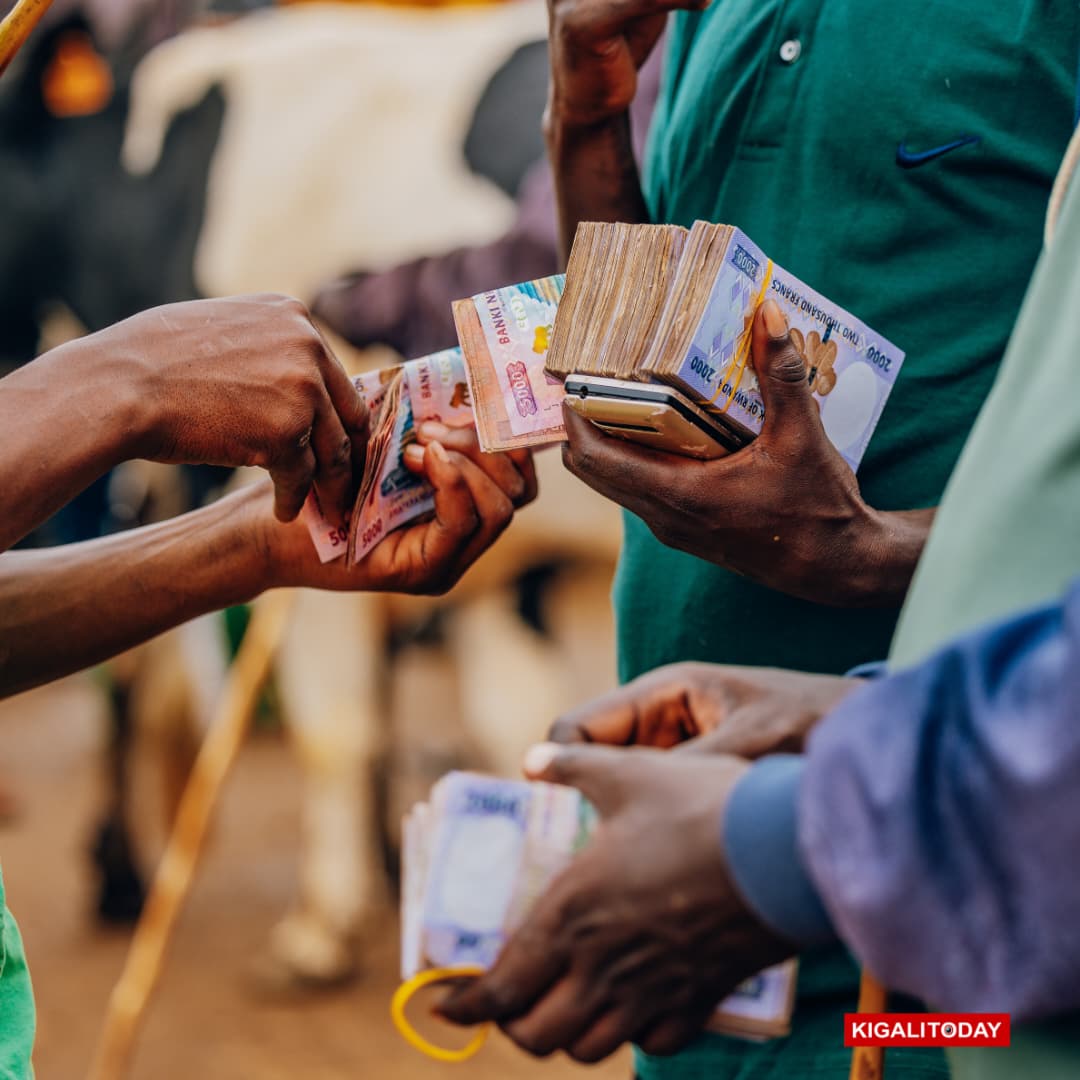
Rwanda is in the middle of a nationwide effort to withdraw several generations of old bank notes.
Searching for the Last Remaining Notes
Although millions of the newer banknotes are already circulating, officials say a small number of the older series are still in the hands of the public.
Some are likely sitting unnoticed inside family savings, while others remain in cash boxes belonging to small traders or in homes where money is kept for emergencies rather than deposited in a bank.
To ensure every remaining note is recovered, BNR has turned the exercise into a nationwide public awareness campaign.
“We are working with the media, reaching residents at the grassroots through social media, our partners and every possible avenue to ensure people are aware,” Muhire says.
The affected notes include the 2004 and 2009 editions of the Frw5,000 note, the 2007 edition of the Frw2,000 note, the 2004 and 2015 editions of the Frw1,000 note, and the 2004 and 2015 editions of the Frw500 note.
Muhire notes that while the Frw5,000 note represents the highest value circulating among the affected series, the Frw500 note is the most common in terms of the number of notes used every day, making public awareness particularly important.
She also encourages traders to familiarize themselves with the security features of genuine notes, including the colour-shifting national emblem and denomination-specific images such as the mountain gorilla on the Frw5,000 note, the traditional basket (agaseke) on the Frw2,000 note and the traditional dancers (intore) on the Frw1,000 note.
A Deadline That Matters
The exchange process has been designed to give the public enough time to act.
Until November 1, 2026, holders of the affected notes can exchange them through commercial banks, microfinance institutions or other financial institutions across the country. After that date, exchanges will only be carried out at BNR offices until March 1, 2027.
After March 2, the affected notes will no longer have any monetary value.
“From the figures we have, the remaining notes in circulation are very few. We therefore call upon everyone who still has them to exchange them so they do not incur losses,” Muhire says.
She adds that anyone unsure whether their banknotes are affected should simply visit the nearest financial institution for guidance rather than wait until the final days of the exercise.
Beyond meeting the deadline, Muhire believes the campaign carries a broader message about respecting the national currency.
“We should not use money for decorations or damage it unnecessarily. Our currency is part of our national heritage and protecting it is everyone’s responsibility.”