



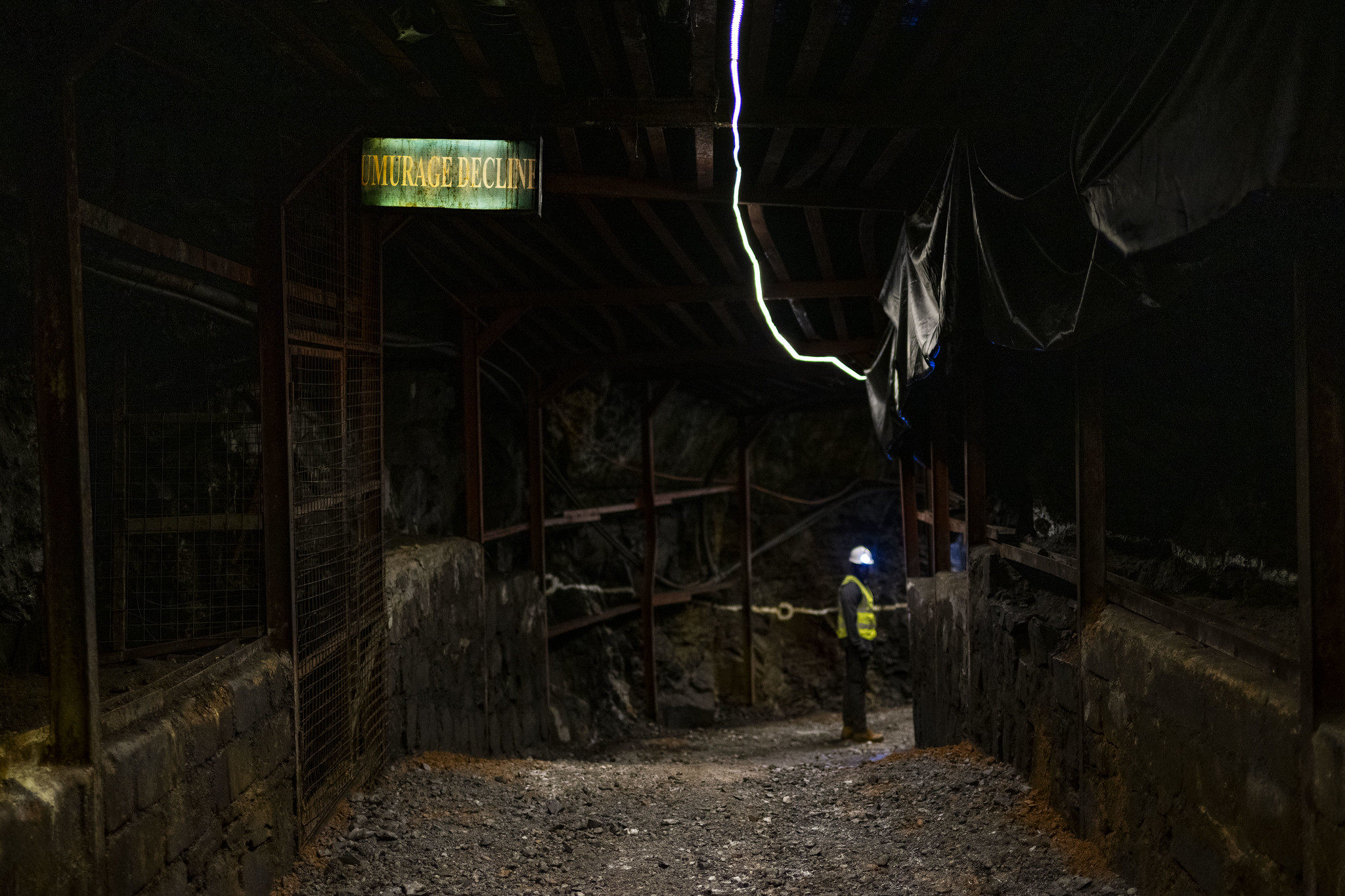
This is inside the Nyakabingo Mine, Africa’s biggest producer of Tungsten, and among top 5 globally
KIGALI – Rwanda’s merchandise exports jumped 51% in the second quarter of 2026, helped by higher mineral exports, non-traditional exports and re-exports, according to the National Bank of Rwanda’s Monetary Policy Committee (MPC).
The figures were released after the MPC’s August 26 meeting, at which the central bank raised its key interest rate by 50 basis points to 8.75% as it moved to contain rising inflation.
The surge in exports comes as Rwanda’s minerals gain increasing importance in global supply chains, particularly for critical minerals.
In August, KT Press reported that Rwanda’s tungsten sector is emerging as an important supplier to the United States, with exports from the Nyakabingo mine increasingly feeding the U.S. critical-minerals supply chain. The mine’s tungsten concentrate was reported to account for up to 20% of primary tungsten concentrate consumption in the United States.
The United States, however, is not the only major market for Rwanda’s minerals. China remains one of the biggest recipients of Rwandan mineral exports, reinforcing the growing importance of Rwanda’s mining sector to the country’s trade with both major global economies.
Rwanda has also secured a new opening in the Chinese market. From May 1, 2026, Rwandan mineral ores, along with coffee and essential oils, became eligible to enter China without tariffs.
The development places Rwanda’s minerals at the intersection of growing competition between the United States and China over critical mineral supply chains. China remains the dominant global player in tungsten, while the United States is seeking alternative sources for minerals considered important to its defence and industrial sectors.
Rwanda’s overall export performance was nevertheless accompanied by a rise in imports. Merchandise imports increased 28% in the second quarter, pushing the trade deficit to $821.9 million.
The strong external trade performance comes as Rwanda’s economy expanded by 10% year-on-year in the first quarter of 2026, with growth recorded across major sectors.
But rising prices are putting increasing pressure on the economy.
Inflation rose from 9.1% in the first quarter to 13.2% in the second quarter, reaching 14.5% in July.
The latest rate increase takes the cumulative rise in the Central Bank Rate since November 2025 to 175 basis points.
The central bank said the move was intended to contain inflationary pressures, anchor inflation expectations and prevent temporary price increases from becoming entrenched.
Food and energy prices remain major sources of pressure. Energy inflation reached 45.7% in the second quarter, while core inflation stood at 12.3%.
BNR expects inflation to remain above its 2%-8% target range through much of 2026 before gradually declining to 7.9% in 2027.
The bank also warned that climate-related risks, including the potential impact of El Niño on food prices, and continued geopolitical tensions in the Middle East could keep commodity prices under pressure.
