



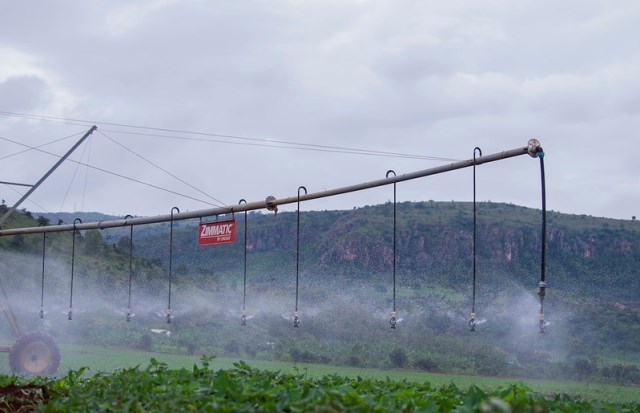
The country requires enormous amounts of water for agriculture in addition to skyrocketting needs in homes
KIGALI — Rwanda needs to increase its water-storage capacity more than eightfold over the next eight years if it is to have enough water to support projected irrigation demand, highlighting the scale of infrastructure investment required as the country tries to make agriculture less dependent on rainfall.
The country will need at least 693.7 million cubic metres of water storage by 2034, according to Davis Bugingo, manager of the Flood Management and Water Storage Development Division at the Rwanda Water Resources Board.
Rwanda currently has only about 83.5 million cubic metres of storage capacity spread across more than 50 dams.
That means the country needs to add roughly 610 million cubic metres of capacity—more than eight times what it currently has.
The challenge is particularly important for Rwanda because agriculture remains heavily dependent on rainfall.
Rwanda’s mountainous terrain creates a paradox: the country receives substantial rainfall, but water is not always available when farmers need it.
Heavy rains can produce floods and erosion, while months later farmers can face water shortages.
Storage infrastructure is intended to bridge that gap.
Large projects are already part of the government’s water and irrigation strategy. The Muvumba Multipurpose Dam in eastern Rwanda is designed to support irrigation, water supply and other uses, while the Nyabarongo II project combines hydropower generation with wider water-management benefits.
The proposed Akanyaru Dam, on the border with Burundi, is another major project intended to increase Rwanda’s ability to capture and manage water.
But the scale of the 2034 requirement means large infrastructure alone will not be enough.
Rwanda will also need smaller reservoirs, farm ponds, water-harvesting systems and more efficient irrigation networks.
The investment is linked not only to food production but also to climate resilience.
A farmer relying entirely on rainfall can lose an entire growing season if rains arrive late, stop early or become concentrated in destructive storms. Irrigation allows farmers to control when crops receive water and can make multiple cropping seasons more feasible.
The government’s challenge is therefore two-sided: store enough water to survive dry periods while also managing excess water during heavy rains.
That requires dams, canals, pumping systems and distribution networks—but also land, financing and careful management of rivers and watersheds.
For international investors, the scale of the gap is significant.
Rwanda currently stores about 83.5 million cubic metres of water. By 2034 it wants nearly 694 million cubic metres.
The difference—about 610 million cubic metres—represents a large pipeline of potential infrastructure investment.
The water-storage target is ultimately about more than dams.
It is an attempt to make Rwanda’s food production less vulnerable to a changing climate, give farmers more predictable access to water and reduce the economic damage caused by alternating floods and droughts.
But the numbers show that Rwanda is starting from a relatively small storage base and has a substantial infrastructure gap to close in less than a decade.
