




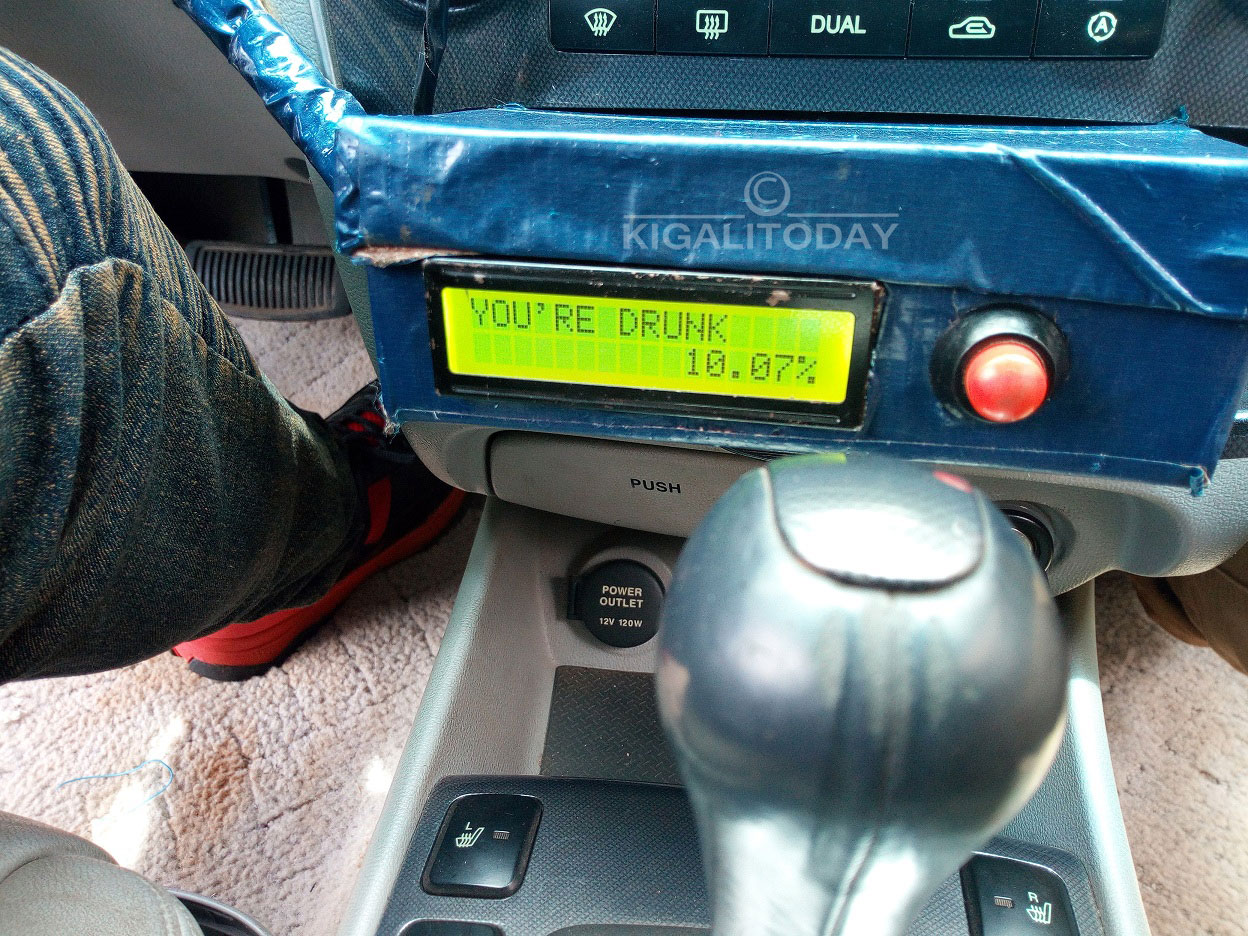
In 2018, Fiston Rutikanga designed ‘Safety Driving with Security’ system which can be installed into your car to determine your ability to drive when drunk. If it sensed you had consumed alcohol beyond limit, the car wouldn’t start. However, unclear where the idea ended
KIGALI — Imagine a young inventor in Kigali who has developed a device that could make farming easier, a software developer with a new technology, or a musician preparing to release original work.
Turning an idea into a product is one challenge. Protecting it from being copied, used without permission or claimed by someone else is another.
In Rwanda, the first step towards patent protection can now cost as little as Rwf 10,000.
That is the fee for filing a provisional patent application under a new ministerial order published in the Official Gazette on October 13, 2026.
The order sets fees for protecting inventions, trademarks, industrial designs and creative works. It also establishes procedures for challenging intellectual property applications, licensing professional agents and stopping suspected counterfeit goods at the border.
What does Rwf 10,000 cover?
An application filed with a final patent specification costs Rwf 30,000. However, filing an application does not automatically guarantee that a patent will be granted.
Patent holders must also pay annual maintenance fees, starting at Rwf 50,000 for each of the first five years. The fees rise to Rwf 70,000 for years six to 10, Rwf 100,000 for years 11 to 15, and Rwf 150,000 for years 16 to 20. Late payment attracts a Rwf 30,000 fee.
The order also distinguishes between fees for applicants in Rwanda and those based abroad.
| Type of intellectual property protection | Local applicants | Foreign applicants |
|---|---|---|
| Provisional patent application | Rwf 10,000 | USD 30 |
| Final-specification patent application | Rwf 30,000 | USD 100 |
| Utility model registration | Rwf 20,000 | USD 50 |
| Industrial design registration | Rwf 30,000 | USD 50 |
| Trademark registration (first class) | Rwf 40,000 | USD 80 |
| Additional trademark class | Rwf 5,000 | Not specified |
| Copyright and related rights registration | Rwf 5,000 | USD 10 |
| Geographical indication | Rwf 50,000 | Not specified |
Foreign applicants may pay in Rwandan francs at the National Bank of Rwanda’s exchange rate on the day of payment. All fees are non-refundable, even when an application is unsuccessful.
Not every idea needs a patent
The type of protection depends on what someone has created.
A patent protects a qualifying invention, while a utility model covers certain technical innovations under a separate framework.
An industrial design protects a product’s appearance, and a trademark identifies a business or its goods and services. Copyright covers eligible creative works, including music, literature and art.
For example, a company developing a new agricultural machine might seek a patent for its technical innovation and a trademark for its brand. A musician releasing an album would generally look to copyright protection instead.
Choosing the appropriate category helps applicants understand both the cost and the rights they are seeking.
A faster route to resolving disputes
The order also sets deadlines for challenging intellectual property applications.
Anyone opposing the grant of a patent, utility model, industrial design or circuit layout has 60 days from publication to file an objection. The applicant must be notified within seven days and given 30 days to respond.
If the applicant fails to respond, the application is treated as abandoned. Otherwise, the competent authority must decide the matter within 30 days of the last hearing.
A new Appeal Committee will review specified decisions involving industrial property. It must have at least seven members drawn from the public sector, private sector and civil society.
Appeals must generally be decided within 30 days, although extensions are possible with written reasons. Anyone still dissatisfied can take the matter to court within 30 days.
Counterfeits and public interest
Rights holders seeking provisional measures from a court or asking customs authorities to suspend suspected counterfeit goods must provide security equivalent to 20% of the goods’ value.
The requirement aims to protect importers and sellers against unjustified claims, but it could also pose a financial challenge for smaller businesses seeking to stop suspected infringement.
The order further allows the government to grant compulsory licences for patented inventions in cases involving national defence, national security, public health or environmental emergencies. Such licences last 12 months and may be renewed. Patent owners must be notified and invited to negotiate, while information disclosed during the process remains confidential.
It also introduces qualification requirements for industrial property agents, including a bachelor’s degree, five years of relevant professional experience, intellectual property training and professional integrity. Licences last two years, and licensing decisions must be made within 90 days, with written reasons for refusals.
Making protection more accessible
The new rules make the cost of protecting intellectual property clearer and establish defined procedures for handling disputes. But lower filing fees do not eliminate the costs of maintaining patents, obtaining professional advice or enforcing rights.
For Rwanda’s inventors, entrepreneurs and artists, the Rwf 10,000 entry point offers a starting place for protecting their work. Whether more people take advantage of it will depend on how accessible the wider system becomes and how effectively their rights are enforced.
