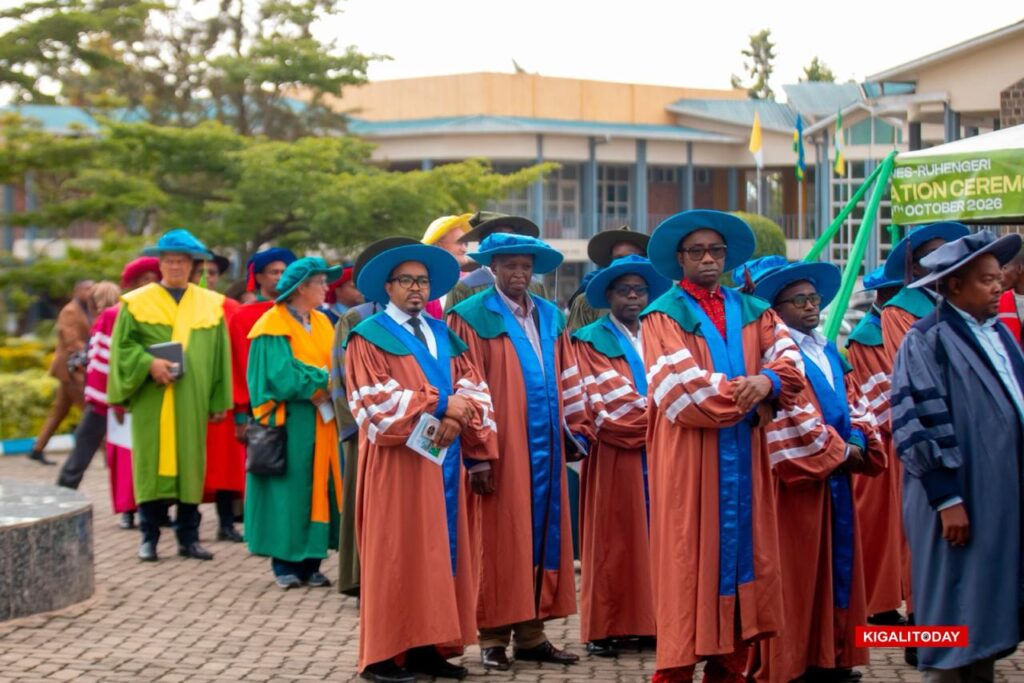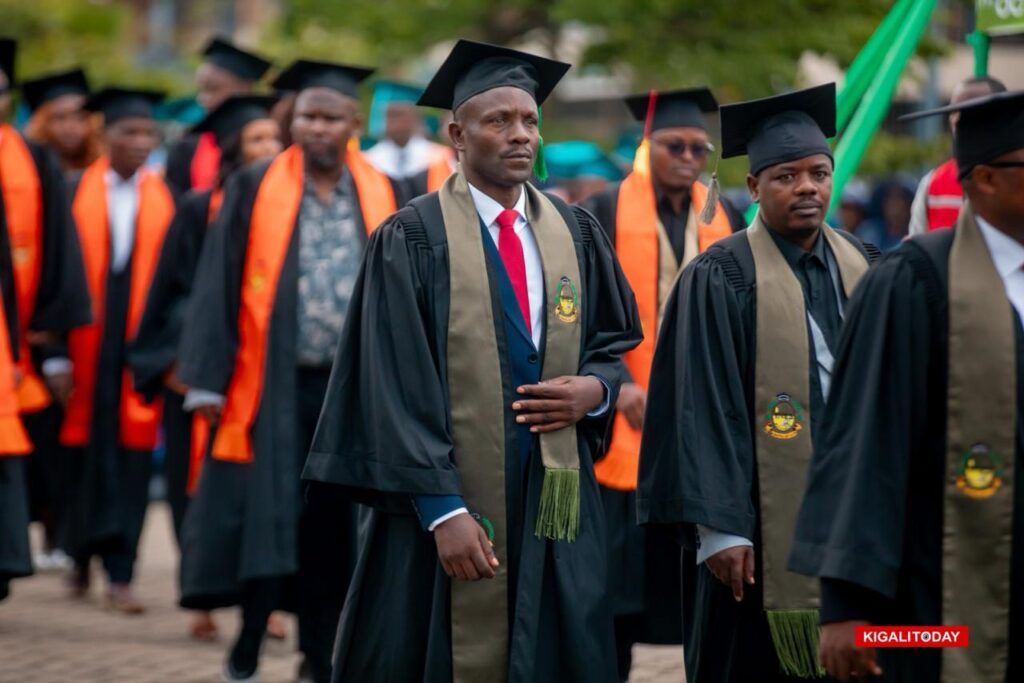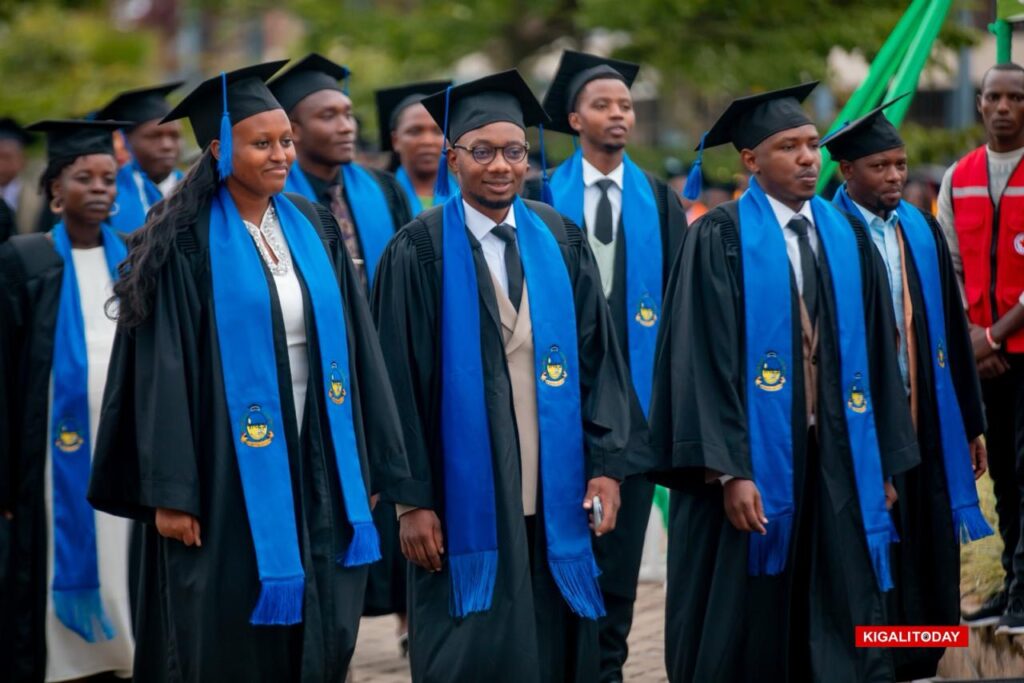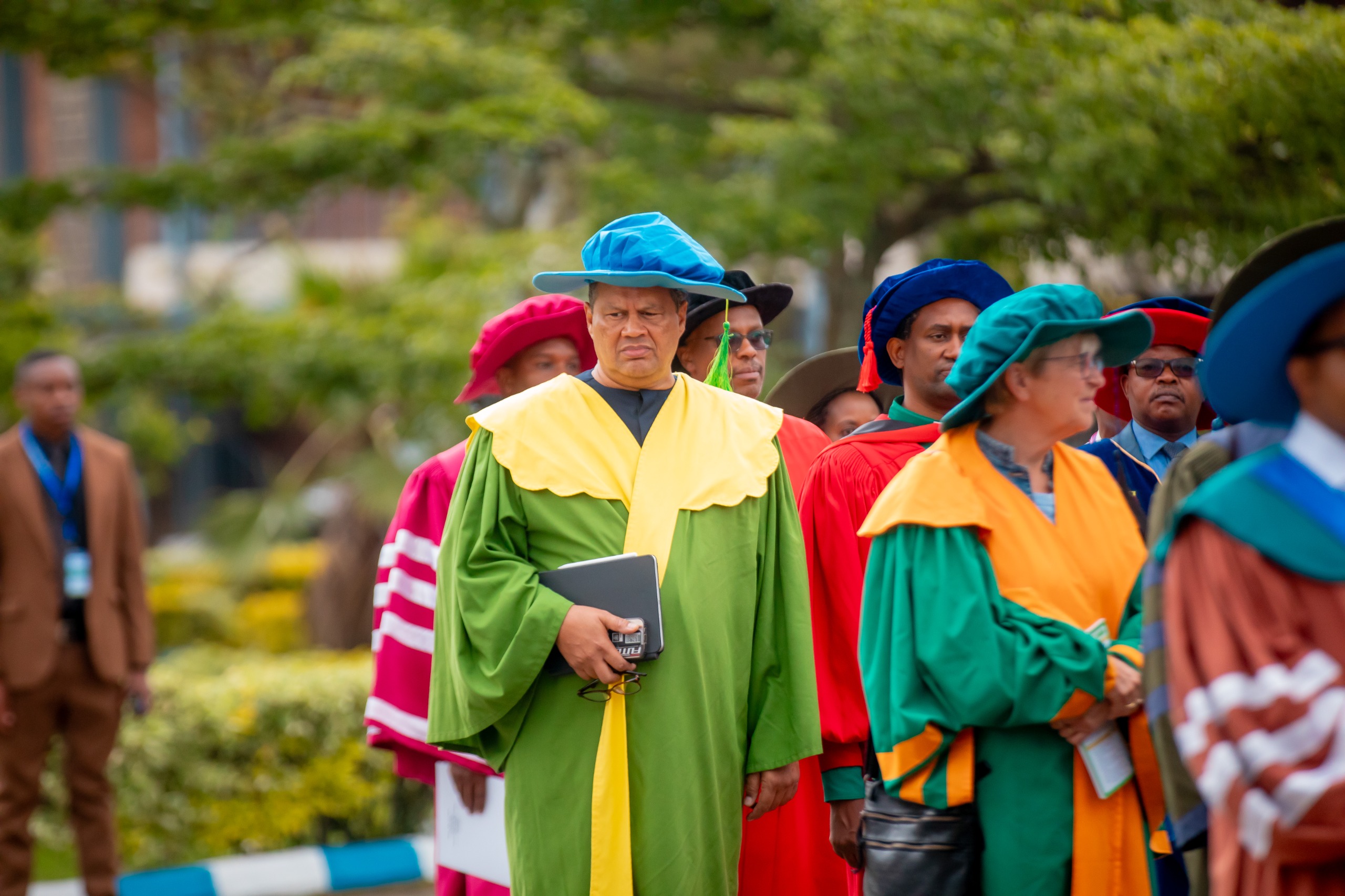

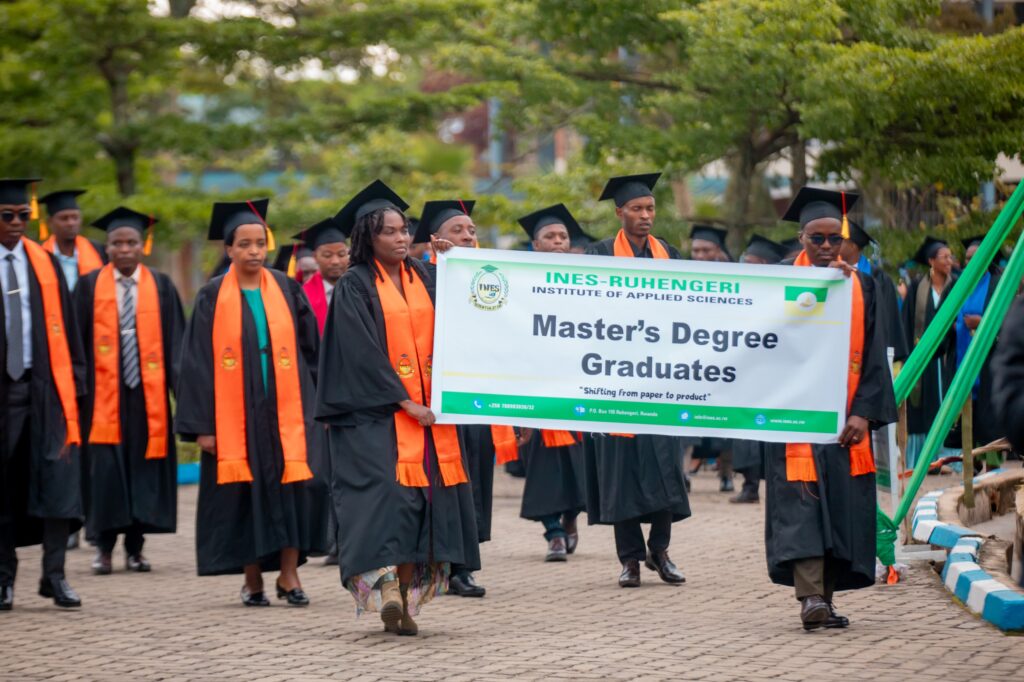
 MUSANZE – For many of the 1,729 students who graduated from INES-Ruhengeri on Thursday, October 30, receiving a university degree marked the fulfilment of a long-held ambition.
But it also opened a new challenge of turning their qualifications into jobs, businesses and practical solutions. The graduates completed bachelor’s and master’s program at the Institute of Applied Sciences in Musanze district during its 18th graduation ceremony.
They included Rwandans and international students, many of whom said they hoped to use their education to address challenges in their communities while contributing to national development.
The ceremony also brought a message from university leaders and education officials encouraging graduates not to wait for employers to create opportunities for them. They should also consider creating their own.
Rwanda has set a target of creating 1.25 million new jobs by 2029. However, available positions in government institutions and other formal workplaces remain limited.
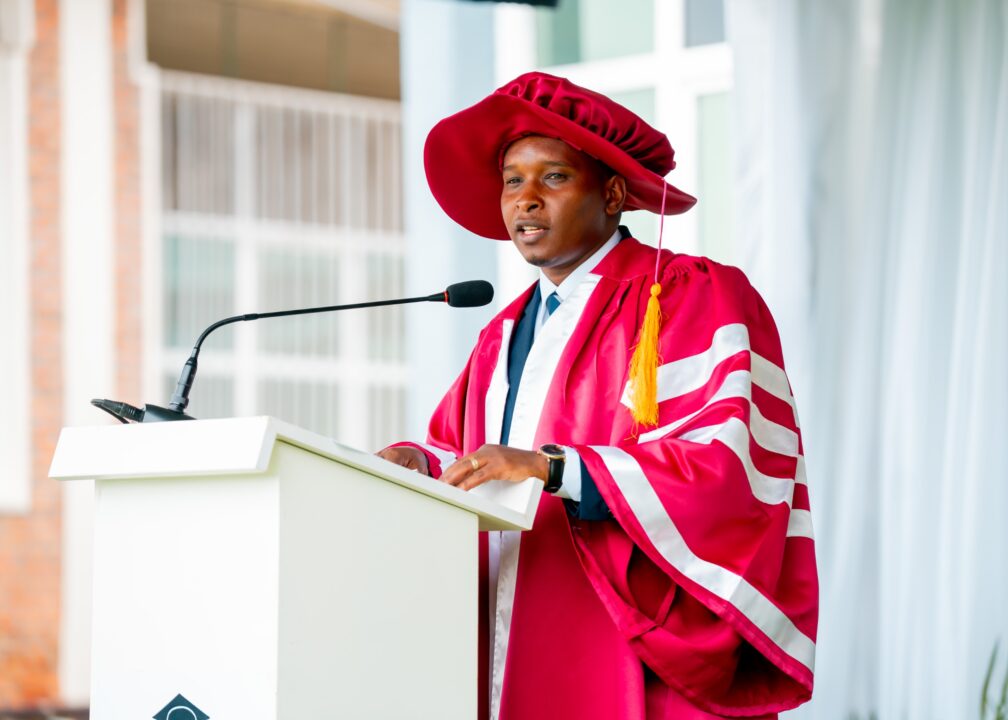
Dr. Olivier Habimana, Director in charge of Technology and Research at the Higher Education Council, told graduates that innovation and entrepreneurship would be essential to meeting the country’s employment ambitions.
“As we have said, the country has an ambitious vision. By 2029, we are expected to have created 1.25 million new jobs. All these jobs will require innovation,” he said.
He noted that government institutions, despite being among the country’s largest employers, have limited vacancies. He therefore urged the graduates to use the skills acquired at university to establish businesses and employ others.
“To make progress, we ask graduates to create their own jobs. This is also what they have been trained to do. We also challenge INES-Ruhengeri to continue investing in laboratories, classrooms and teaching staff to strengthen its practical training programs,” Habimana said.
He commended the institution for attracting students from different countries, saying this supported Rwanda’s ambition to become a regional education hub, with international students returning home equipped with skills and positive experiences of the country.

For some graduates, the challenge is already clear. Vital Rugwiza, who completed his studies in Law, said a university degree should be viewed as a passport to different opportunities rather than a guarantee of a particular career.
“Among the advice we received, we were told that completing our studies here is like being given a passport that will help us reach different destinations. It should not dictate what we must do. Rather, we should use it to choose different paths in life that are beneficial to us,” he said.
Rugwiza disclosed that he intended to use his legal knowledge to address problems facing communities, particularly those involving injustice and violations of people’s rights.
He also urged fellow graduates to look beyond traditional office jobs. They should consider starting businesses, creating employment for themselves and providing jobs for others.
International Students Take Home More Than Degrees

The graduating class also included students from other African countries such as Deborah Yar Makuei, from South Sudan, who said completing her studies in Rwanda was a personal achievement and a source of pride for her family and country.
She recalled the difficulties experienced when she first arrived in Rwanda, particularly because she did not speak the language.
“During my first week of classes, things were difficult because I did not know Kinyarwanda. However, I gradually adapted by interacting with my Rwandan classmates, who are welcoming and friendly people,” she said.
She said the experience had become an important part of her university journey. “Completing my studies is a source of happiness for me and my family. It is also a source of pride for my country,” she recalled.
Makuei encouraged other international students to consider Rwanda as a study destination. She cited its cleanliness, security and welcoming environment, particularly at INES-Ruhengeri.
University Expands as Graduate Numbers Rise

INES-Ruhengeri’s Vice-Chancellor, Fr. Dr. Jean Bosco Baribeshya, said the growing number of graduates reflected the institution’s expansion and increasing demand for its programs.
He noted that the university was graduating more students than in previous years due to its consistency in providing improved quality of education.
“We are happy that student numbers are increasing, but what makes us even happier is that the quality of education we provide is increasingly meeting the expectations of employers,” he said.
He said the institution wanted graduates to have the skills to establish their own businesses or compete successfully for available jobs.
Those who seek employment, he added, should be able to pass recruitment examinations and contribute to productivity in the organizations that hire them.
The university says it is strengthening its focus on applied sciences, technology and research aimed at finding practical solutions to challenges facing society.
Its priorities include expanding infrastructure, developing laboratories and classrooms, increasing teaching staff and aligning academic programs with labor market needs. The latest graduation included 1,634 bachelor’s degree holders and 95 master’s degree graduates.
Parents Urge Graduates to Keep Learning

For parents, the ceremony marked the reward for years of financial sacrifice and support. Paulo Gumiriza Mugunga, one of those who attended, said seeing so many young people graduate was a source of pride for families.
However, he reminded graduates that completing university should not mark the end of their education.
“As parents, today is a day of joy because we have seen so many young people complete their studies. However, we know very well that the journey of education does not end here because learning is a continuous process,” he said.
He said parents would continue looking for ways to support their children in pursuing master’s and doctoral studies. He also urged graduates to remain disciplined and committed to hard work as they face the challenges of professional life.
For the new graduates, the next chapter will test how effectively they can turn their education into productive work. For the country, their contribution will form part of a wider effort to expand employment, strengthen innovation and build a skilled workforce.