





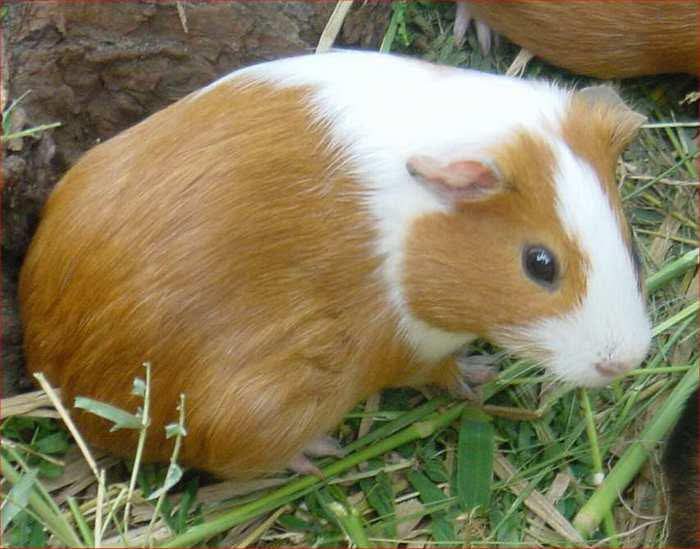
The government at the time saw it fit to feed rats to to its children
In the late 1980s, Rwanda’s government faced a severe nutrition crisis. Decades of poor agricultural policy, land fragmentation, and neglect of rural welfare had left millions of Rwandans chronically undernourished.
Seeking help from its former colonial ruler, Belgium, the Habyarimana regime turned to development aid to solve what was fundamentally a governance and poverty problem.
What came back from Brussels, however, was not machinery, irrigation systems, or food technology. It was rats.
The “Sumbiligi” Episode
Belgian experts, working with Rwandan officials, proposed that rural households could supplement their diet by rearing and eating a species of giant rat — the African pouched rat — known for its rapid reproduction and high protein content.
Shipments of the rodents arrived in Rwanda and were distributed in a pilot program intended to combat malnutrition.
But what was marketed as innovation was, in reality, an insult. Local communities rejected the idea with scorn and disbelief.
To Rwandans, the suggestion to eat rats was degrading, a reflection of how little foreign “experts” — and the regime that approved their ideas — understood or cared about the dignity and aspirations of ordinary citizens.
The people mockingly called the animals “Sumbiligi”, derived from the French “ce sont Belgiques” — “these are Belgians.”
The term came to symbolize both the absurdity and the humiliation of foreign aid projects that treated Africans not as partners, but as test subjects.
A Window into a Broken System
The “Sumbiligi” incident was more than a strange footnote in Rwanda’s history. It revealed a government detached from its people, content with superficial solutions while the country’s social fabric rotted underneath.
By the late 1980s, Rwanda was one of the poorest nations on Earth. Only 2% of the population had electricity, and most rural areas lived in total darkness, both literally and figuratively. Industrial activity was almost nonexistent, and public infrastructure was crumbling.
The country had fewer than 4,000 university graduates nationwide — a figure so low that Rwanda could barely sustain a professional class. Scientists, economists, engineers, and teachers were all in short supply.
Meanwhile, the elite that surrounded President Juvénal Habyarimana lived comfortably in Kigali, insulated from the realities of peasant life.
When a government’s best answer to malnutrition is rats, it speaks volumes about its priorities — and its contempt for the people it rules.
The Politics of Distraction
As poverty deepened, Rwandans began asking hard questions. Why were they hungry when the country’s leaders enriched themselves? Why did aid money vanish? Why did so many youth have no future beyond tilling exhausted soil?
The regime’s response was not reform — it was distraction. Instead of addressing the structural inequality and mismanagement that kept Rwanda trapped in poverty, the elite turned to an easier narrative: blame your neighbor.
Ethnicity became the convenient scapegoat. The government and its propaganda networks stoked suspicion and resentment, telling ordinary those considered “Hutu” that their suffering was caused by Tutsi privilege, not by state failure.
It was a lethal diversion. While people argued over who was to blame, the same system that had failed to provide food, education, or opportunity continued unchecked.
The Road to Catastrophe
By the early 1990s, the country’s social and political decay was irreversible. Years of corruption, incompetence, and fear-mongering had hollowed out every institution. The leadership had learned to survive not by solving problems, but by manufacturing enemies.
So when the crisis of the 1990s arrived — war, displacement, and economic collapse — there was no moral or political foundation left to hold the country together. What began as cynicism turned into hate; what started as distraction ended in genocide.
The massacres that consumed Rwanda between 1990 and 1994 did not erupt from nowhere. They were the tragic climax of decades of neglect and manipulation.
A state that could not feed its people or educate its children had one final export to offer: death.
A Lesson in Leadership and Dignity
The “Sumbiligi” story endures not because of the rats themselves, but because of what they symbolized — a failure of vision and compassion. A government that accepts rats as food for its people has already surrendered its humanity.
Rwanda’s rebirth after 1994 stands in direct contrast to that mindset. The post-genocide government invested in education, electrification, and dignity — rejecting the fatalism that once defined its past.
From less than 2% electrification in the 1980s, Rwanda now connects villages with power and internet.
From a few thousand graduates, it now trains tens of thousands of students in science, engineering, and innovation every year.
History’s irony is stark: a nation once offered rats as a solution to hunger now exports drones, vaccines, and digital services.
The “Sumbiligi” era is gone, but it remains a warning. When leaders stop caring about the real needs of their people — when they trade dignity for dependency, and accountability for propaganda — catastrophe is never far behind.

3 comments
It’s wonderful to hear and to see.
you showed the world something unforgettable .
1- Genocide [this not only in Rwanda but in Africa as a hole.
2- Development ,reconciliation in a short-term off time.
My English is very por.
my filing is great thanks
noway
Such a tragic and sorrowful period of time! Pray for those who lost their lives in that tragedy and cherish for what we own now.
Comments are closed.