



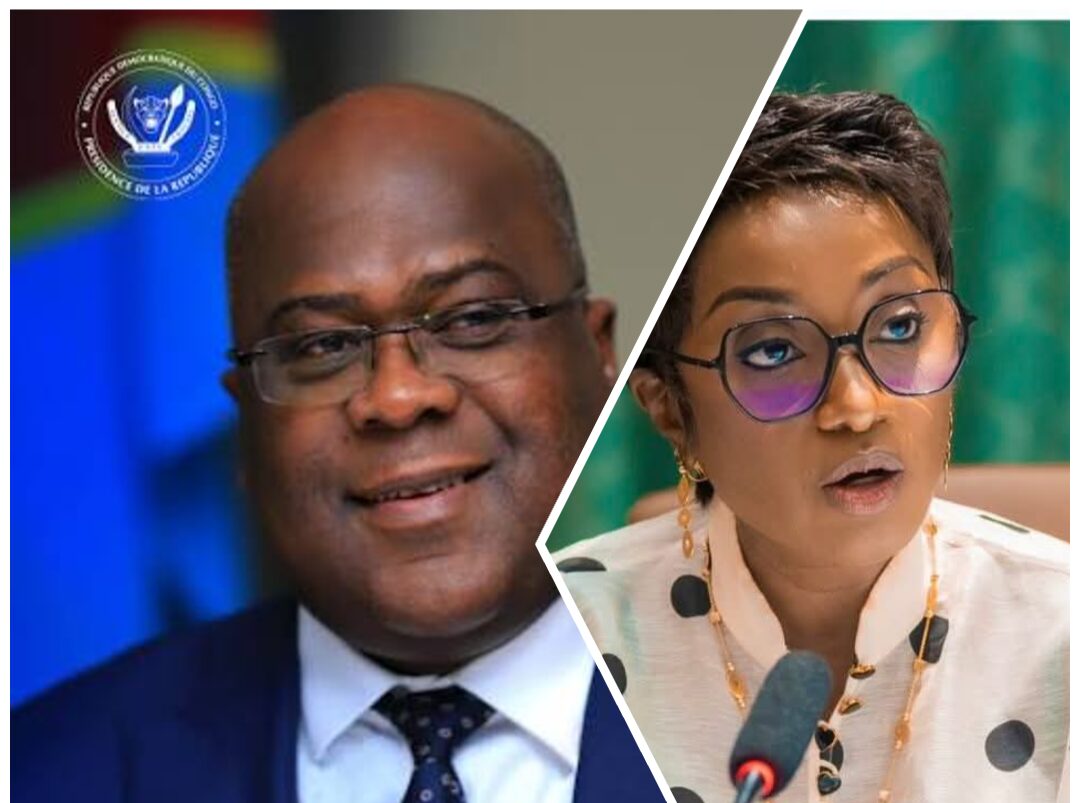
Julie Mbuyi Shiku – Minister of State in charge of the Portfolio, which handled the deal, is a close confidant of President Tshisekedi.
The U.S.-based fintech company PayServices has filed a lawsuit against the Democratic Republic of Congo (DRC) in American courts over the collapse of a state digitalisation project, alleging breach of contract and attempted corruption involving senior Congolese officials.
The case places President Félix Tshisekedi in an awkward position as he seeks U.S. backing on regional security matters.
President Félix Tshisekedi is facing a high-profile legal dispute after the American fintech firm PayServices, headquartered in Idaho, initiated proceedings against the Congolese state in U.S. courts.
The company accuses Kinshasa of violating agreements related to the digitalisation of public institutions and the rollout of a national electronic payment infrastructure. The deal, signed with the Congolese government in early 2024, was projected to generate over $8 billion in annual revenue.
PayServices, led by Lionel Danenberg, says it lost more than $90 million in investments after concluding what it describes as binding protocol agreements with the Congolese authorities. In a complaint filed earlier this year in a federal court in Idaho against the DRC and several officials, the company alleges that the project was deliberately sabotaged.
The lawsuit also refers to attempted acts of corruption in the United States and alleged interference by Congolese ministers and presidential advisers. Contacted by Africa Intelligence, the Congolese government dismissed the allegations as “unfounded.”
A $4 Billion Claim
The complaint names several senior officials, including Julie Mbuyi Shiku, Minister of State in charge of the Portfolio; Doudou Fwamba Likunde, Minister of Finance; Anthony Nkinzo Kamole, Chief of Staff to the President; André Wameso, Governor of the Central Bank of Congo; and Célestin Mukeba Muntuabu, Director General of the National Savings Fund (CADECO).
According to PayServices, all of those cited, including President Tshisekedi, had previously received a formal pre-litigation notice from the company’s lawyers.
Efforts to resolve the dispute out of court began on November 13, led by the Houston-based law firm Parker Sanchez & Donnelly. The firm sent a series of letters proposing two options to avoid U.S. litigation.
The first option involved reviving the original project, with a payment of $470 million described as a confidence-building measure. The second proposed an amicable settlement involving a $650 million payment, which PayServices said represented half of the project’s potential revenues.
Congolese authorities rejected what they described as “pressure and intimidation through threats of legal action,” arguing that the second proposal “was neither properly submitted nor legally notified to the competent state authorities.”
The Contested $20 Million Payment
At the president’s request, a meeting was later held with then Finance Minister Nicolas Kazadi to validate the project’s structure, which was built around a financial arrangement linking CADECO and PayServices.
Protocol agreements were subsequently signed in March with the Ministries of Health, Persons with Disabilities, Digital Affairs, and Portfolio, as well as with the Congolese Post and Telecommunications Company (SCPT).
Under the agreements, the Congolese state was to pay $20 million to PayServices by the end of March 2024. Kinshasa now disputes this obligation, citing serious procedural irregularities.
The government argues that because the agreement was not concluded by the Ministry of Finance, “its commitment is legally non-existent (…) and cannot give rise to any public payment.”
In its complaint, PayServices accuses Julie Mbuyi Shiku of actively blocking the $20 million payment. The company alleges that in April she demanded a **10% kickback—$2 million—**to authorize the transfer.
The request, which PayServices says was made in person and witnessed, was rejected. The company claims it has gathered evidence ready for submission to U.S. courts. Julie Mbuyi Shiku, now Minister of State for the Portfolio, did not respond to requests for comment.
Ministers and Presidential Advisers Implicated
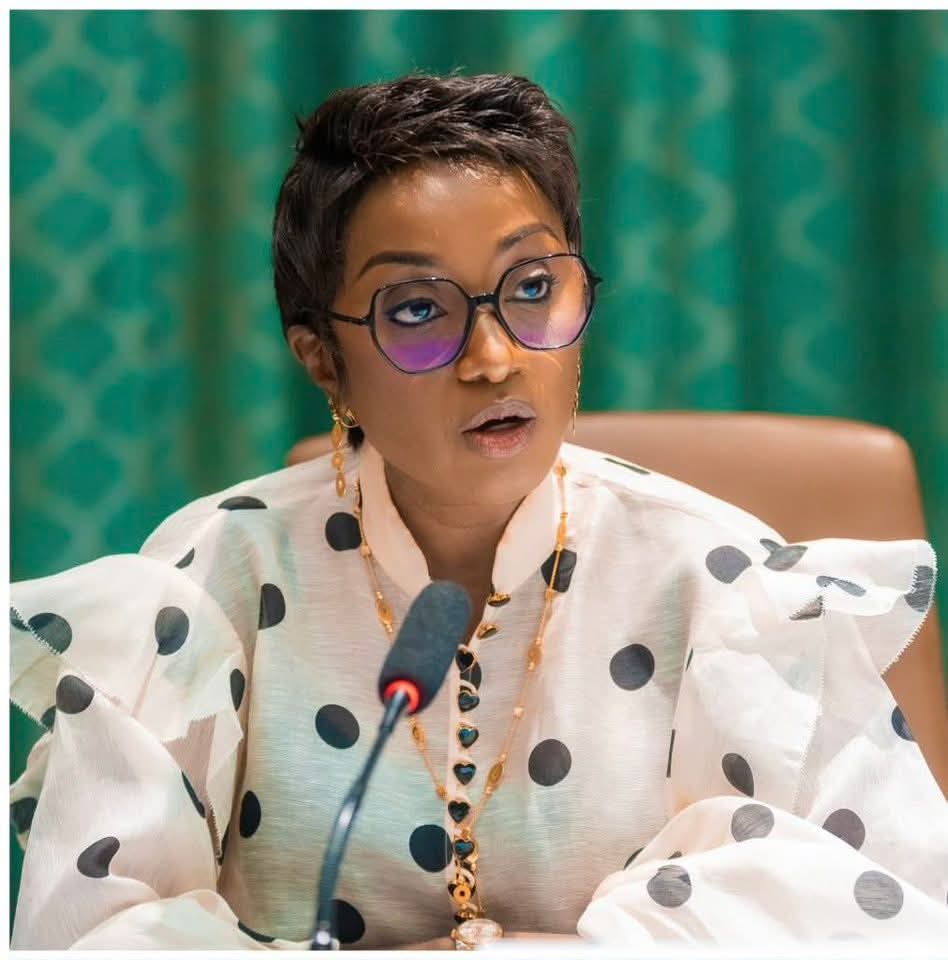
Julie Mbuyi Shiku – Minister of State in charge of the Portfolio
PayServices says it invested $72 million to integrate its technology into CADECO’s systems. It also contacted the U.S. Embassy in Kinshasa, which sent a letter to the Congolese presidency on May 22, confirming the company’s good faith, though it did not mention the allegations against Mbuyi Shiku.
Two months later, PayServices hosted a Congolese delegation at its facilities in Florida and Idaho.
In September 2024, company executives met in New York with the new Finance Minister, Doudou Fwamba Likunde, who is accused in the complaint of attempting to solicit a bribe in the presence of a witness—one of his advisers.
Following the meeting, the adviser allegedly sent a message inviting PayServices executives to travel to Kinshasa for a private meeting with the minister. Fwamba Likunde did not respond to requests for comment.
Another alleged attempt at corruption, now under review by U.S. courts, is attributed to Aphy Badaga Mubagwa, presidential adviser in charge of economic and financial affairs, portfolio, and foreign trade. Anthony Nkinzo Kamole, the president’s chief of staff, is accused of colluding with the finance minister to block a planned meeting between PayServices executives and President Tshisekedi in New York in late 2024.
According to the company, this was “a key act in a conspiracy aimed at keeping the president uninformed and preventing resolution of the project without the payment of a bribe.” Both men declined to comment.
Presidential Involvement
In April, CADECO unsuccessfully appealed to the Governor of the Central Bank to release the $20 million payment, arguing that PayServices had completed the project’s first phase.
The following month, in Deerfield Beach, Florida, one of the president’s brothers, Thierry Tshisekedi, offered to mediate between the parties. Shortly thereafter, Lionel Danenberg and his team were received by President Tshisekedi in Kinshasa on May 21 and 24.
The president instructed his Deputy Chief of Staff for economic affairs, André Wameso—now Governor of the Central Bank—to resolve the dispute within 15 days, but no solution was reached. PayServices now accuses Wameso of “deliberately defying a presidential directive and actively sabotaging the project.”
One of Wameso’s advisers said he merely submitted a report to the head of state highlighting irregularities in the PayServices agreement and questioning the company’s financial capacity to fulfil its commitments.
SCPT and CADECO Under Scrutiny
PayServices also alleges that Sandra Tshibonge Mbiye, Director General of SCPT, intended to breach the protocol agreement to award the project to another company that allegedly paid her a €5 million bribe. The company says it holds testimonies and evidence supporting this claim. The project reportedly conflicted with another case involving Minister Julie Mbuyi Shiku.
Mbuyi Shiku is further accused of collaborating with Célestin Mukeba Muntuabu, Director General of CADECO, to transfer contractual prerogatives to a company registered in North Macedonia, PCES Akiba.
Speaking through Justice Minister Guillaume Ngefa-Atondoko, the Congolese government stated that “no authority whatsoever has solicited or accepted, directly or indirectly, financial advantages, commissions, shares, or any other benefit in return for a decision, commitment, or relationship between the State and PayServices.” The matter is now before U.S. courts.
The case is particularly sensitive for President Tshisekedi, as several members of his family are already under investigation by Belgian authorities over alleged embezzlement and money laundering linked to illegal mining operations in Katanga.
Congolese officials are concerned about the potential diplomatic fallout, as Kinshasa seeks to maintain strong relations with the administration of President Donald Trump, whose efforts to reduce tensions with Rwanda and halt the advance of the M23 rebel group, have so far yielded no concrete results on the ground.
