



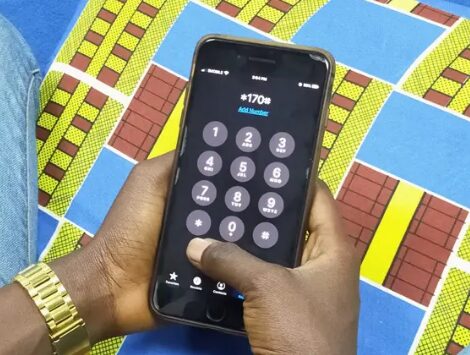
Kigali — In case you have an MTN or Airtel SIM card—or even if you switch between the two—life is about to get much easier.
Starting immediately, and no later than February, you will no longer need to worry about which short code works on which network when sending money, buying airtime, or checking your bank balance.
The latest changes, though coming sometime after it was first initiated several years ago, is a first in the region, and perhaps globally.
The Rwanda Utilities Regulatory Authority (RURA) has issued a new directive that will end long-standing confusion around USSD short codes in Rwanda. These are the short codes people dial daily for mobile money, buying airtime and data, banking services, and other essential phone-based services.
In an official notice dated January 14, 2026, RURA directed that all approved short codes must work on all mobile networks in the country. This applies to MTN Rwanda, Airtel Rwanda, and KT Rwanda Network (KTRN).
According to the directive, once RURA assigns a short code, it must be activated and integrated across all licensed operators before it is launched, so that subscribers on any network can access the service.
All organisations that already use short codes—both public and private—have been given until February 15, 2026 to complete integration with any networks where their codes were not previously active.
They must also inform their customers about the changes. RURA warned that failure to comply could result in enforcement action and penalties under Rwanda’s telecommunications laws.
Although earlier rules, including those issued in 2014, already required short codes to work across all networks, the new directive tightens enforcement.
It introduces clear deadlines and stronger oversight to ensure interoperability, fair access, consumer protection, and efficient digital communication services.
What This Means in Everyday Life
USSD, which stands for Unstructured Supplementary Service Data, refers to the short codes that start with an asterisk (*) and end with a hash (#).
These codes allow users to access services directly from their phones without internet or smartphone applications. They are widely used for mobile money transfers, checking balances, buying airtime or data, and accessing bank services.
Until now, many USSD codes only worked properly on specific networks. A code that functioned well on MTN might fail or work inconsistently on Airtel or KTRN. When users switched networks—either by changing SIM cards or using number portability—they often lost access to familiar menus.
As a result, some people carried multiple SIM cards or had to remember different codes for the same service depending on the network they were using.
Once the directive is fully implemented by mid-February 2026, the same USSD code will work in the same way on MTN, Airtel, and KTRN.
This change will make it easier for users to switch networks without losing access to essential services. It also supports financial inclusion, especially for people who rely on basic phones and mobile money for everyday transactions.
Commonly Used Codes
Mobile money services are among the most frequently used USSD services in Rwanda. For example, *182# is widely used for MTN MoMo services such as sending and receiving money, paying bills, and buying airtime.
Similarly, *500# is commonly associated with Airtel Money services. With full interoperability, users on any network should be able to access these services smoothly, or through harmonised versions if providers make adjustments.
Many banks also rely on USSD codes linked to mobile money platforms. Codes such as *334# for Bank of Kigali, *150# for BPR, *227# for I&M Bank, and *555# for Equity Bank are used daily by customers to access banking services from their phones.
Telecom operators also use USSD codes for everyday services. MTN customers often use *140# for call bundles and the *345# series for internet data bundles.
Airtel users commonly dial *130# to recharge airtime, *131# to check their balance, and *132# to share airtime with others. In the past, these codes were limited to specific networks, creating confusion and inconvenience for users.
After February 2026, accessing these services should be much simpler. Whether someone is sending mobile money, buying data, or checking a bank-linked wallet, the experience should be the same regardless of the mobile network they use.
A Win for Consumers
RURA’s decision is part of broader efforts to make Rwanda’s telecommunications sector more inclusive, competitive, and user-friendly. Mobile network operators are expected to inform customers of any temporary changes during the integration period.
For official updates, users are encouraged to follow announcements from their mobile operators or visit RURA’s website at www.rura.rw.
Overall, the change is a clear benefit for consumers. It reduces confusion, improves convenience, and allows people to choose their mobile network freely without losing access to essential digital services.
Regional, International Situation
Across East Africa, mobile money and USSD short codes are a lifeline for millions of people, especially those using basic phones without internet.
Countries like Kenya, Tanzania, and Uganda have made strong progress in allowing people to send money between different mobile money wallets and banks, but the actual USSD codes often remain tied to specific networks.
This means users still need the “right” SIM card for certain services, and switching networks can disrupt access. Ethiopia is beginning to break this model with newer, network-agnostic platforms, but most countries have not yet fully addressed USSD access itself.
Rwanda’s new directive stands out in this regional context. Unlike its neighbours, Rwanda is not only focusing on mobile money interoperability at the transaction level but is also enforcing full short code interoperability.
By February 15, 2026, all approved USSD codes must work across MTN, Airtel, and KTRN, with clear deadlines and penalties for non-compliance. This is a more decisive and consumer-focused approach than elsewhere in East Africa and could influence regional discussions through bodies such as the East African Communications Organization.
In Europe, the situation is very different. Most people rely on smartphone apps and internet banking rather than USSD menus, and telecom interoperability has long been ensured through EU-wide rules.
Mobile number portability works smoothly, and short codes are used mainly for niche services such as customer care or charity donations. As a result, USSD access is not a major issue in Europe.
Rwanda’s move highlights how African regulators are innovating to meet the needs of feature-phone users, potentially setting a regional benchmark for inclusive digital access.

1 comment
My country truly works. Congratulations to RURA for the amazing job you’re doing—keep it up. We could really use more public institutions that operate with the same level of excellence as our immigration office. ✊😌
Comments are closed.