



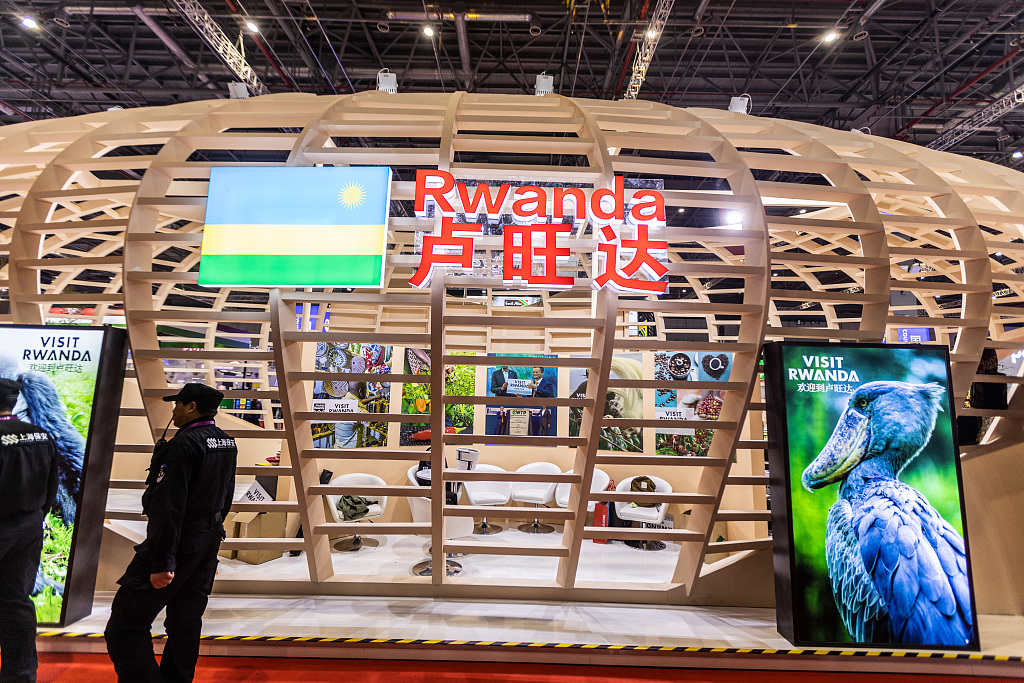
A Visit Rwanda stand at a major Chinese international expo
Kigali — Starting May 1, Rwandan coffee beans, mineral ores and essential oils will enter China without tariffs, a shift that could reshape one of the country’s fastest-growing export relationships — and offer a glimpse into how Africa’s trade map is being quietly redrawn.
The move follows an announcement on Saturday by Chinese President Xi Jinping, who said China would eliminate import duties for nearly all African countries, extending a zero-tariff policy previously limited to 33 nations.
Under the expanded arrangement, all African states with diplomatic ties to Beijing will benefit — with the lone exception of Eswatini, which maintains relations with Taiwan.
For Rwanda, the timing is striking.
In December 2025, China emerged as Rwanda’s second-largest export destination, absorbing roughly $19.6 million (Rwf 24 billion) in goods in a single month, according to latest official trade figures from the National Institute of Statistics (NISR).
Most of that trade was driven by raw and semi-processed commodities — minerals such as tin and coltan, along with coffee, tea and essential oils, chillies, and even ovacados— products that now stand to gain a decisive price advantage in the Chinese market once tariffs fall away.
This changes the math. When you remove duties on commodities, even by a few percentage points, it can determine whether a shipment is profitable.
China is already Africa’s largest trading partner and a central financier of roads, railways and power plants through its sprawling Belt and Road Initiative.
But the tariff decision marks a deeper turn toward trade liberalization, as Beijing positions itself as an alternative economic anchor for a continent increasingly wary of Western protectionism.
President Xi unveiled the May 1 start date as African leaders gathered in Ethiopia for the annual summit of the African Union, telling delegates that the policy would “provide new opportunities for African development.”
The announcement comes amid a broader recalibration of global commerce. Many African governments have been seeking closer ties with China and other partners after renewed tariffs imposed by the United States last year disrupted traditional export routes.
For countries like Rwanda — landlocked, resource-light, and heavily focused on value addition — access to China’s vast consumer base offers both promise and pressure.
Rwanda’s export basket to China remains narrow, dominated by minerals and agricultural commodities.
However, duty-free access could boost volumes quickly, particularly in mining, where Chinese demand is strong.
But long-term gains will depend on Kigali’s ability to move up the value chain — exporting roasted coffee instead of green beans, processed minerals instead of ore.
There’s an opportunity here. But there’s also a risk of reinforcing old patterns, where Africa ships raw materials and imports finished goods.
For now, exporters are preparing for May.
Coffee cooperatives are going to explore new contracts. Mineral traders will be recalculating margins. Government officials are also going quietly urge manufacturers to think bigger.
If Rwanda can seize the moment, the tariff shift could help accelerate its ambitions to become a regional hub for light manufacturing and creative enterprise — goals that sit at the heart of its national development strategy.
And in Beijing, where lanterns glowed ahead of Lunar New Year celebrations this week, the message was clear: China is betting that freer access to its markets will bind Africa closer, one shipment at a time.
