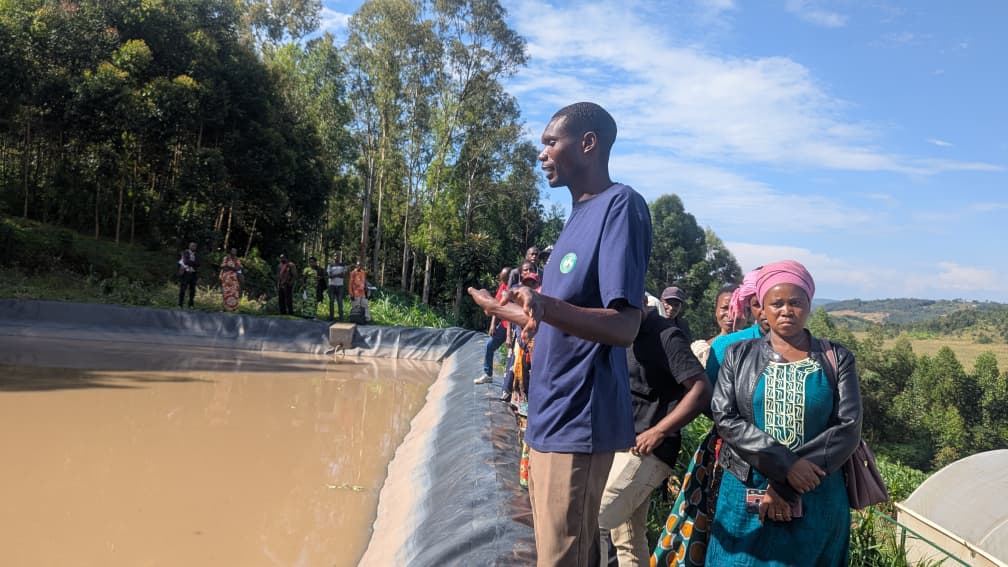
Gisagara District agronomist Cleophas Ntihabose shares an irrigation experience and benefits to touring farmers.
The Government of Rwanda is launching a revamped irrigation equipment loan scheme aimed at helping smallholder farmers expand irrigated land, boost crop yields, and strengthen food security across the country. The initiative comes as Rwanda moves to nearly double its irrigated farmland by 2029 under the Second National Strategy for Transformation (NST2).
Under NST2 (2024–2029), the country plans to increase irrigated land from 71,549 hectares in 2024 to 132,171 hectares by 2029, a move expected to improve food security, enhance agricultural productivity, and protect farmers from climate-related shocks such as prolonged dry spells.
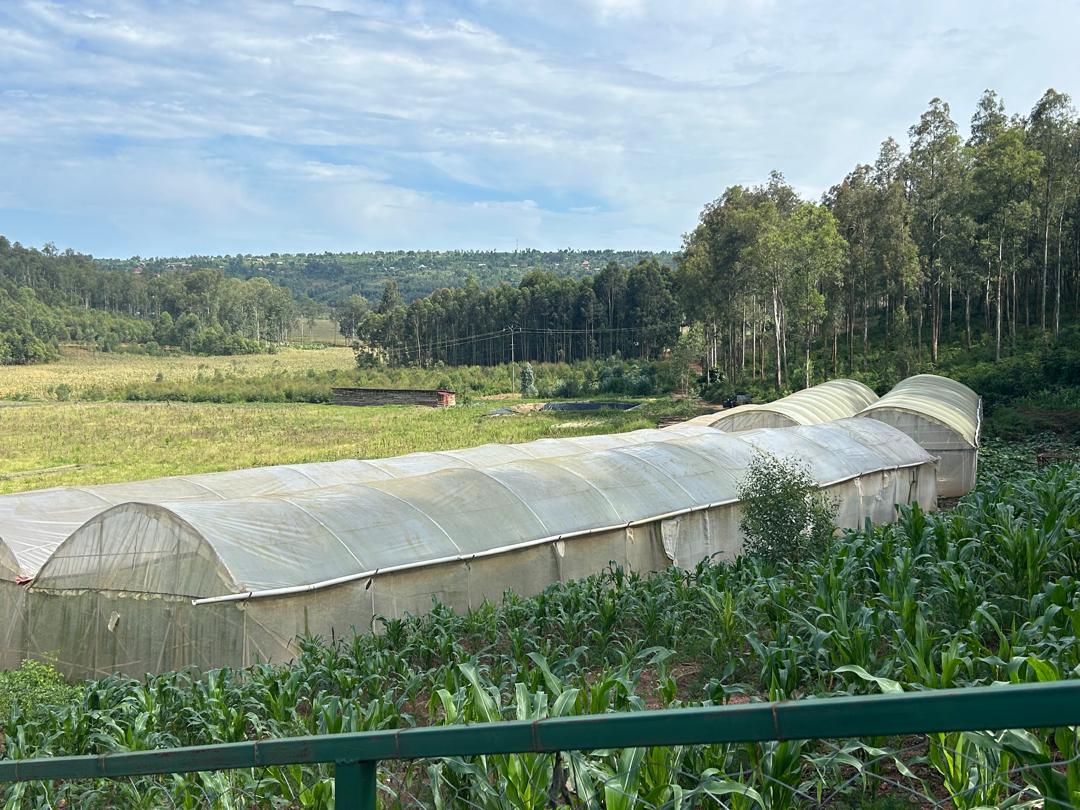
The expansion builds on progress made through the World Bank-funded Sustainable Agricultural Intensification and Food Security Project (SAIP). During its first phase (2018–2023), SAIP I developed 1,367 hectares of irrigated land, while SAIP II (2023–2028) targets an additional 1,078 hectares, with another 500 hectares slated for development in the coming months.
Authorities note that infrastructure alone will not meet NST2 goals. Farmers also need access to irrigation equipment and the skills to operate and maintain it effectively.
Under the Small-Scale Irrigation Technology (SSIT) programme, implemented by the Rwanda Agriculture and Animal Resources Development Board (RAB), farmers have been accessing subsidised loans. Previously, those with less than five hectares of land received 50 percent co-financing, while larger farms could access 75 percent, provided they mobilised the remaining funds individually or collectively.
The new scheme will expand access for smallholder farmers nationwide, particularly those willing to consolidate land and form cooperatives or water-user groups to meet financing requirements. Authorities say the initiative is designed to remove barriers that have limited uptake among farmers lacking upfront capital.
To prepare farmers for the new financing opportunity, SAIP has launched on-field study tours linking former beneficiaries with new cooperatives from drought-prone districts such as Ruhango, Huye, and Gisagara in the Southern Province.
“Through peer learning, we want farmers—especially those who are not yet using irrigation—to see how it works, how others have applied it successfully, and how they can benefit from this approach,” said Jules Mporana, RAB SPIU water-use specialist.
The Southern Province is a focus due to its vulnerability to dry spells that disrupt planting seasons and reduce yields. “Irrigation success is not only about infrastructure,” Mporana said. “It is about management, maintenance, and responsible water use.”
During visits to schemes such as Ngiryi and Gatare, farmers are learning how structured water governance, clear irrigation schedules, collective responsibility, and disciplined maintenance can significantly improve productivity on small plots of land.
In Kibirizi Sector, Gisagara District, agronomist Cleophas Ntihabose said solar-powered irrigation transformed his maize yields from less than one tonne per hectare to more than 5.5 tonnes per hectare across all three planting seasons. “We had water but did not know how to use it properly. Now we produce throughout the year,” he said.
Agriculture remains a cornerstone of Rwanda’s economy, employing more than half the workforce and contributing significantly to national output. The sector is vital for food security, rural incomes, and export earnings, particularly through crops such as tea and coffee. Strengthening irrigation is therefore central to Rwanda’s development and poverty-reduction goals.
Rwanda’s total irrigable land potential is estimated at 493,050 hectares, yet only about 75,223 hectares—roughly 15 percent—have been developed. Achieving the NST2 target would nearly double irrigated land within five years, supporting the goal of annual agricultural growth above six percent.
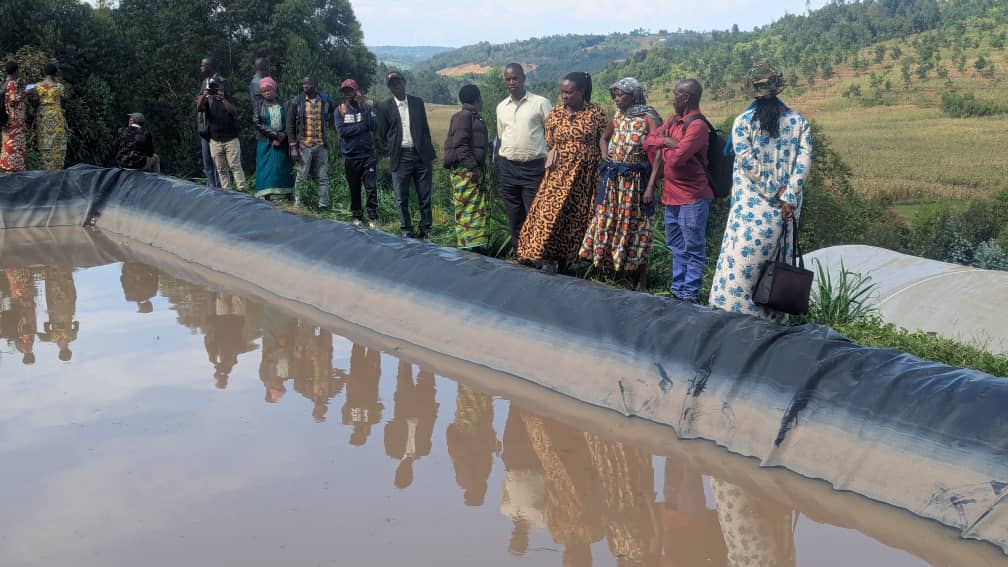
The importance of irrigation expansion was reaffirmed at the 2026 National Dialogue Council (Umushyikirano), where leaders called for intensified efforts to scale up irrigation as a pathway to higher productivity, poverty reduction, and climate resilience.
“To achieve this, we will mobilise smallholder farmers to consolidate land and form working groups to access SSIT funding across the district,” said Erneste Banginirora, Gisagara District agriculture officer.