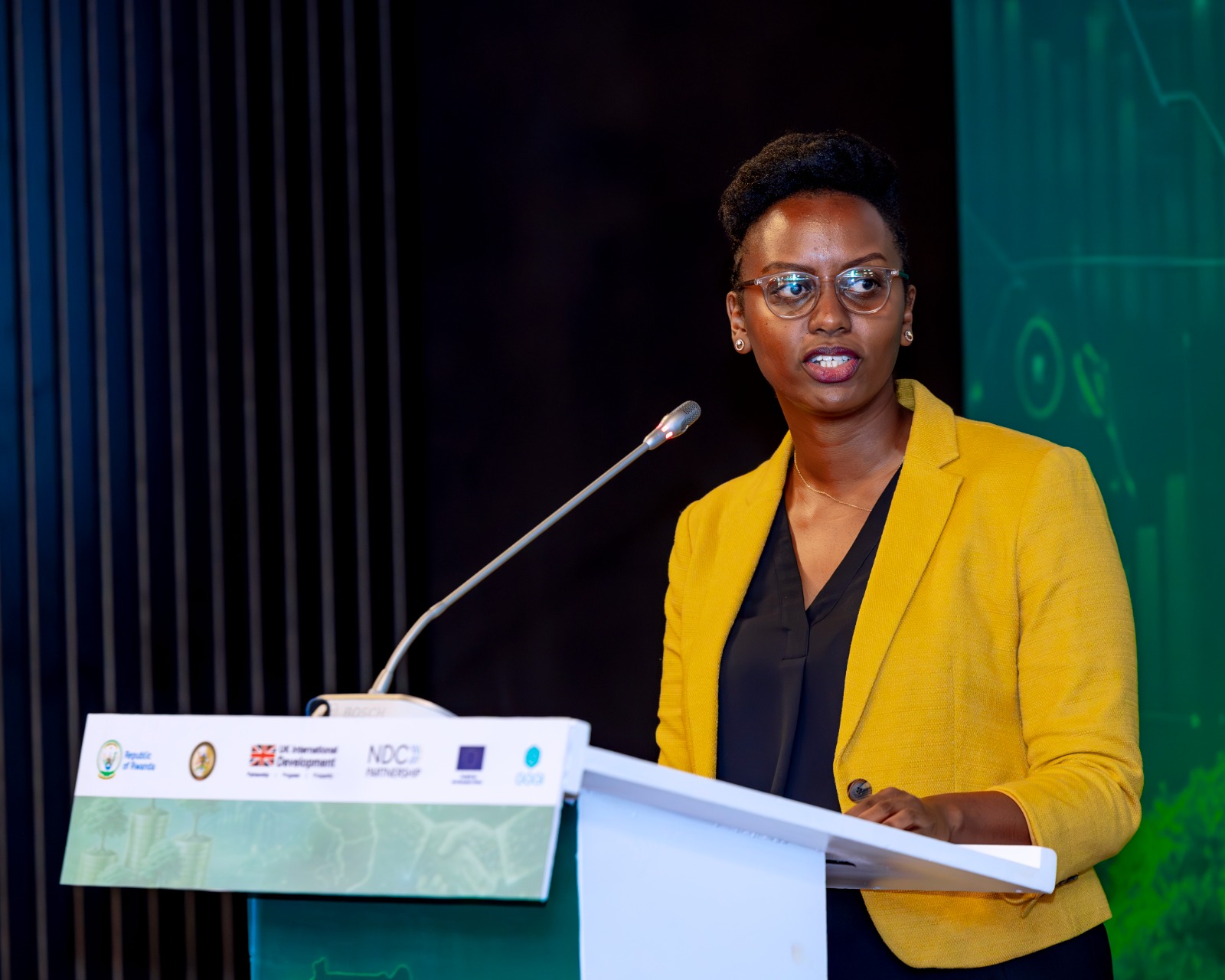
Hon. Tesi Rusagara, Rwanda’s Minister of State for Resource Mobilization and Public Investment at Ministry of Finance and Economic Planning
Finance leaders from across East Africa are meeting in Kigali this week for the 7th East Africa Climate Finance Directors’ Meeting. The focus is on improving access to climate finance and translating national commitments into viable, investable projects. The meeting provides an opportunity for the region to strengthen coordination, share experiences, and attract both public and private funding to support climate action.
The meeting, held from 17th to 20th February 2026, brings together finance ministries, regional institutions, development partners, and private sector stakeholders. They will discuss strategies for scaling up climate finance and implementing NDC 3.0 ambitions.
East Africa faces unique climate challenges, including rising temperatures, erratic rainfall, flooding, droughts, and threats to agriculture and coastal livelihoods. Mobilizing finance to address these risks is critical for sustainable development and economic resilience.
Held under the theme “From Frameworks to Action: Scaling Up Climate Finance to Advance NDC 3.0 Ambitions,” the meeting emphasizes moving beyond policy commitments to tangible investments. It provides a platform for peer learning, regional coordination, and practical solutions. The aim is to ensure climate initiatives protect communities and foster green growth.
Opening the meeting, Hon. Tesi Rusagara, Rwanda’s Minister of State for Resource Mobilization and Public Investment at the Ministry of Finance and Economic Planning, stressed that climate change is no longer a distant threat.
“Climate change is not a future risk; it is our present reality. For finance ministries, climate is not a sectoral issue. It is a macroeconomic and development challenge that affects fiscal stability, debt sustainability, and the resilience of our growth model,” she said.
She emphasized that finance ministries must lead the shift from ambition to action. Public finance alone cannot meet the scale of need. Blended instruments, credible carbon markets, and stronger private sector participation must become central pillars of the region’s strategy.
The meeting was established under the Taskforce on Access to Climate Finance following COP26. Since 2023, it has evolved into a practical platform for peer learning and coordinated regional action. This is important as East African countries seek to implement updated Nationally Determined Contributions under the Paris Agreement. The goal is to translate commitments into projects that attract investment.
This seventh edition comes at a pivotal moment, following COP30 in Belém, Brazil. The COP launched the Baku-to-Belém roadmap, aimed at mobilizing at least USD 1.3 trillion annually by 2035. The roadmap underscores the global urgency of financing climate adaptation and mitigation in developing regions. East Africa has an opportunity to position itself as a proactive player in the global climate finance landscape.
Beatrice Rono, Head of Budget at the East African Community Secretariat, reaffirmed the bloc’s commitment to harmonized regional climate action. She highlighted progress on key instruments, including the 2025-reviewed EAC Climate Change Policy, the Regional NDC Implementation Framework, and the Climate Finance Access and Mobilization Strategy. These instruments were developed with support from the UNFCCC Secretariat.
“Let us ensure that East Africa does not merely participate in the global climate finance architecture but competes, influences, and succeeds within it,” she urged.
Rono also noted that the EAC pavilion at COP30 facilitated strategic engagements with partners such as the Adaptation Fund and the Green Climate Fund. Follow-up discussions are already underway to accelerate accreditation processes and expand regional project pipelines.
Margaret Barihaihi, Regional Manager for Anglophone and Lusophone countries at the NDC Partnership Support Unit, said many countries have submitted updated NDC 3.0 commitments. However, readiness for financing remains uneven.
“Countries are ready to implement, but financial flows are still low, and many investment priorities are not yet fully costed or bankable,” she said.
She announced the launch of a new climate finance hub and a policy brief on country-led programmatic approaches. These are designed to help nations move from fragmented projects to scalable investment frameworks. The frameworks aim to attract grants, concessional loans, and private capital.
Pablo Martinez, Country Representative of the Global Green Growth Institute, highlighted the importance of aligning national ambition with credible financing pathways.
“Moving from frameworks to action requires not only technical solutions but also coordinated regional commitment. This platform demonstrates both,” he said.
Key sessions focused on localizing climate finance governance and strengthening climate finance units. They also addressed attracting private capital through de-risking mechanisms and blended finance. Improving climate finance transparency through collaboration with academia and media was another priority.
A regional concept note on climate resilience and blue economy programming is advancing. Coastal and inland components are expected to be submitted to the Green Climate Fund within the year. Successful implementation could help East Africa build climate-resilient economies, protect vulnerable communities, and demonstrate regional leadership in sustainable development.