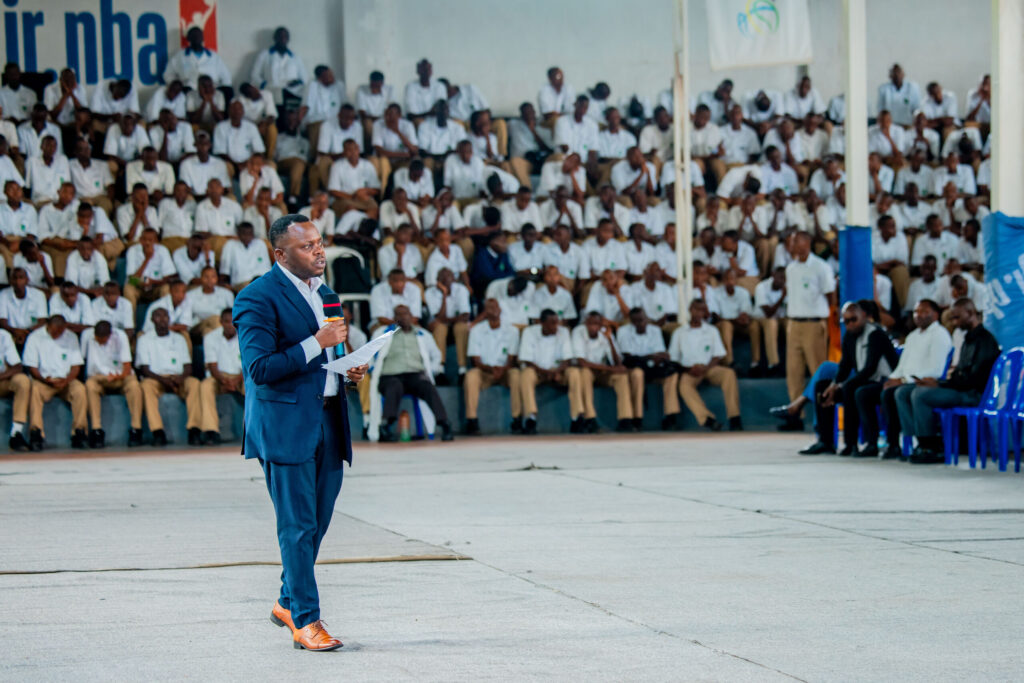
Dr. Jean Nepo Abdallah Utumatwishima, Rwanda’s Minister of Youth and Arts addresing students at Lyce de Kigali.
The Unity Club Intwararumuri, in partnership with the Ministry of National Unity and Civic Engagement, the Ministry of Youth and Arts, and the Ministry of Education, has launched the fifth phase of dialogue sessions aimed at fostering the Ndi Umunyarwanda spirit among the youth.
The initiative, unveiled on March 9, seeks to deepen conversations among students regarding Rwanda’s history, core values, and national identity, while encouraging them to play a proactive role in strengthening unity and reconciliation.
In a shift from previous phases—which primarily targeted universities and higher learning institutions—this new stage will extend discussions to approximately 100 secondary schools nationwide, beginning with 26 schools in Kigali and the Western Province.
Officials noted that the program aims to cultivate a culture of constructive dialogue, helping young people understand the nation’s past while shaping a shared vision for the future.
From Universities to Secondary Schools
Speaking during a session with students, Dr. Jean Nepo Abdallah Utumatwishima, Rwanda’s Minister of Youth and Arts, noted that similar programs in universities have already demonstrated a measurable impact.
“These programs are ongoing in universities and the impact is clear. Crimes connected to genocide ideology are reducing,” the Minister told students at Lycée de Kigali.
He explained that the decision to expand the initiative to secondary schools was informed by troubling tendencies observed among some young people.
“We have seen some students exhibiting tendencies associated with genocide ideology, which is why we are introducing these programs at the secondary level,” he noted.
He emphasized that such attitudes often stem from a lack of historical understanding or exposure to harmful narratives online.
Minister Utumatwishima added that family backgrounds and historical trauma significantly shape perceptions.
“Young people from families of genocide victims are more likely to be affected by trauma, while those from families of perpetrators may inherit the hatred that once existed in their homes,” he explained.
He stressed that a deep understanding of Rwanda’s history is critical to preventing divisionism, pointing out how colonial policies introduced racial segregation and undermined traditional leadership to sow the seeds of the 1994 Genocide against the Tutsi.
“Ndi Umunyarwanda is the promise we have and the legacy we can leave for future generations,” he said, urging youth to join reconciliation clubs, use creative talents like music to challenge misinformation, and avoid destructive behaviors such as drug and alcohol abuse.
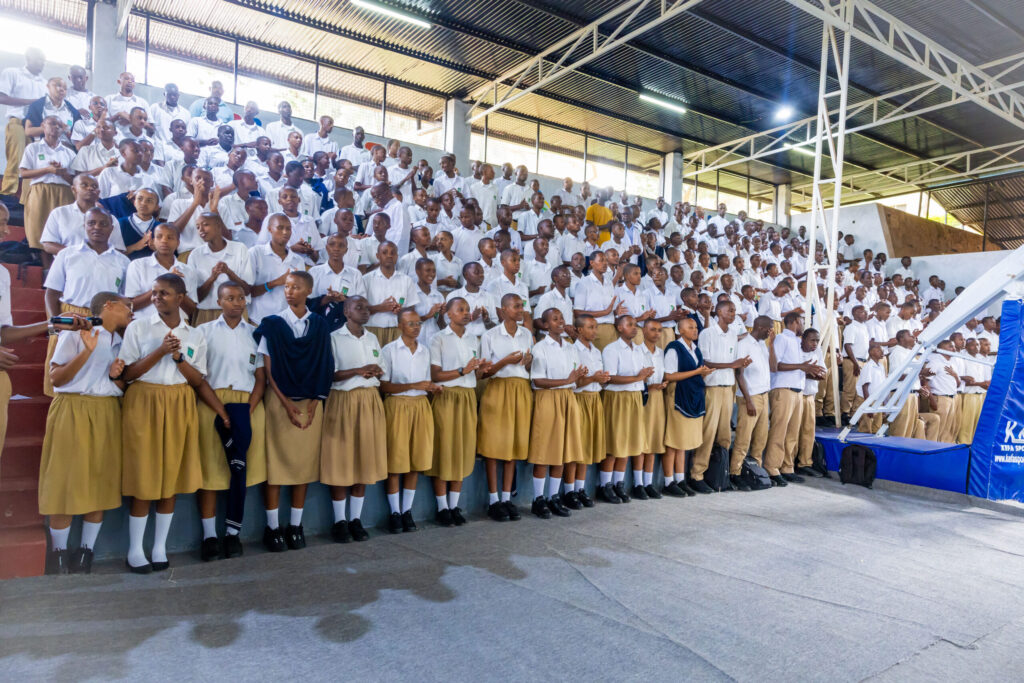
Students of Lyce de Kigali during the fifth phase of dialogue sessions aimed at promoting the Ndi Umunyarwanda spirit among young people.
Students Share Their Views
Students attending the discussions welcomed the initiative as an opportunity to learn from the past while building stronger bonds.
Delice Ishimwe, a Senior 4 student studying Mathematics and Sciences at Lycée de Kigali, said the conversations help students grasp the importance of national cohesion.
“Discussing Ndi Umunyarwanda helps us understand where our country came from and why unity is vital. As young people, we must learn the truth about our history to protect the peace Rwanda enjoys today,” she said.
Julius Niyonshuti, a Senior 5 student focusing on Physics, Chemistry, and Biology, added that the initiative encourages responsibility.
“We realize that we are the generation responsible for continuing the journey of reconciliation. These discussions help us respect each other and work together as one Rwanda,” he said.
Officials believe the expansion of the program will empower the youth to safeguard national unity and ensure that the lessons of history continue to guide Rwanda’s development.
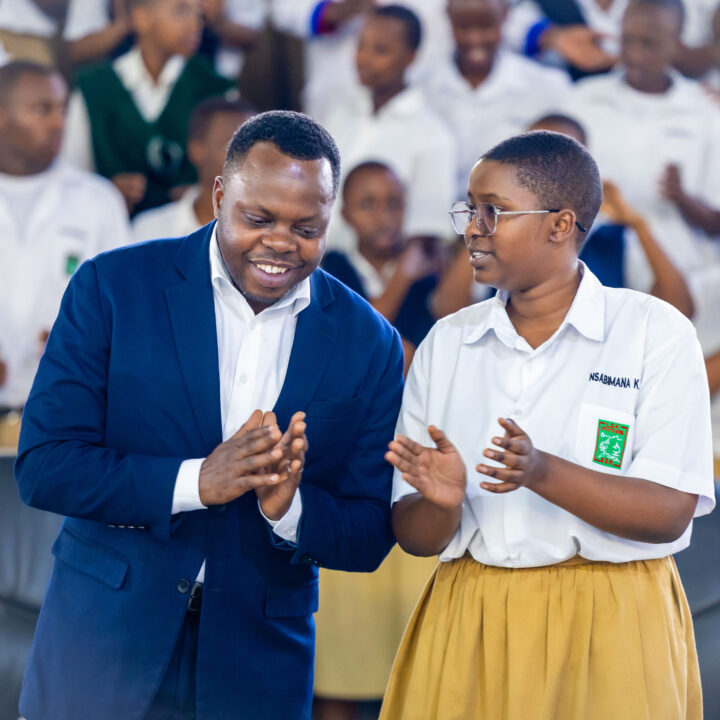
Minister Dr. Jean Nepo Abdallah Utumatwishima chants a morale song with a student at Lycée de Kigali.
As the initiative moves forward, it serves as a critical bridge between Rwanda’s resilient past and its ambitious future.
By addressing historical wounds within the classroom, the program aims to ensure the next generation is socially anchored in a unified identity, effectively neutralizing divisionism.
Ultimately, officials believe this expansion will empower the youth to safeguard national unity, ensuring that the lessons of history continue to guide Rwanda’s development and secure a peaceful legacy for generations to come.