


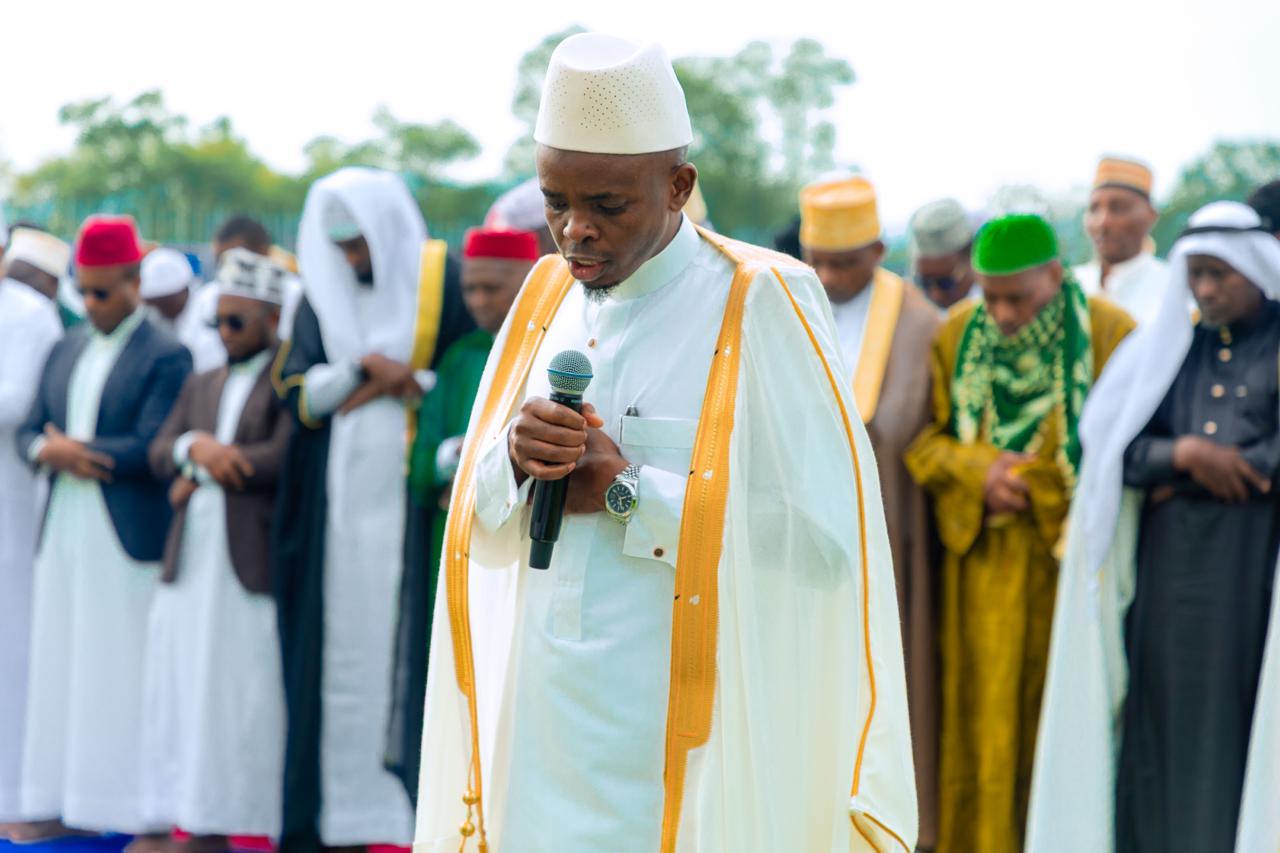
The head of the Muslim community, Mufti Sheikh Sindayigaya Mussa leads the faithful in prayer. Today’s celebrations serve as a reminder of the dignity and inclusion that define modern Rwanda.
While Rwanda’s Liberation Day, Kwibohora, is commemorated on July 4, its meaning resonates throughout the year. This is especially evident during Eid al-Fitr, the Islamic festival marking the end of Ramadan, which Rwandan Muslims celebrate today.
Muslims across the country are joined by friends and communities in observing Eid al-Fitr, a nationally recognised public holiday on par with major Christian celebrations such as Christmas and Easter. When the holiday falls on a Sunday, legislation provides for the following Monday to be observed as a public holiday.
For many Muslims in Rwanda—particularly the younger generation—this recognition is now taken for granted. It has also become customary for the Head of State to send warm greetings to the Muslim community, while encouraging all Rwandans to reflect on the values of unity, peace, wellbeing and compassion associated with the celebration.
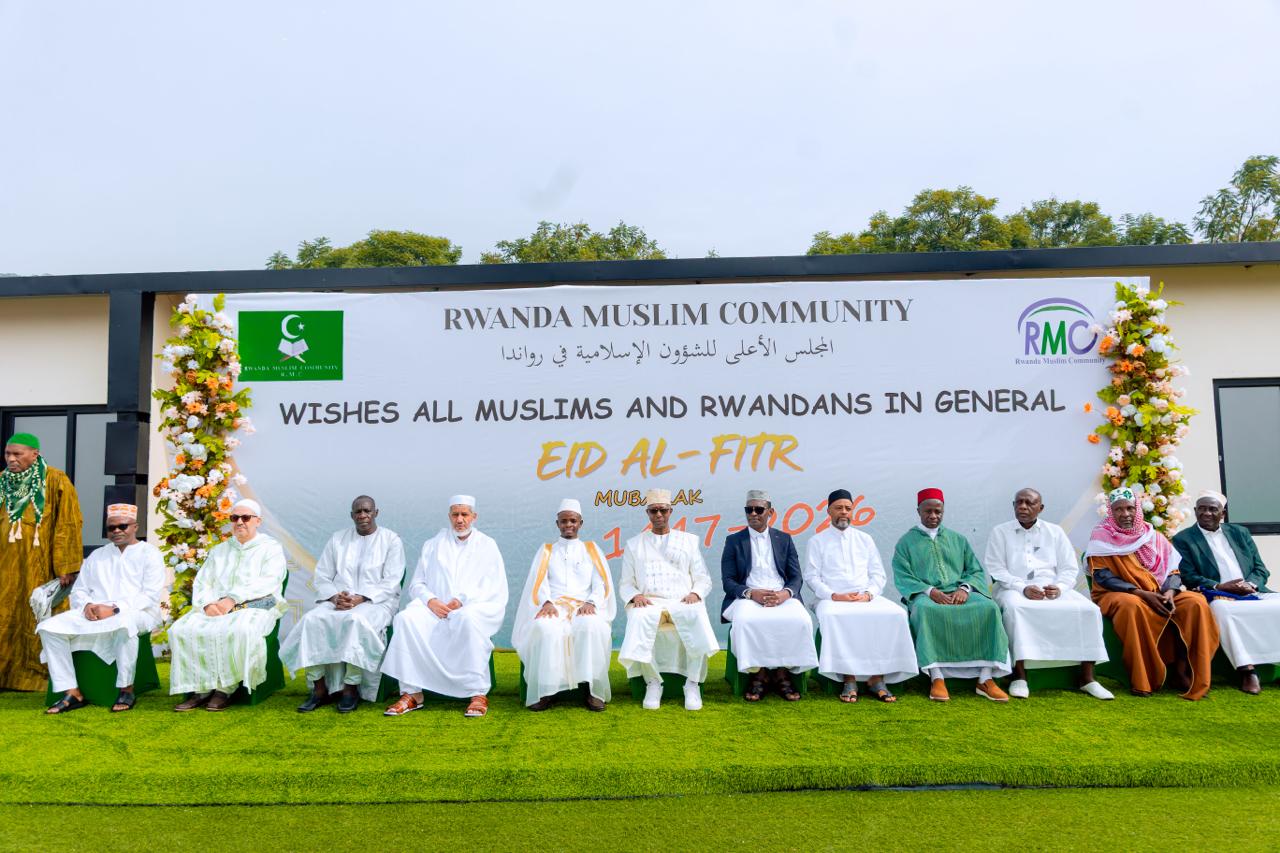
Muslim leaders, sit before a banner wishing all Rwandans a happy Eid al-Fitr. The gesture reflects the community’s integration into the broader fabric of Rwandan society.
Older members of the community, however, recall a different past. Before Rwanda’s liberation, Muslims often faced marginalisation and, at times, overt discrimination. On occasions such as Eid al-Fitr, many simply hoped to observe the day without interference.
During the colonial period, Rwanda was heavily influenced by the Catholic Church, particularly through the Missionaries of Africa, commonly known as the White Fathers. Their authority extended deeply into governance, and the country was widely regarded as a Catholic state.
Today, while the Catholic Church remains the largest religious denomination, Rwanda upholds a clear separation between religion and the state. Freedom of worship is guaranteed to all citizens, and the equal recognition of different faiths reflects a broader commitment to national unity and inclusion.
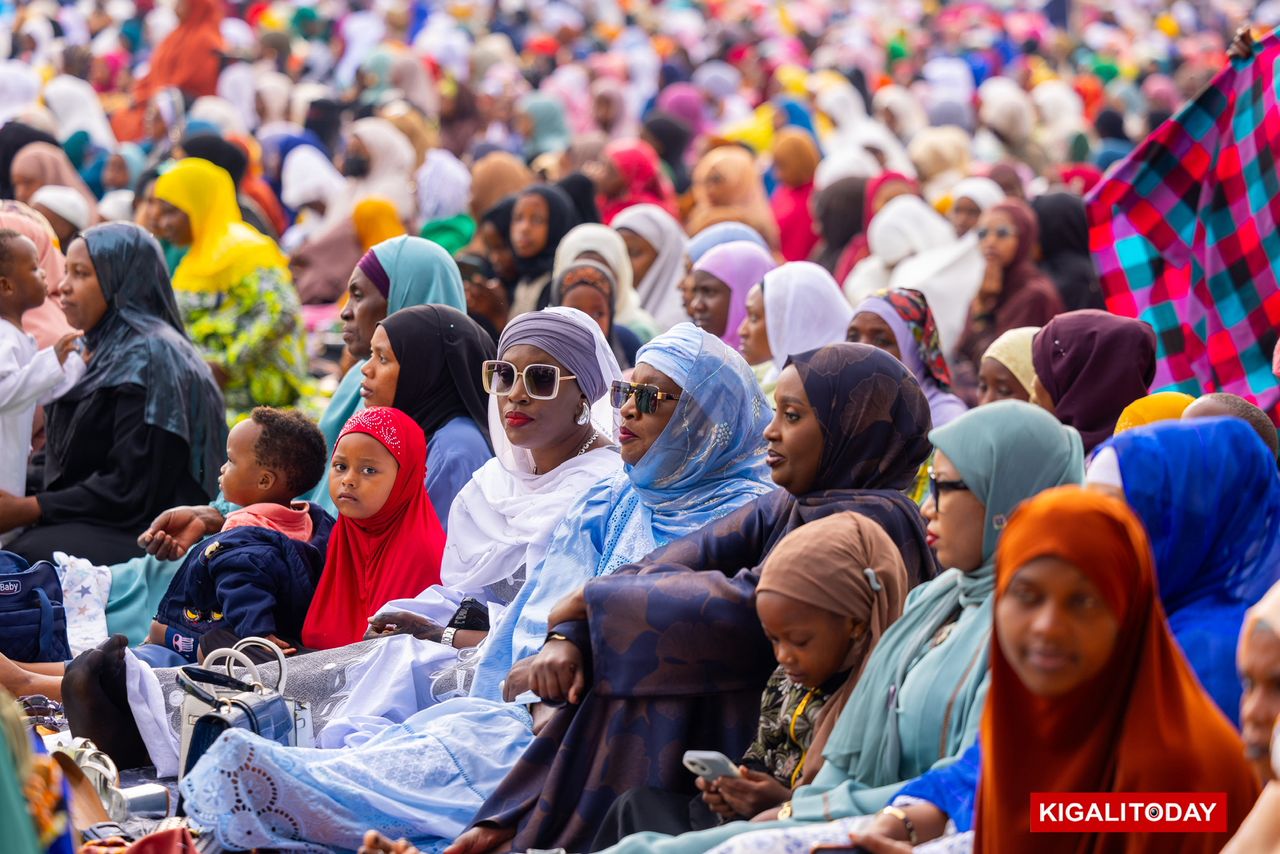
Rwandan Muslim women gather in prayer at the stadium. The vibrant colors of their attire reflect the joy of Eid al-Fitr, a day of spiritual renewal and national celebration.
For Rwandan Muslims, the ability to freely celebrate Eid al-Fitr is, in many ways, a reflection of the gains of Kwibohora—an affirmation of dignity, equality and shared national identity.
