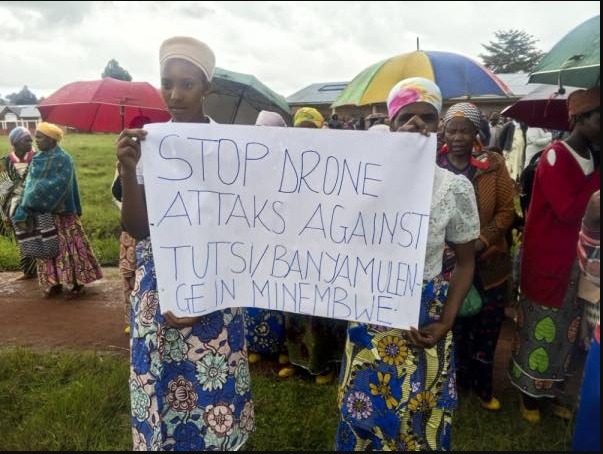
Members of the Banyamulenge community protest following deadly drone attacks.
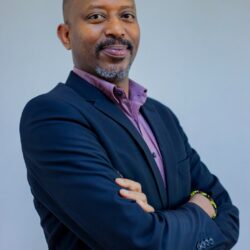
KIGALI — Speaking via Google Meet from her base in the United States, Congolese activist Adele Kibasumba leans into the camera with a message for a generation she believes is standing at a moral crossroads. For those shaped by displacement and the long shadow of conflict, she argues that the defining challenge is no longer just what they have survived, but how they choose to respond to it.
“The first step is awareness,” Kibasumba says. “You have to understand your trauma and own it.”
For Kibasumba, trauma is not a weight to be suppressed but a foundation to be understood. She frames memory as essential to identity—particularly for those born in exile or far from ancestral homes—but warns that awareness alone is a stagnant pool.
“We made a promise that we’re not going to sit and just be angry at the world,” she says, stressing that the true test is whether young people remain trapped in grievance or channel their history into quiet, incremental action. “We may not stop everything, but at least we are doing whatever we can.”
The Power of the Collective
Kibasumba views isolation as a vulnerability. She emphasizes collective responsibility, noting that voices carry further when they harmonise. In her view, unity is more than a social value; it is a tactical safeguard in environments where division is easily manufactured and digitally amplified.
“When young people come together, their efforts gain weight,” she explains. “If we join our efforts, maybe one day those efforts can bear fruit.”
A Generation at a Crossroads: Lessons from 1994
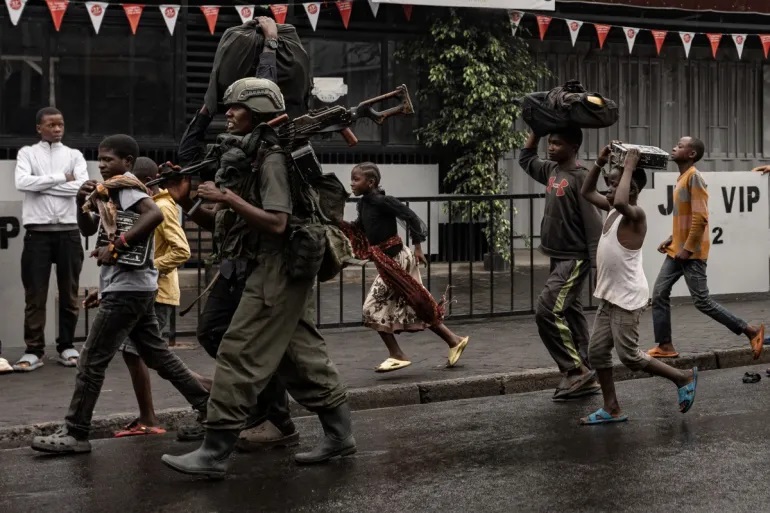
Kibasumba says empowered youth can shape the destiny of their communities.
The urgency in her voice is anchored in the legacy of the 1994 Genocide against the Tutsi—a moment in history where youth were present on both sides.
Kibasumba reflects on how many were instrumentalized through propaganda and fear, drawn into the Interahamwe or fueled by the hate speech of Radio Télévision Libre des Mille Collines. It was a generation mobilized to destroy its own society.
“When people are fed hate long enough, they can believe they are doing something right,” she notes.
However, she also points to the contrast of the youth within the Rwanda Patriotic Front (RPF), who acted as the force that stopped the killings. This duality, she suggests, proves that youth are never neutral in times of crisis; they are shaped by the leadership and the narratives they choose to follow.
Outlook: Between Repetition and Rupture
As the interview draws to a close, the digital distance between the US and Kigali feels small compared to the vastness of the task she describes. For Kibasumba, the future of post-conflict societies hinges on a specific kind of discipline: the discipline of preventing division before it takes root.
Today’s generation faces a familiar inflection point. They can inherit the fractures of the past or engage in the deliberate work of restraint. In her framing, the future depends less on memory itself, and more on what is done with it.
“We cannot give space to people who are spreading hate,” she concludes. “We cannot just watch.”